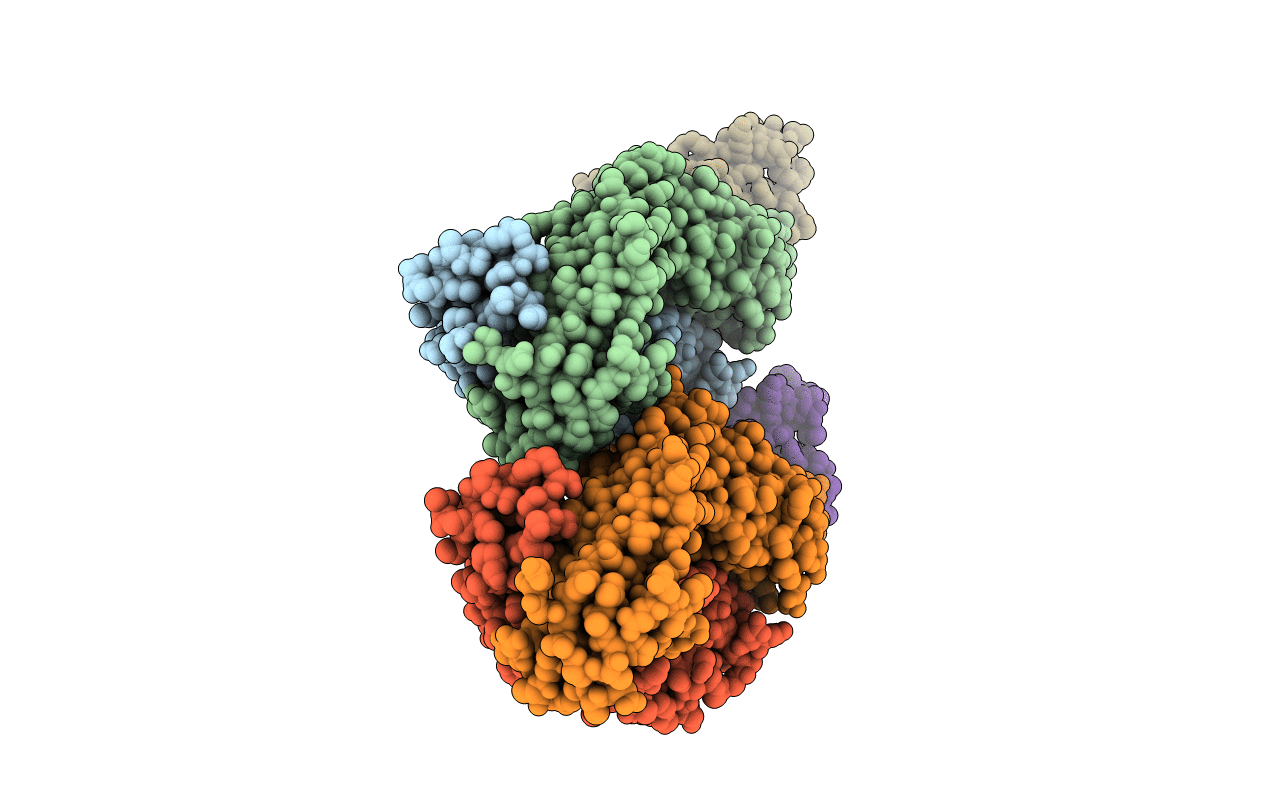
6U9S image
Deposition Date 2019-09-09
Release Date 2020-05-13
Last Version Date 2024-11-13
Entry Detail
PDB ID:
6U9S
Keywords:
Title:
Crystal structure of human CD81 large extracellular loop in complex with 5A6 Fab
Biological Source:
Source Organism:
Mus musculus (Taxon ID: 10090)
Homo sapiens (Taxon ID: 9606)
Host Organism:
Method Details:
Experimental Method:
Resolution:
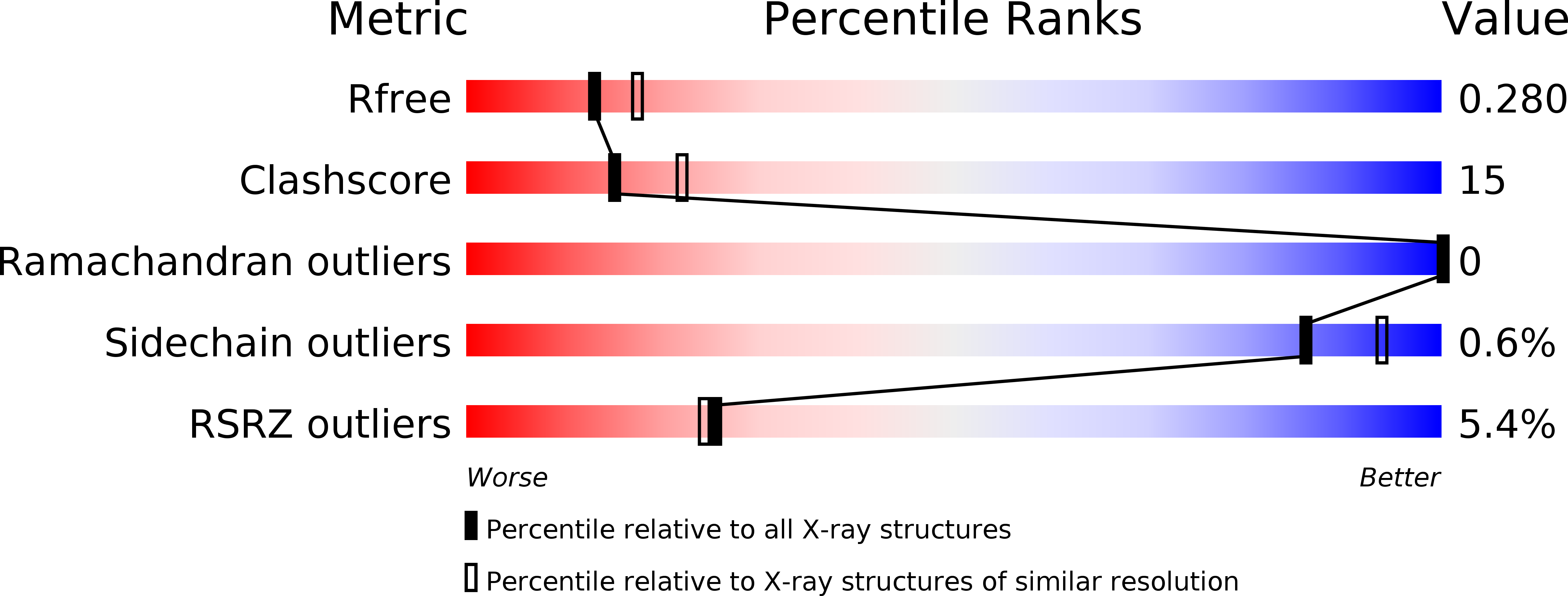
2.40 Å
R-Value Free:
0.28
R-Value Work:
0.21
R-Value Observed:
0.21
Space Group:
P 21 21 21
Macromolecular Entities
Polymer Type:polypeptide(L)
Molecule:5A6 FAB Heavy Chain
Chain IDs:A, D
Chain Length:232
Number of Molecules:2
Biological Source:Mus musculus
Polymer Type:polypeptide(L)
Molecule:5A6 FAB Light Chain
Chain IDs:B, E
Chain Length:219
Number of Molecules:2
Biological Source:Mus musculus
Structures with similar UniProt ID
Protein Blast
Polymer Type:polypeptide(L)
Molecule:CD81 antigen
Gene (Uniprot):CD81
Chain IDs:C, F
Chain Length:98
Number of Molecules:2
Biological Source:Homo sapiens
Ligand Molecules
Primary Citation
A dynamic interaction between CD19 and the tetraspanin CD81 controls B cell co-receptor trafficking.
Elife 9 ? ? (2020)
PMID: 32338599 DOI: 10.7554/eLife.52337

Abstact

CD81 and its binding partner CD19 are core subunits of the B cell co-receptor complex. While CD19 belongs to the extensively studied Ig superfamily, CD81 belongs to a poorly understood family of four-pass transmembrane proteins called tetraspanins. Tetraspanins play important physiological roles by controlling protein trafficking and other processes. Here, we show that CD81 relies on its ectodomain to traffic CD19 to the cell surface. Moreover, the anti-CD81 antibody 5A6, which binds selectively to activated B cells, recognizes a conformational epitope on CD81 that is masked when CD81 is bound to CD19. Mutations of CD81 in this interface suppress its CD19 export activity. These data indicate that the CD81 - CD19 interaction is dynamically regulated upon B cell activation and this dynamism can be exploited to regulate B cell function. These results are not only valuable for understanding B cell biology, but also have important implications for understanding tetraspanin function generally.

Legend

Protein

Chemical

Disease

Primary Citation of related structures
Feedback Form
Name
Email
Institute
Feedback