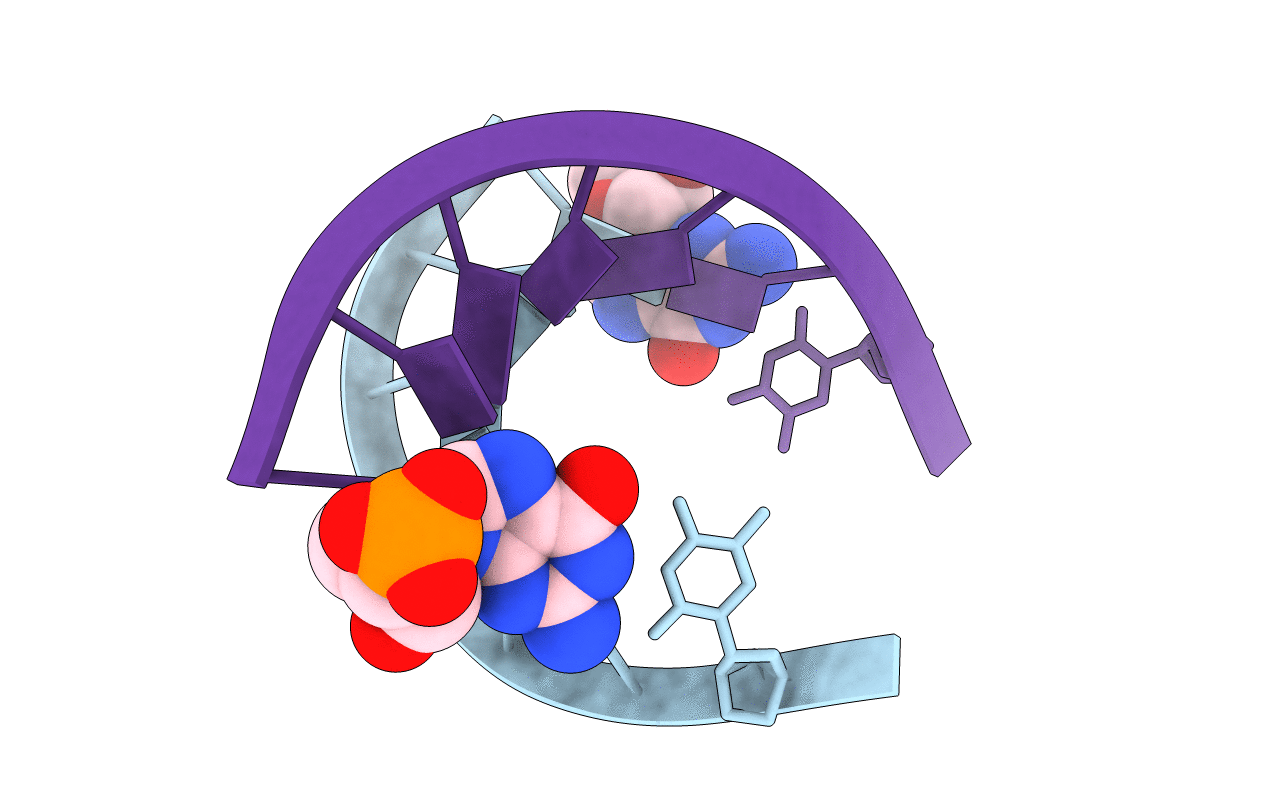
6U89 image
Deposition Date 2019-09-04
Release Date 2020-12-09
Last Version Date 2023-10-11
Entry Detail
PDB ID:
6U89
Keywords:
Title:
RNA duplex, bound with TNA monomer
Biological Source:
Source Organism:
Method Details:
Experimental Method:
Resolution:
2.36 Å
R-Value Free:
0.27
R-Value Work:
0.18
R-Value Observed:
0.19
Space Group:
P 63
Macromolecular Entities
Polymer Type:polyribonucleotide
Molecule:RNA (5'-R(*(LCC)P*(TLN)P*(LCG)P*UP*AP*CP*A)-3')
Chain IDs:A, B
Chain Length:7
Number of Molecules:2
Biological Source:synthetic construct
Ligand Molecules
Primary Citation
Structural interpretation of the effects of threo-nucleotides on nonenzymatic template-directed polymerization.
Nucleic Acids Res. 49 646 656 (2021)
PMID: 33347562 DOI: 10.1093/nar/gkaa1215

Abstact

The prebiotic synthesis of ribonucleotides is likely to have been accompanied by the synthesis of noncanonical nucleotides including the threo-nucleotide building blocks of TNA. Here, we examine the ability of activated threo-nucleotides to participate in nonenzymatic template-directed polymerization. We find that primer extension by multiple sequential threo-nucleotide monomers is strongly disfavored relative to ribo-nucleotides. Kinetic, NMR and crystallographic studies suggest that this is due in part to the slow formation of the imidazolium-bridged TNA dinucleotide intermediate in primer extension, and in part because of the greater distance between the attacking RNA primer 3'-hydroxyl and the phosphate of the incoming threo-nucleotide intermediate. Even a single activated threo-nucleotide in the presence of an activated downstream RNA oligonucleotide is added to the primer 10-fold more slowly than an activated ribonucleotide. In contrast, a single activated threo-nucleotide at the end of an RNA primer or in an RNA template results in only a modest decrease in the rate of primer extension, consistent with the minor and local structural distortions revealed by crystal structures. Our results are consistent with a model in which heterogeneous primordial oligonucleotides would, through cycles of replication, have given rise to increasingly homogeneous RNA strands.

Legend

Protein

Chemical

Disease

Primary Citation of related structures
Feedback Form
Name
Email
Institute
Feedback