6TWF image
Deposition Date 2020-01-13
Release Date 2020-02-19
Last Version Date 2024-11-13
Entry Detail
PDB ID:
6TWF
Keywords:
Title:
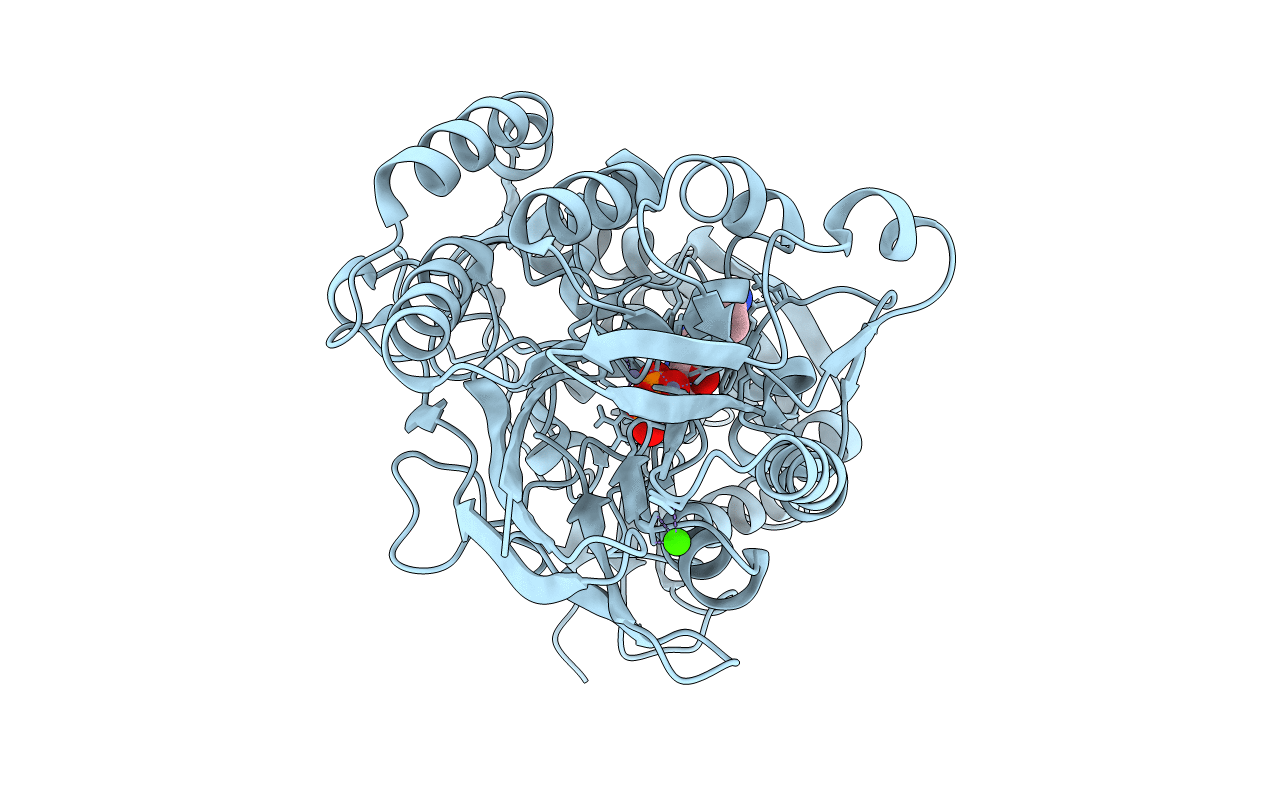
Human CD73 (ecto 5'-nucleotidase) in complex with PSB12604 (an AOPCP derivative, compound 21 in publication) in the closed state
Biological Source:
Source Organism:
Homo sapiens (Taxon ID: 9606)
Host Organism:
Method Details:
Experimental Method:
Resolution:
2.50 Å
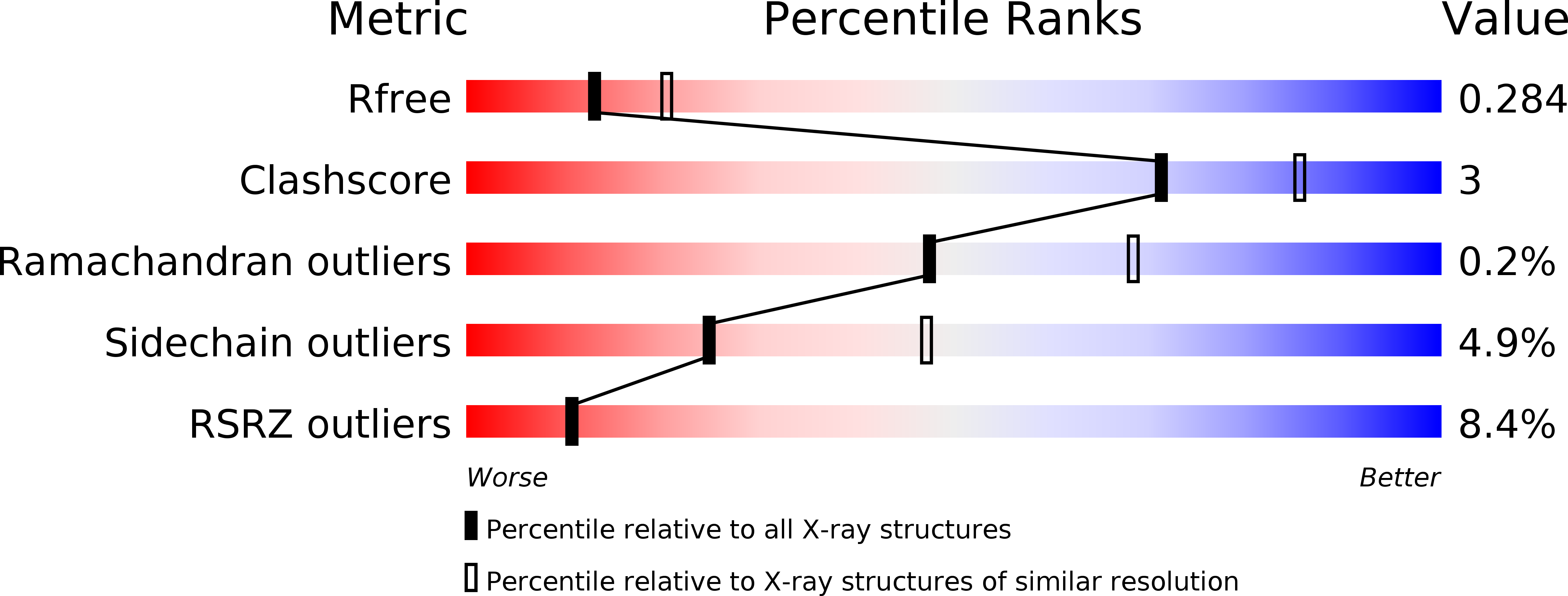
R-Value Free:
0.26
R-Value Work:
0.21
R-Value Observed:
0.22
Space Group:
C 2 2 21
Macromolecular Entities
Structures with similar UniProt ID
Protein Blast
Polymer Type:polypeptide(L)
Molecule:5'-nucleotidase
Gene (Uniprot):NT5E
Chain IDs:A
Chain Length:532
Number of Molecules:1
Biological Source:Homo sapiens
Primary Citation
2-Substituted alpha , beta-Methylene-ADP Derivatives: Potent Competitive Ecto-5'-nucleotidase (CD73) Inhibitors with Variable Binding Modes.
J.Med.Chem. 63 2941 2957 (2020)
PMID: 32045236 DOI: 10.1021/acs.jmedchem.9b01611

Abstact

CD73 inhibitors are promising drugs for the (immuno)therapy of cancer. Here, we present the synthesis, structure-activity relationships, and cocrystal structures of novel derivatives of the competitive CD73 inhibitor α,β-methylene-ADP (AOPCP) substituted in the 2-position. Small polar or lipophilic residues increased potency, 2-iodo- and 2-chloro-adenosine-5'-O-[(phosphonomethyl)phosphonic acid] (15, 16) being the most potent inhibitors with Ki values toward human CD73 of 3-6 nM. Subject to the size and nature of the 2-substituent, variable binding modes were observed by X-ray crystallography. Depending on the binding mode, large species differences were found, e.g., 2-piperazinyl-AOPCP (21) was >12-fold less potent against rat CD73 compared to human CD73. This study shows that high CD73 inhibitory potency can be achieved by simply introducing a small substituent into the 2-position of AOPCP without the necessity of additional bulky N6-substituents. Moreover, it provides valuable insights into the binding modes of competitive CD73 inhibitors, representing an excellent basis for drug development.

Legend

Protein

Chemical

Disease

Primary Citation of related structures
Feedback Form
Name
Email
Institute
Feedback