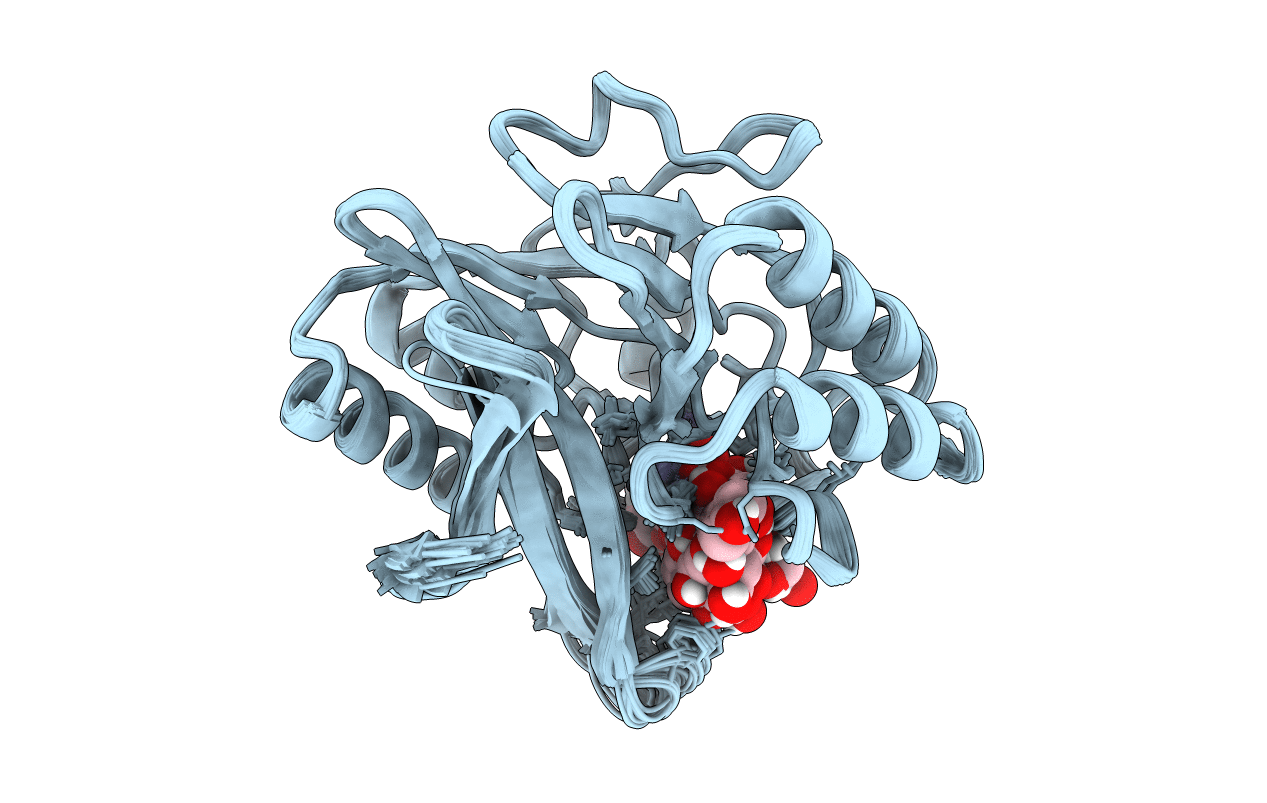
6TT8 image
Deposition Date 2019-12-25
Release Date 2021-01-13
Last Version Date 2024-05-15
Entry Detail
PDB ID:
6TT8
Title:
Haddock model of NDM-1/morin complex
Biological Source:
Source Organism:
Host Organism:
Method Details:
Experimental Method:
Conformers Calculated:
2800
Conformers Submitted:
56
Selection Criteria:
target function
Macromolecular Entities
Structures with similar UniProt ID
Protein Blast
Polymer Type:polypeptide(L)
Molecule:Metallo beta lactamase NDM-1
Gene (Uniprot):blaNDM-1
Chain IDs:A
Chain Length:227
Number of Molecules:1
Biological Source:Klebsiella pneumoniae
Primary Citation
NMR Characterization of the Influence of Zinc(II) Ions on the Structural and Dynamic Behavior of the New Delhi Metallo-beta-Lactamase-1 and on the Binding with Flavonols as Inhibitors.
Acs Omega 5 10466 10480 (2020)
PMID: 32426604 DOI: 10.1021/acsomega.0c00590

Abstact

New Delhi metallo-β-lactamase-1 (NDM-1) has recently emerged as a global threat because of its ability to confer resistance to all common β-lactam antibiotics. Understanding the molecular basis of β-lactam hydrolysis by NDM is crucial for designing NDM inhibitors or β-lactams resistant to their hydrolysis. In this study, for the first time, NMR was used to study the influence of Zn(II) ions on the dynamic behavior of NDM-1. Our results highlighted that the binding of Zn(II) in the NDM-1 active site induced several structural and dynamic changes on active site loop 2 (ASL2) and L9 loops and on helix α2. We subsequently studied the interaction of several flavonols: morin, quercetin, and myricetin were identified as natural and specific inhibitors of NDM-1. Quercetin conjugates were also synthesized in an attempt to increase the solubility and bioavailability. Our NMR investigations on NDM-1/flavonol interactions highlighted that both Zn(II) ions and the residues of the NDM-1 ASL1, ASL2, and ASL4 loops are involved in the binding of flavonols. This is the first NMR interaction study of NDM-1/inhibitors, and the models generated using HADDOCK will be useful for the rational design of more active inhibitors, directed against NDM-1.

Legend

Protein

Chemical

Disease

Primary Citation of related structures
Feedback Form
Name
Email
Institute
Feedback