6THP image
Deposition Date 2019-11-21
Release Date 2020-02-12
Last Version Date 2024-11-13
Entry Detail
PDB ID:
6THP
Keywords:
Title:
Neprilysin in complex with the inhibitor (R)-4-(1-carboxy-3-(3'-chlorobiphenyl-4-yl)propan-2-ylamino)-4-oxobutanoic acid
Biological Source:
Source Organism:
Homo sapiens (Taxon ID: 9606)
Method Details:
Experimental Method:
Resolution:
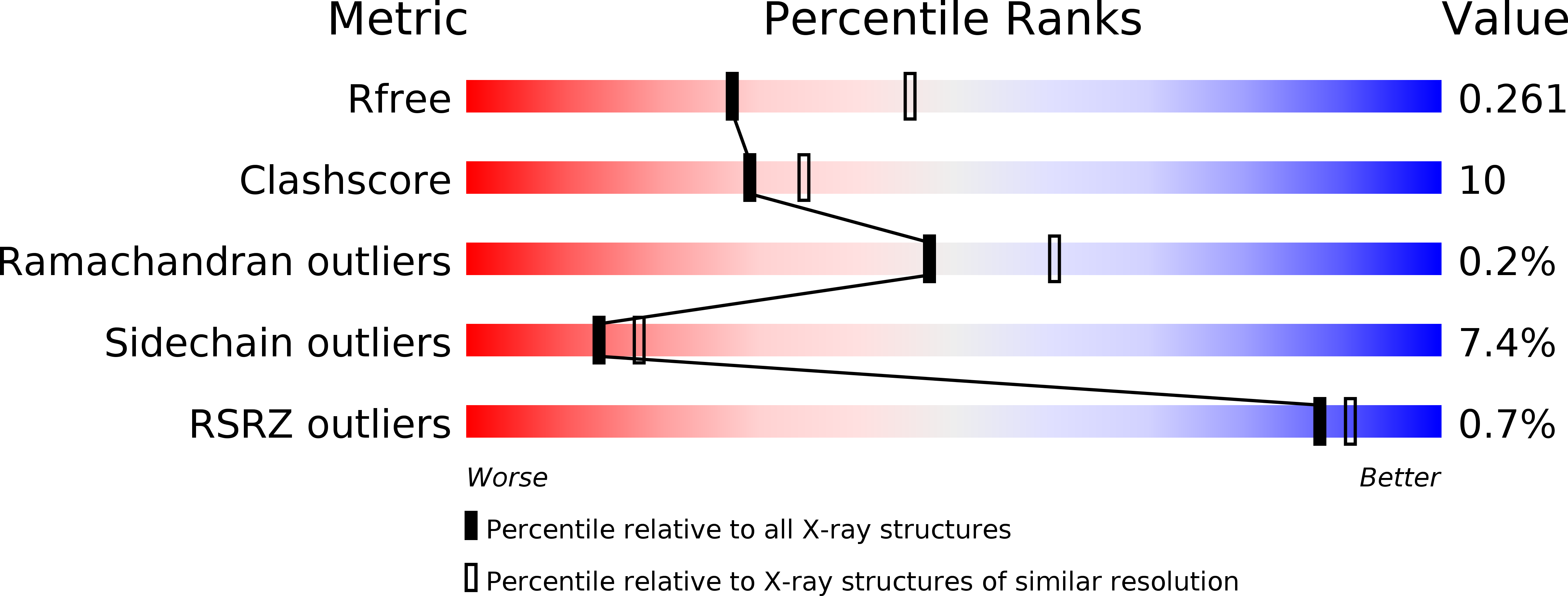
2.54 Å
R-Value Free:
0.26
R-Value Work:
0.20
R-Value Observed:
0.20
Space Group:
P 21 21 21
Macromolecular Entities
Structures with similar UniProt ID
Protein Blast
Polymer Type:polypeptide(L)
Molecule:Neprilysin
Gene (Uniprot):MME
Chain IDs:A, B
Chain Length:696
Number of Molecules:2
Biological Source:Homo sapiens
Primary Citation
Structure-Guided Design of Substituted Biphenyl Butanoic Acid Derivatives as Neprilysin Inhibitors.
Acs Med.Chem.Lett. 11 188 194 (2020)
PMID: 32071687 DOI: 10.1021/acsmedchemlett.9b00578

Abstact

Inhibition of neprilysin (NEP) is widely studied as a therapeutic target for the treatment of hypertension, heart failure, and kidney disease. Sacubitril/valsartan (LCZ696) is a drug approved to reduce the risk of cardiovascular death in heart failure patients with reduced ejection fraction. LBQ657 is the active metabolite of sacubitril and an inhibitor of NEP. Previously, we have reported the crystal structure of NEP bound with LBQ657, whereby we noted the presence of a subsite in S1' that has not been explored before. We were also intrigued by the zinc coordination made by one of the carboxylic acids of LBQ657, leading us to explore alternative linkers to efficiently engage zinc for NEP inhibition. Structure-guided design culminated in the synthesis of selective, orally bioavailable, and subnanomolar inhibitors of NEP. A 17-fold boost in biochemical potency was observed upon addition of a chlorine atom that occupied the newly found subsite in S1'. We report herein the discovery and preclinical profiling of compound 13, which paved the path to our clinical candidate.

Legend

Protein

Chemical

Disease

Primary Citation of related structures
Feedback Form
Name
Email
Institute
Feedback