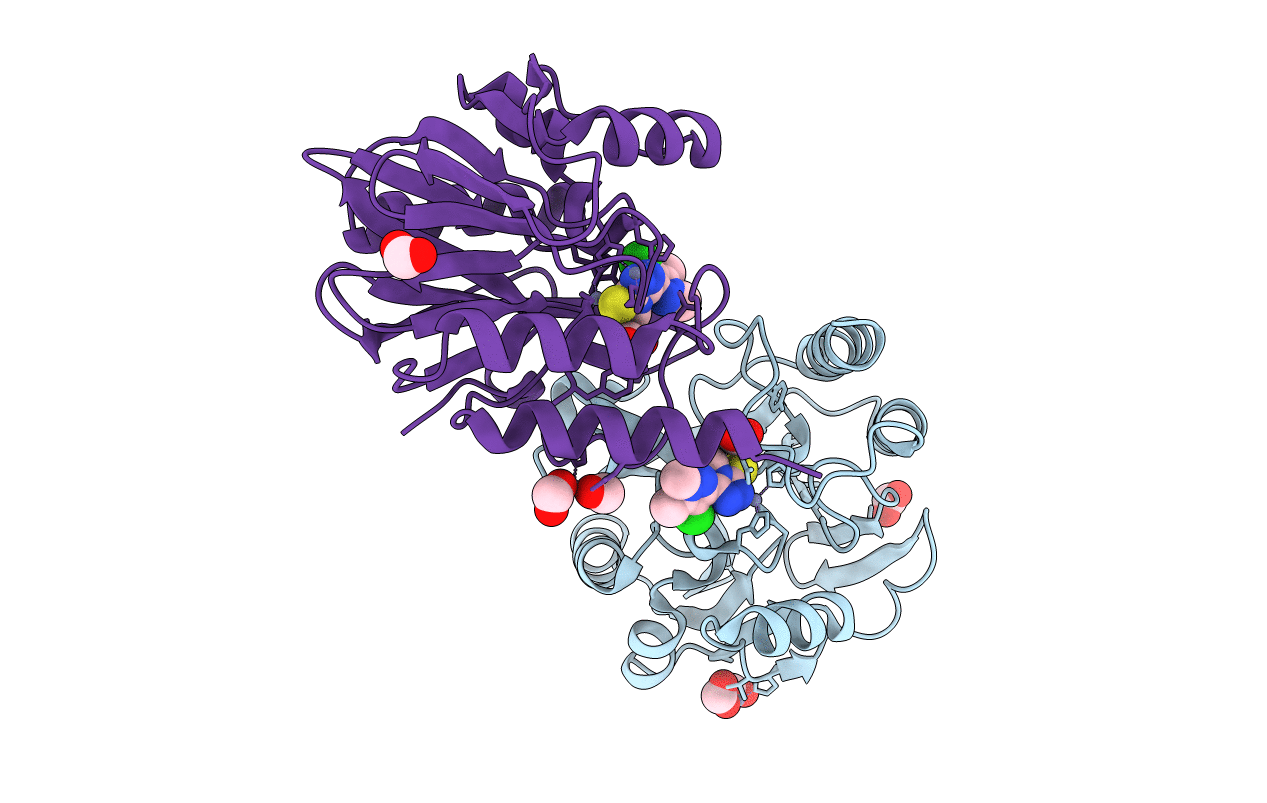
6TGI image
Deposition Date 2019-11-15
Release Date 2020-10-14
Last Version Date 2024-01-24
Entry Detail
PDB ID:
6TGI
Keywords:
Title:
Crystal structure of VIM-2 in complex with triazole-based inhibitor OP24
Biological Source:
Source Organism:
Host Organism:
Method Details:
Experimental Method:
Resolution:
1.60 Å
R-Value Free:
0.21
R-Value Work:
0.17
R-Value Observed:
0.18
Space Group:
C 1 2 1
Macromolecular Entities
Structures with similar UniProt ID
Protein Blast
Polymer Type:polypeptide(L)
Molecule:Vim-1
Chain IDs:A, B
Chain Length:246
Number of Molecules:2
Biological Source:Pseudomonas aeruginosa
Primary Citation
Virtual screening identifies broad-spectrum beta-lactamase inhibitors with activity on clinically relevant serine- and metallo-carbapenemases.
Sci Rep 10 12763 12763 (2020)
PMID: 32728062 DOI: 10.1038/s41598-020-69431-y

Abstact

Bacteria are known to evade β-lactam antibiotic action by producing β-lactamases (BLs), including carbapenemases, which are able to hydrolyze nearly all available β-lactams. The production of BLs represents one of the best known and most targeted mechanisms of resistance in bacteria. We have performed the parallel screening of commercially available compounds against a panel of clinically relevant BLs: class A CTX-M-15 and KPC-2, subclass B1 NDM-1 and VIM-2 MBLs, and the class C P. aeruginosa AmpC. The results show that all BLs prefer scaffolds having electron pair donors: KPC-2 is preferentially inhibited by sulfonamide and tetrazole-based derivatives, NDM-1 by compounds bearing a thiol, a thiosemicarbazide or thiosemicarbazone moiety, while VIM-2 by triazole-containing molecules. Few broad-spectrum BLs inhibitors were identified; among these, compound 40 potentiates imipenem activity against an NDM-1-producing E. coli clinical strain. The binary complexes of the two most promising compounds binding NDM-1 and VIM-2 were obtained at high resolution, providing strong insights to improve molecular docking simulations, especially regarding the interaction of MBLs with inhibitors.

Legend

Protein

Chemical

Disease

Primary Citation of related structures
Feedback Form
Name
Email
Institute
Feedback