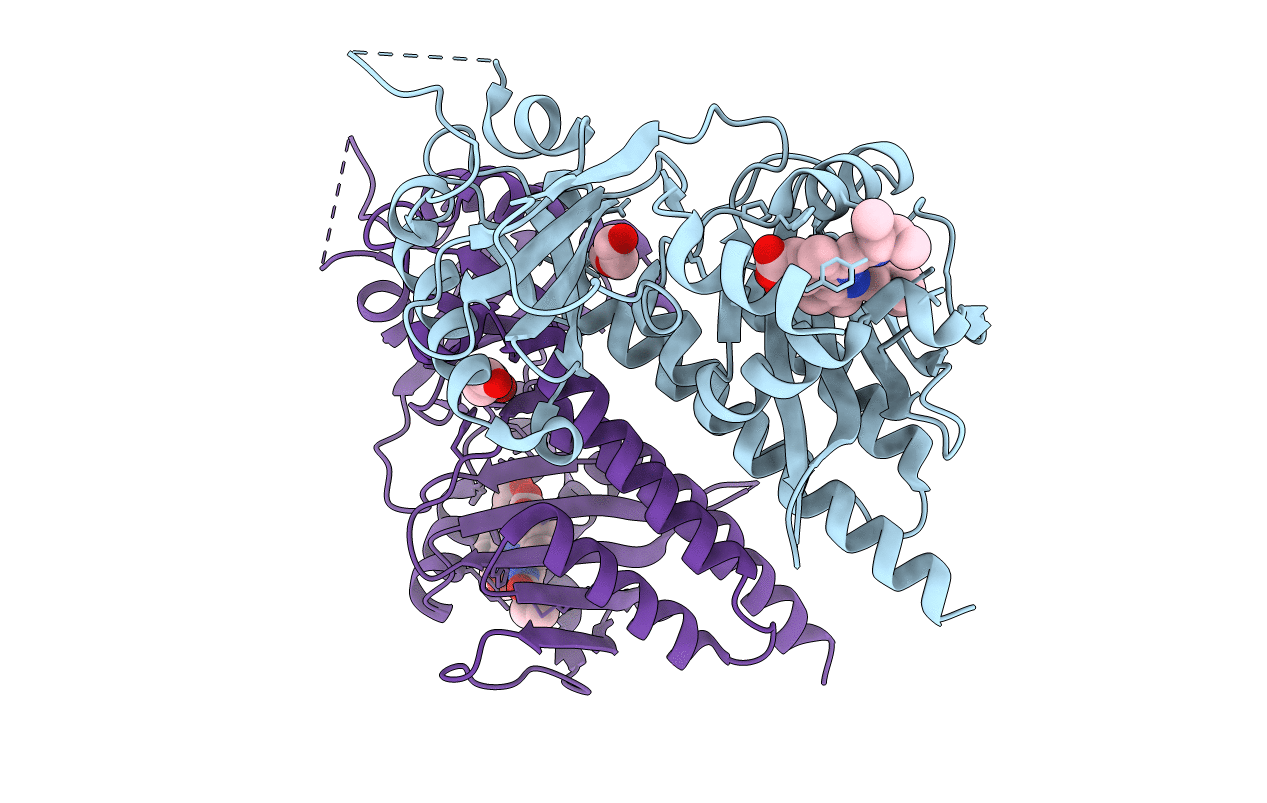
6TC7 image
Deposition Date 2019-11-05
Release Date 2020-05-06
Last Version Date 2024-11-06
Entry Detail
PDB ID:
6TC7
Keywords:
Title:
PAS-GAF bidomain of Glycine max phytochromeA
Biological Source:
Source Organism:
Glycine max (Taxon ID: 3847)
Method Details:
Experimental Method:
Resolution:
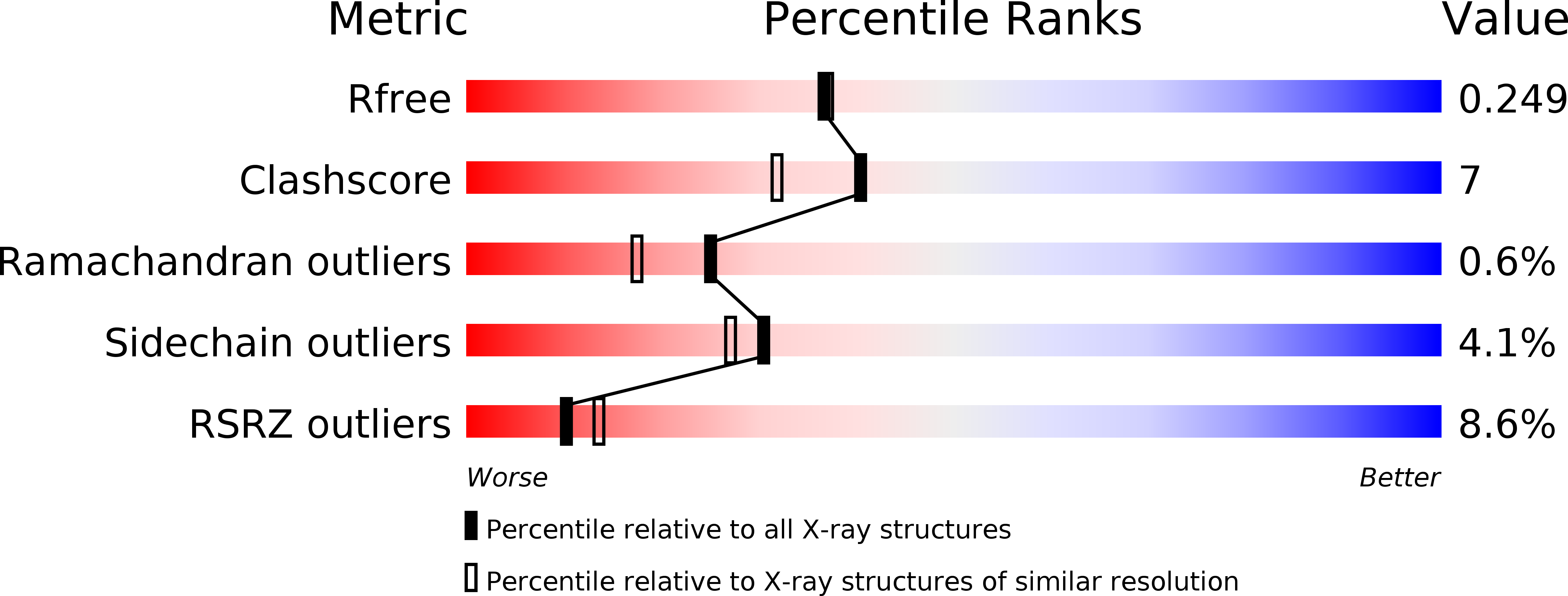
2.13 Å
R-Value Free:
0.24
R-Value Work:
0.18
Space Group:
P 1 21 1
Macromolecular Entities
Structures with similar UniProt ID
Protein Blast
Polymer Type:polypeptide(L)
Molecule:Phytochrome
Gene (Uniprot):PHYA2
Chain IDs:A (auth: AAA), B (auth: BBB)
Chain Length:359
Number of Molecules:2
Biological Source:Glycine max
Primary Citation
Structural insights into photoactivation and signalling in plant phytochromes.
Nat.Plants 6 581 588 (2020)
PMID: 32366982 DOI: 10.1038/s41477-020-0638-y

Abstact

Plant phytochromes are red/far-red photochromic photoreceptors that act as master regulators of development, controlling the expression of thousands of genes. Here, we describe the crystal structures of four plant phytochrome sensory modules, three at about 2 Å resolution or better, including the first of an A-type phytochrome. Together with extensive spectral data, these structures provide detailed insight into the structure and function of plant phytochromes. In the Pr state, the substitution of phycocyanobilin and phytochromobilin cofactors has no structural effect, nor does the amino-terminal extension play a significant functional role. Our data suggest that the chromophore propionates and especially the phytochrome-specific domain tongue act differently in plant and prokaryotic phytochromes. We find that the photoproduct in period-ARNT-single-minded (PAS)-cGMP-specific phosphodiesterase-adenylyl cyclase-FhlA (GAF) bidomains might represent a novel intermediate between MetaRc and Pfr. We also discuss the possible role of a likely nuclear localization signal specific to and conserved in the phytochrome A lineage.

Legend

Protein

Chemical

Disease

Primary Citation of related structures
Feedback Form
Name
Email
Institute
Feedback