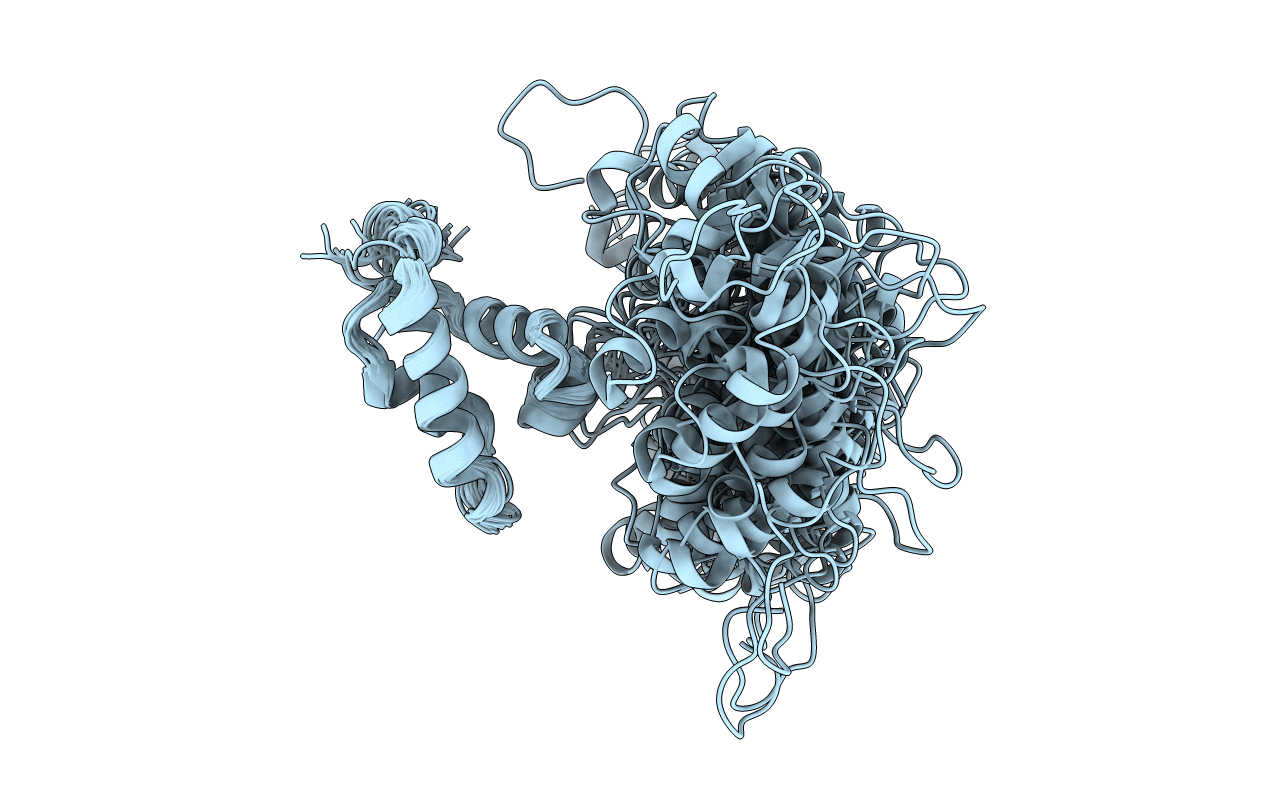
6TAZ image
Deposition Date 2019-10-31
Release Date 2020-07-01
Last Version Date 2024-06-19
Entry Detail
PDB ID:
6TAZ
Title:
Timeless couples G quadruplex detection with processing by DDX11 during DNA replication
Biological Source:
Source Organism:
Homo sapiens (Taxon ID: 9606)
Host Organism:
Method Details:
Experimental Method:
Conformers Calculated:
200
Conformers Submitted:
20
Selection Criteria:
structures with the lowest energy

Macromolecular Entities
Structures with similar UniProt ID
Protein Blast
Polymer Type:polypeptide(L)
Molecule:Protein timeless homolog
Gene (Uniprot):TIMELESS
Chain IDs:A (auth: B)
Chain Length:141
Number of Molecules:1
Biological Source:Homo sapiens
Ligand Molecules
Primary Citation
Timeless couples G-quadruplex detection with processing by DDX11 helicase during DNA replication.
Embo J. 39 e104185 e104185 (2020)
PMID: 32705708 DOI: 10.15252/embj.2019104185

Abstact

Regions of the genome with the potential to form secondary DNA structures pose a frequent and significant impediment to DNA replication and must be actively managed in order to preserve genetic and epigenetic integrity. How the replisome detects and responds to secondary structures is poorly understood. Here, we show that a core component of the fork protection complex in the eukaryotic replisome, Timeless, harbours in its C-terminal region a previously unappreciated DNA-binding domain that exhibits specific binding to G-quadruplex (G4) DNA structures. We show that this domain contributes to maintaining processive replication through G4-forming sequences, and exhibits partial redundancy with an adjacent PARP-binding domain. Further, this function of Timeless requires interaction with and activity of the helicase DDX11. Loss of both Timeless and DDX11 causes epigenetic instability at G4-forming sequences and DNA damage. Our findings indicate that Timeless contributes to the ability of the replisome to sense replication-hindering G4 formation and ensures the prompt resolution of these structures by DDX11 to maintain processive DNA synthesis.

Legend

Protein

Chemical

Disease

Primary Citation of related structures
Feedback Form
Name
Email
Institute
Feedback