6T7H image
Deposition Date 2019-10-22
Release Date 2020-09-30
Last Version Date 2024-11-13
Entry Detail
PDB ID:
6T7H
Keywords:
Title:
Crystal structure of Thrombin in complex with macrocycle N14-PR4-A
Biological Source:
Source Organism:
Homo sapiens (Taxon ID: 9606)
Method Details:
Experimental Method:
Resolution:
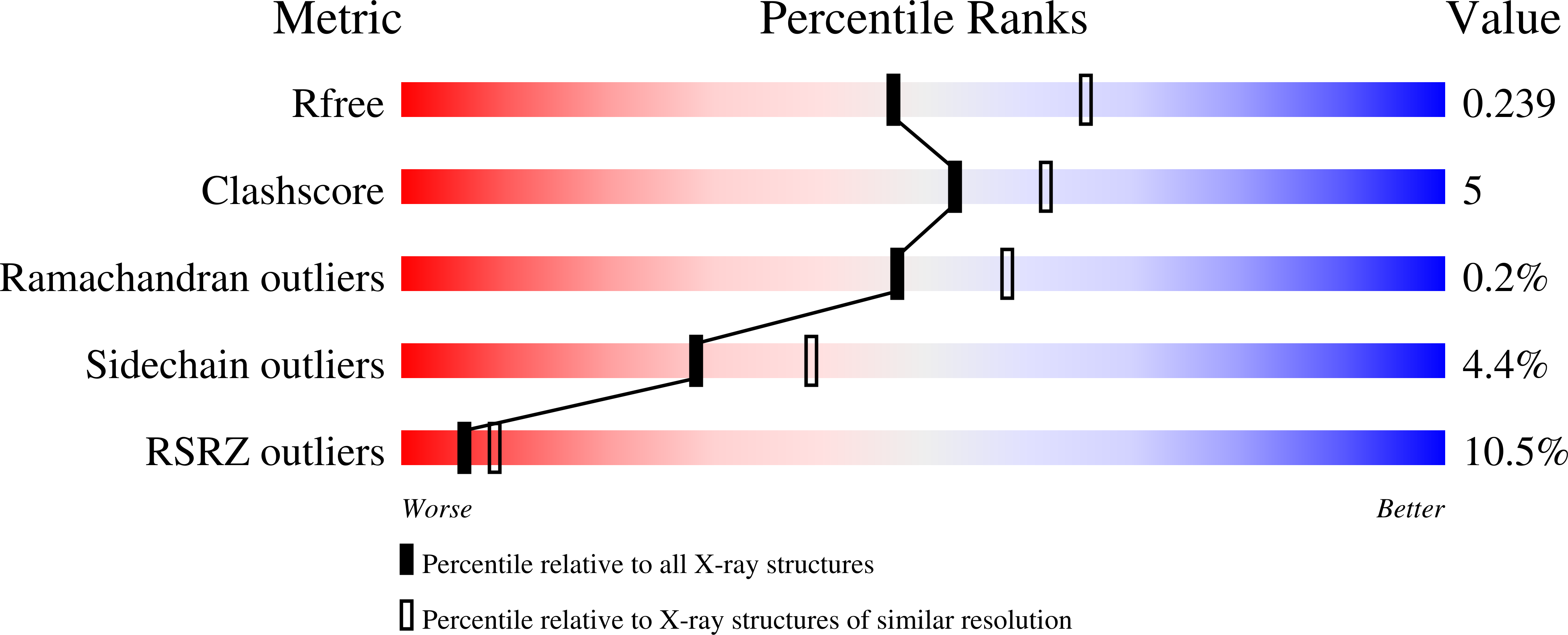
2.32 Å
R-Value Free:
0.23
R-Value Work:
0.19
R-Value Observed:
0.19
Space Group:
P 21 21 21
Macromolecular Entities
Structures with similar UniProt ID
Protein Blast
Polymer Type:polypeptide(L)
Molecule:Thrombin light chain
Gene (Uniprot):F2
Chain IDs:A, C (auth: L)
Chain Length:36
Number of Molecules:2
Biological Source:Homo sapiens
Structures with similar UniProt ID
Protein Blast
Polymer Type:polypeptide(L)
Molecule:Thrombin heavy chain
Gene (Uniprot):F2
Chain IDs:B, D (auth: H)
Chain Length:259
Number of Molecules:2
Biological Source:Homo sapiens
Primary Citation
Macrocycle synthesis strategy based on step-wise "adding and reacting" three components enables screening of large combinatorial libraries.
Chem Sci 11 7858 7863 (2020)
PMID: 34094158 DOI: 10.1039/d0sc01944e

Abstact

Macrocycles provide an attractive modality for drug development, but generating ligands for new targets is hampered by the limited availability of large macrocycle libraries. We have established a solution-phase macrocycle synthesis strategy in which three building blocks are coupled sequentially in efficient alkylation reactions that eliminate the need for product purification. We demonstrate the power of the approach by combinatorially reacting 15 bromoacetamide-activated tripeptides, 42 amines, and 6 bis-electrophile cyclization linkers to generate a 3780-compound library with minimal effort. Screening against thrombin yielded a potent and selective inhibitor (K i = 4.2 ± 0.8 nM) that efficiently blocked blood coagulation in human plasma. Structure-activity relationship and X-ray crystallography analysis revealed that two of the three building blocks acted synergistically and underscored the importance of combinatorial screening in macrocycle development. The three-component library synthesis approach is general and offers a promising avenue to generate macrocycle ligands to other targets.

Legend

Protein

Chemical

Disease

Primary Citation of related structures
Feedback Form
Name
Email
Institute
Feedback