6SQ8 image
Deposition Date 2019-09-03
Release Date 2020-04-22
Last Version Date 2024-01-24
Entry Detail
PDB ID:
6SQ8
Keywords:
Title:
Structure of amide bond synthetase McbA from Marinactinospora thermotolerans
Biological Source:
Source Organism:
Method Details:
Experimental Method:
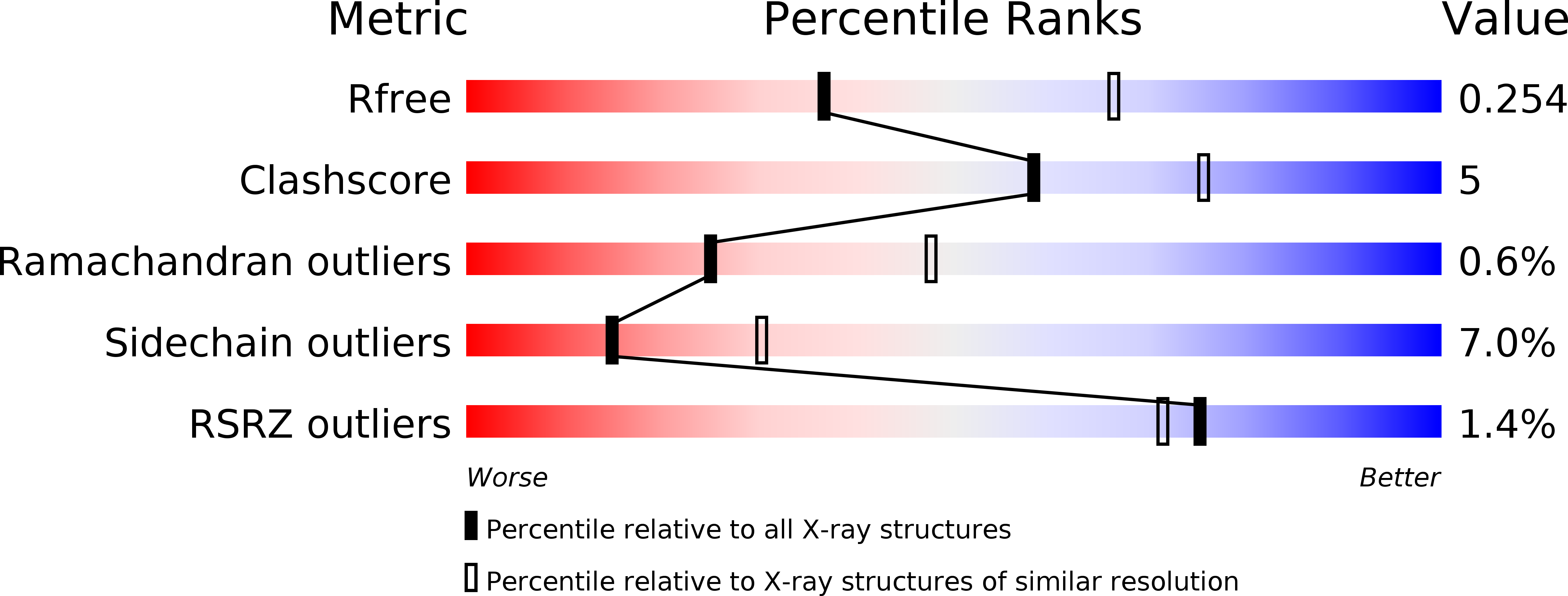
Resolution:
2.59 Å
R-Value Free:
0.24
R-Value Work:
0.21
R-Value Observed:
0.21
Space Group:
P 21 21 21
Macromolecular Entities
Structures with similar UniProt ID
Protein Blast
Polymer Type:polypeptide(L)
Molecule:Fatty acid CoA ligase
Chain IDs:A, B, C, D, E
Chain Length:498
Number of Molecules:5
Biological Source:Marinactinospora thermotolerans
Primary Citation
Biocatalytic Synthesis of Moclobemide Using the Amide Bond Synthetase McbA Coupled with an ATP Recycling System.
Acs Catalysis 10 4659 4663 (2020)
PMID: 32337091 DOI: 10.1021/acscatal.0c00929

Abstact

The biocatalytic synthesis of amides from carboxylic acids and primary amines in aqueous media can be achieved using the ATP-dependent amide bond synthetase McbA, via an adenylate intermediate, using only 1.5 equiv of the amine nucleophile. Following earlier studies that characterized the broad carboxylic acid specificity of McbA, we now show that, in addition to the natural amine substrate 2-phenylethylamine, a range of simple aliphatic amines, including methylamine, butylamine, and hexylamine, and propargylamine are coupled efficiently to the native carboxylic acid substrate 1-acetyl-9H-β-carboline-3-carboxylic acid by the enzyme, to give amide products with up to >99% conversion. The structure of wild-type McbA in its amidation conformation, coupled with modeling and mutational studies, reveal an amine access tunnel and a possible role for residue D201 in amine activation. Amide couplings were slower with anilines and alicyclic secondary amines such as pyrrolidine and piperidine. The broader substrate specificity of McbA was exploited in the synthesis of the monoamine oxidase A inhibitor moclobemide, through the reaction of 4-chlorobenzoic acid with 1.5 equiv of 4-(2-aminoethyl)morpholine, and utilizing polyphosphate kinases SmPPK and AjPPK in the presence of polyphosphoric acid and 0.1 equiv of ATP, required for recycling of the cofactor.

Legend

Protein

Chemical

Disease

Primary Citation of related structures
Feedback Form
Name
Email
Institute
Feedback