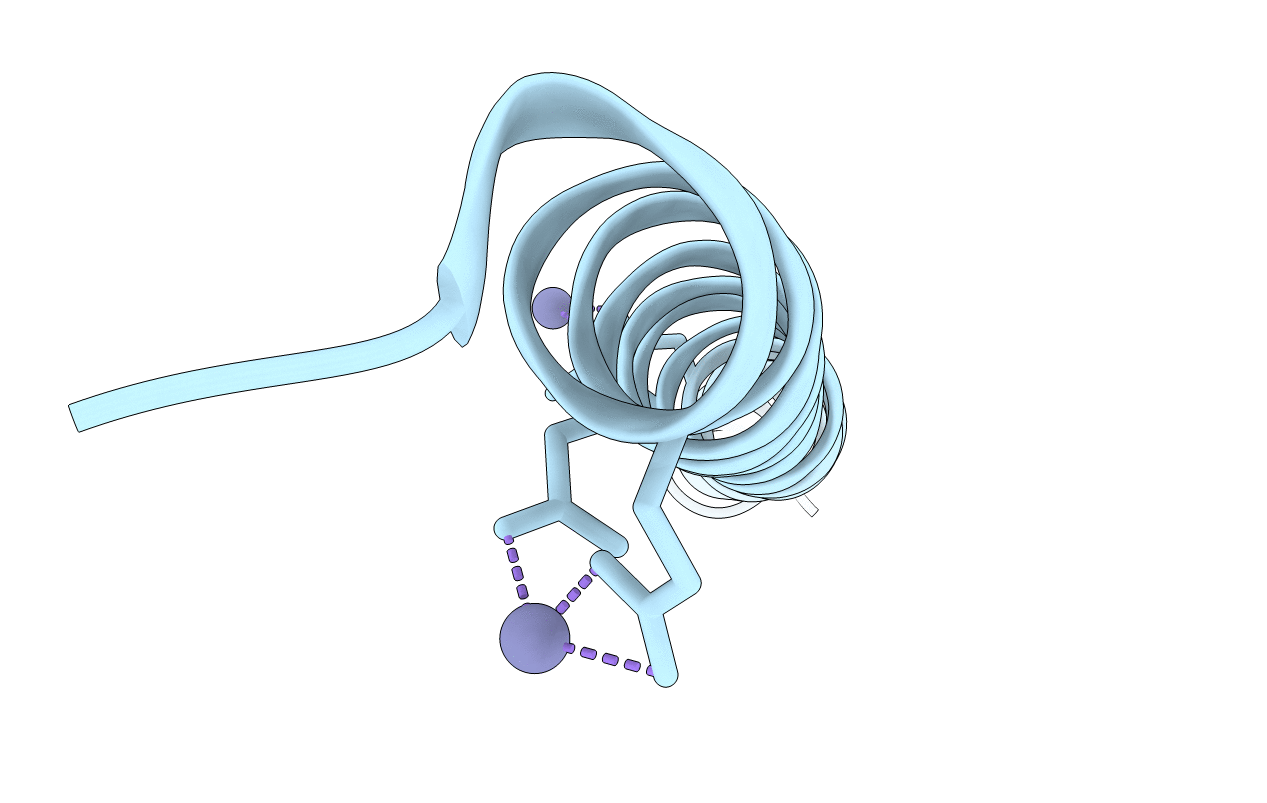
6SHK image
Deposition Date 2019-08-07
Release Date 2019-09-25
Last Version Date 2024-05-15
Entry Detail
PDB ID:
6SHK
Title:
High resolution structure of the antimicrobial peptide Dermcidin from human
Biological Source:
Source Organism:
Homo sapiens (Taxon ID: 9606)
Host Organism:
Method Details:
Experimental Method:
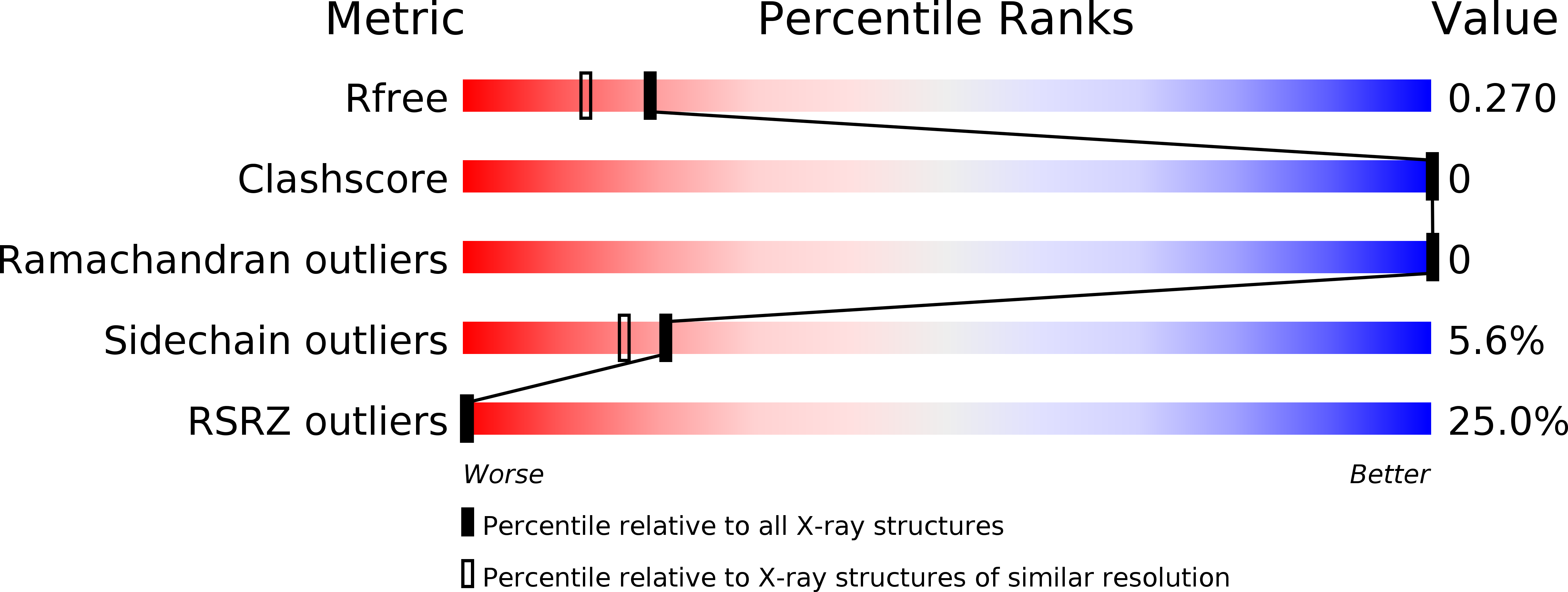
Resolution:
1.99 Å
R-Value Free:
0.27
R-Value Work:
0.28
R-Value Observed:
0.28
Space Group:
H 3 2
Macromolecular Entities
Structures with similar UniProt ID
Protein Blast
Polymer Type:polypeptide(L)
Molecule:Dermcidin
Gene (Uniprot):DCD
Chain IDs:A
Chain Length:48
Number of Molecules:1
Biological Source:Homo sapiens
Ligand Molecules
Primary Citation
Crystal structure and functional mechanism of a human antimicrobial membrane channel.
Proc.Natl.Acad.Sci.USA 110 4586 4591 (2013)
PMID: 23426625 DOI: 10.1073/pnas.1214739110

Abstact

Multicellular organisms fight bacterial and fungal infections by producing peptide-derived broad-spectrum antibiotics. These host-defense peptides compromise the integrity of microbial cell membranes and thus evade pathways by which bacteria develop rapid antibiotic resistance. Although more than 1,700 host-defense peptides have been identified, the structural and mechanistic basis of their action remains speculative. This impedes the desired rational development of these agents into next-generation antibiotics. We present the X-ray crystal structure as well as solid-state NMR spectroscopy, electrophysiology, and MD simulations of human dermcidin in membranes that reveal the antibiotic mechanism of this major human antimicrobial, found to suppress Staphylococcus aureus growth on the epidermal surface. Dermcidin forms an architecture of high-conductance transmembrane channels, composed of zinc-connected trimers of antiparallel helix pairs. Molecular dynamics simulations elucidate the unusual membrane permeation pathway for ions and show adjustment of the pore to various membranes. Our study unravels the comprehensive mechanism for the membrane-disruptive action of this mammalian host-defense peptide at atomistic level. The results may form a foundation for the structure-based design of peptide antibiotics.

Legend

Protein

Chemical

Disease

Primary Citation of related structures
Feedback Form
Name
Email
Institute
Feedback