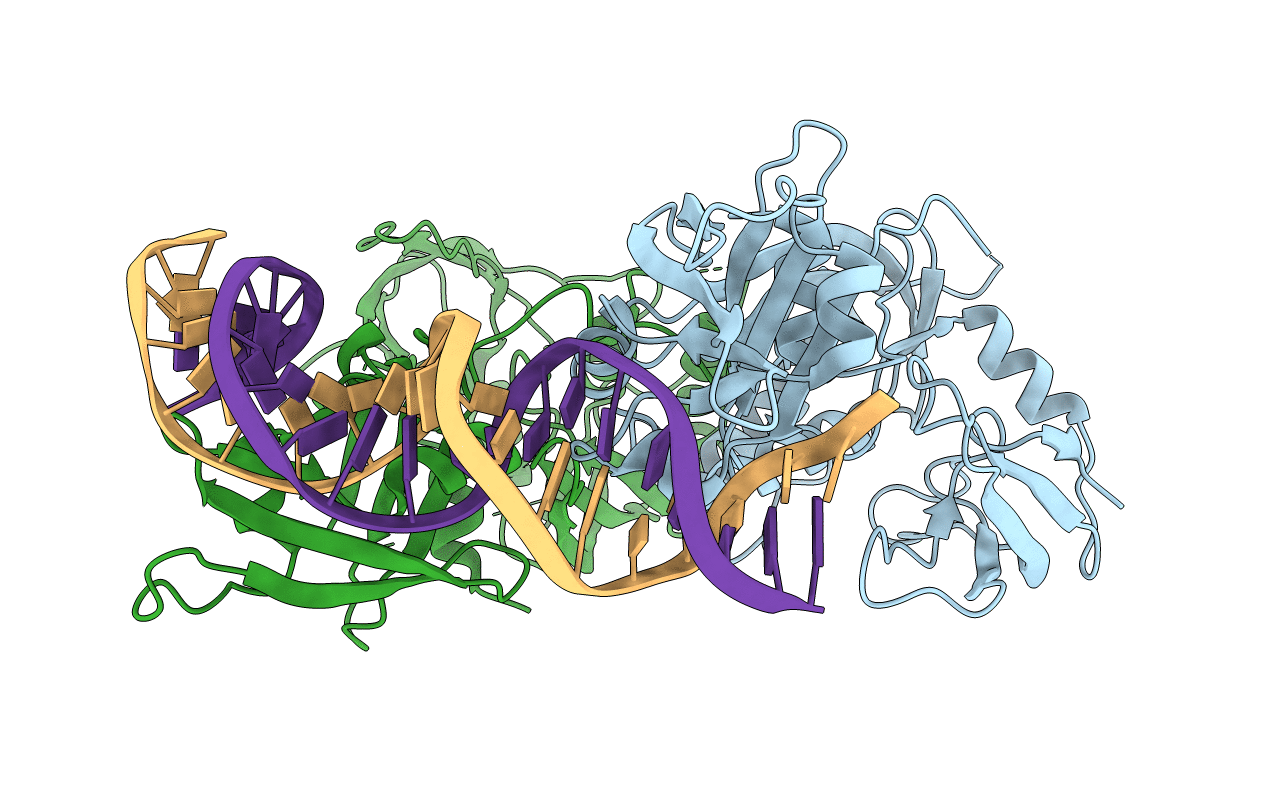
6SDG image
Deposition Date 2019-07-27
Release Date 2020-04-08
Last Version Date 2024-01-24
Entry Detail
PDB ID:
6SDG
Keywords:
Title:
Crystal structure of the DNA binding domain of M. polymorpha Auxin Response Factor 2 (MpARF2) in complex with High Affinity DNA
Biological Source:
Source Organism:
Method Details:
Experimental Method:
Resolution:
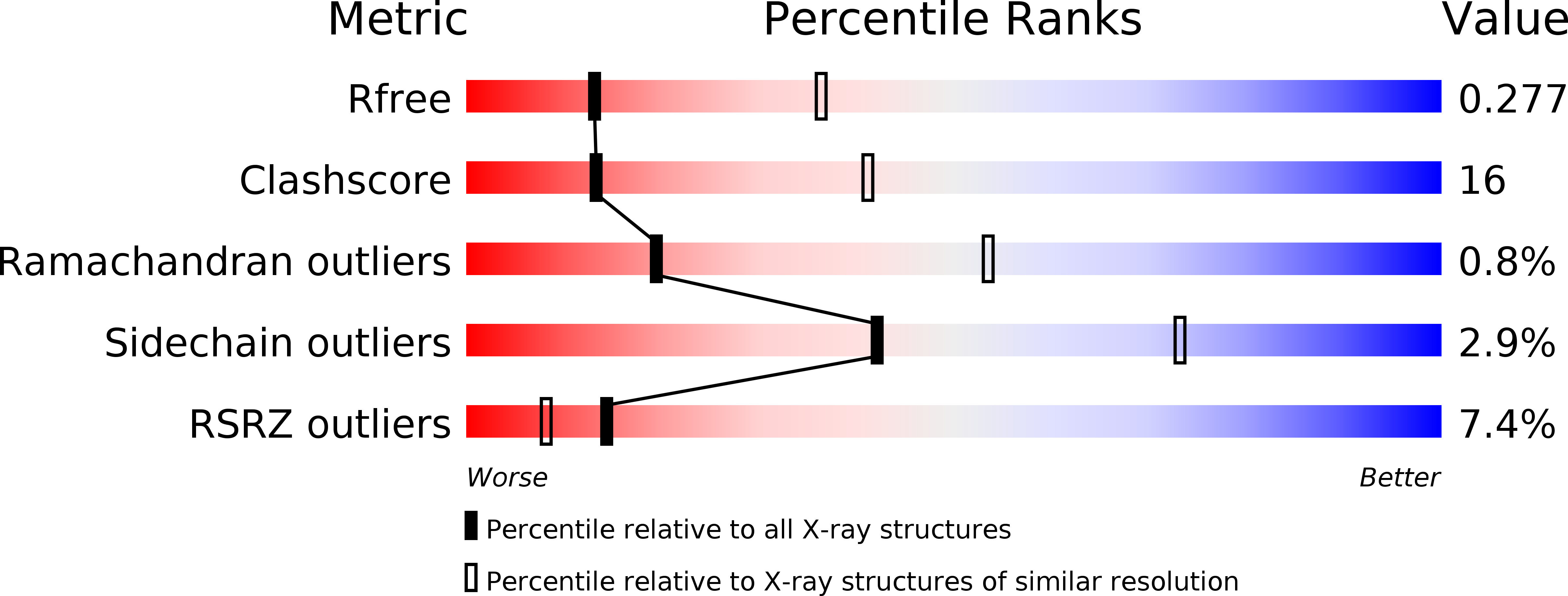
2.96 Å
R-Value Free:
0.27
R-Value Work:
0.21
R-Value Observed:
0.21
Space Group:
C 1 2 1
Macromolecular Entities
Structures with similar UniProt ID
Protein Blast
Polymer Type:polypeptide(L)
Molecule:Auxin response factor
Chain IDs:A, B
Chain Length:366
Number of Molecules:2
Biological Source:Marchantia polymorpha
Polymer Type:polydeoxyribonucleotide
Molecule:21-7_A
Chain IDs:C
Chain Length:21
Number of Molecules:1
Biological Source:Arabidopsis thaliana
Polymer Type:polydeoxyribonucleotide
Molecule:21-7_B
Chain IDs:D
Chain Length:21
Number of Molecules:1
Biological Source:Arabidopsis thaliana
Ligand Molecules
Primary Citation

Abstact

Auxin controls numerous growth processes in land plants through a gene expression system that modulates ARF transcription factor activity1-3. Gene duplications in families encoding auxin response components have generated tremendous complexity in most land plants, and neofunctionalization enabled various unique response outputs during development1,3,4. However, it is unclear what fundamental biochemical principles underlie this complex response system. By studying the minimal system in Marchantia polymorpha, we derive an intuitive and simple model where a single auxin-dependent A-ARF activates gene expression. It is antagonized by an auxin-independent B-ARF that represses common target genes. The expression patterns of both ARF proteins define developmental zones where auxin response is permitted, quantitatively tuned or prevented. This fundamental design probably represents the ancestral system and formed the basis for inflated, complex systems.

Legend

Protein

Chemical

Disease

Primary Citation of related structures
Feedback Form
Name
Email
Institute
Feedback