6S90 image
Deposition Date 2019-07-11
Release Date 2019-09-18
Last Version Date 2024-05-15
Entry Detail
PDB ID:
6S90
Keywords:
Title:
BTK in complex with an inhibitor
Biological Source:
Source Organism:
Homo sapiens (Taxon ID: 9606)
Host Organism:
Method Details:
Experimental Method:
Resolution:
1.82 Å
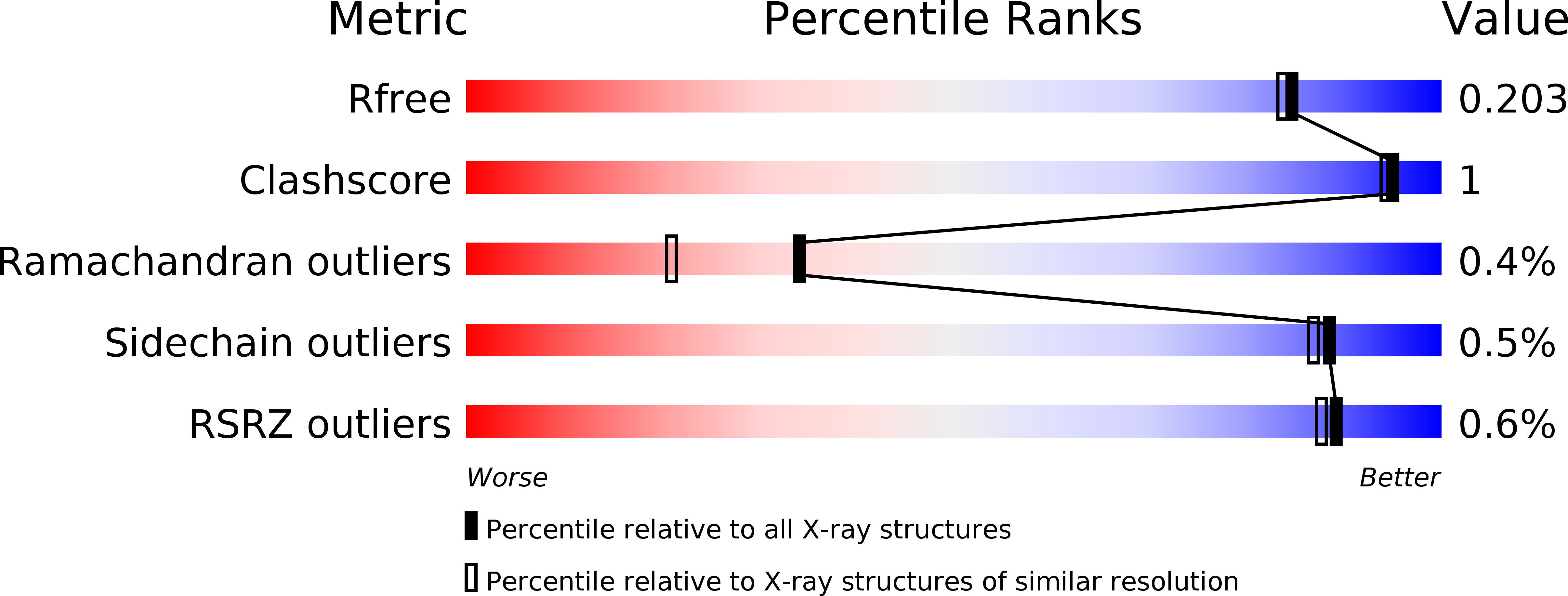
R-Value Free:
0.20
R-Value Work:
0.16
R-Value Observed:
0.16
Space Group:
C 1 2 1
Macromolecular Entities
Structures with similar UniProt ID
Protein Blast
Polymer Type:polypeptide(L)
Molecule:Tyrosine-protein kinase BTK
Gene (Uniprot):BTK
Chain IDs:A, B
Chain Length:266
Number of Molecules:2
Biological Source:Homo sapiens
Ligand Molecules
Primary Citation
Design of Potent and Selective Covalent Inhibitors of Bruton's Tyrosine Kinase Targeting an Inactive Conformation.
Acs Med.Chem.Lett. 10 1467 1472 (2019)
PMID: 31620235 DOI: 10.1021/acsmedchemlett.9b00317

Abstact

Bruton's tyrosine kinase (BTK) is a member of the TEC kinase family and is selectively expressed in a subset of immune cells. It is a key regulator of antigen receptor signaling in B cells and of Fc receptor signaling in mast cells and macrophages. A BTK inhibitor will likely have a positive impact on autoimmune diseases which are caused by autoreactive B cells and immune-complex driven inflammation. We report the design, optimization, and characterization of potent and selective covalent BTK inhibitors. Starting from the selective reversible inhibitor 3 binding to an inactive conformation of BTK, we designed covalent irreversible compounds by attaching an electrophilic warhead to reach Cys481. The first prototype 4 covalently modified BTK and showed an excellent kinase selectivity including several Cys-containing kinases, validating the design concept. In addition, this compound blocked FcγR-mediated hypersensitivity in vivo. Optimization of whole blood potency and metabolic stability resulted in compounds such as 8, which maintained the excellent kinase selectivity and showed improved BTK occupancy in vivo.

Legend

Protein

Chemical

Disease

Primary Citation of related structures
Feedback Form
Name
Email
Institute
Feedback