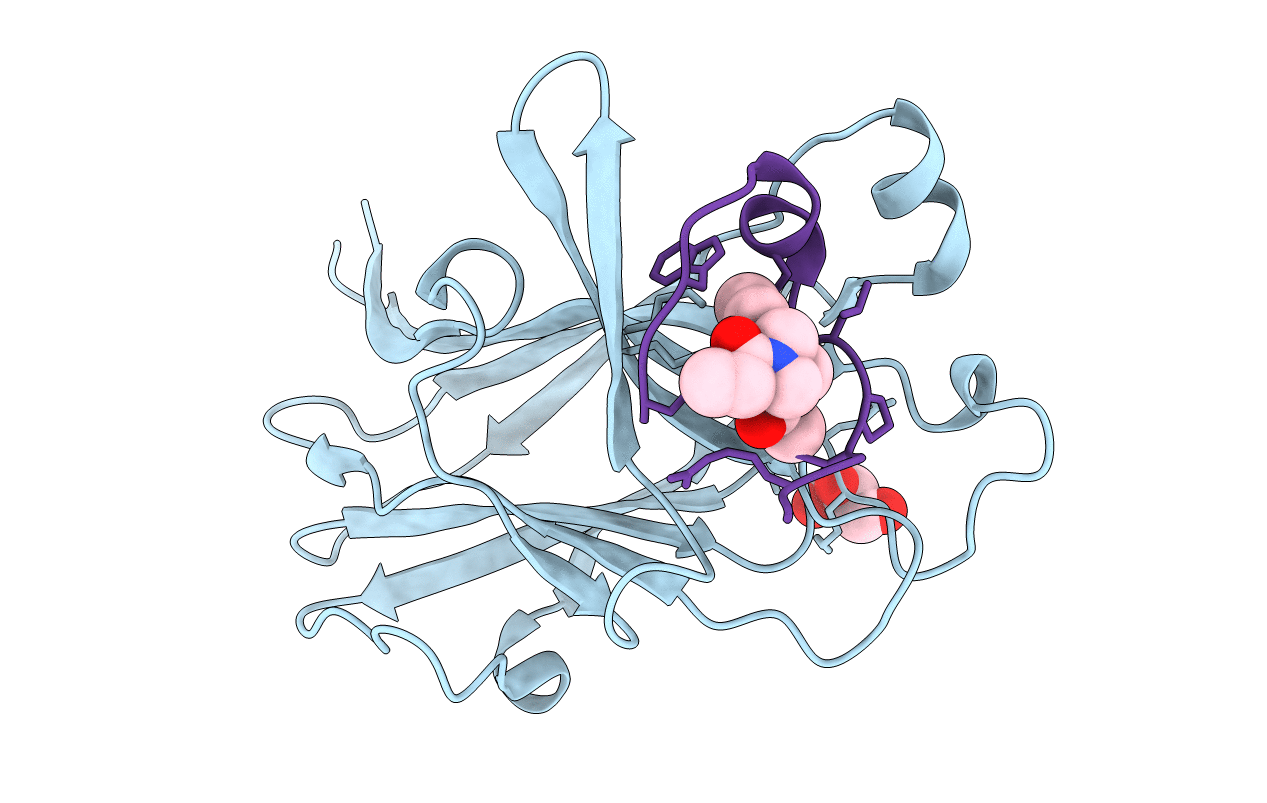
6RW2 image
Deposition Date 2019-06-03
Release Date 2020-04-08
Last Version Date 2024-10-16
Entry Detail
PDB ID:
6RW2
Title:
Bicycle Toxin Conjugate bound to EphA2
Biological Source:
Source Organism:
Host Organism:
Method Details:
Experimental Method:
Resolution:
2.26 Å
R-Value Free:
0.26
R-Value Work:
0.21
R-Value Observed:
0.21
Space Group:
I 2 2 2
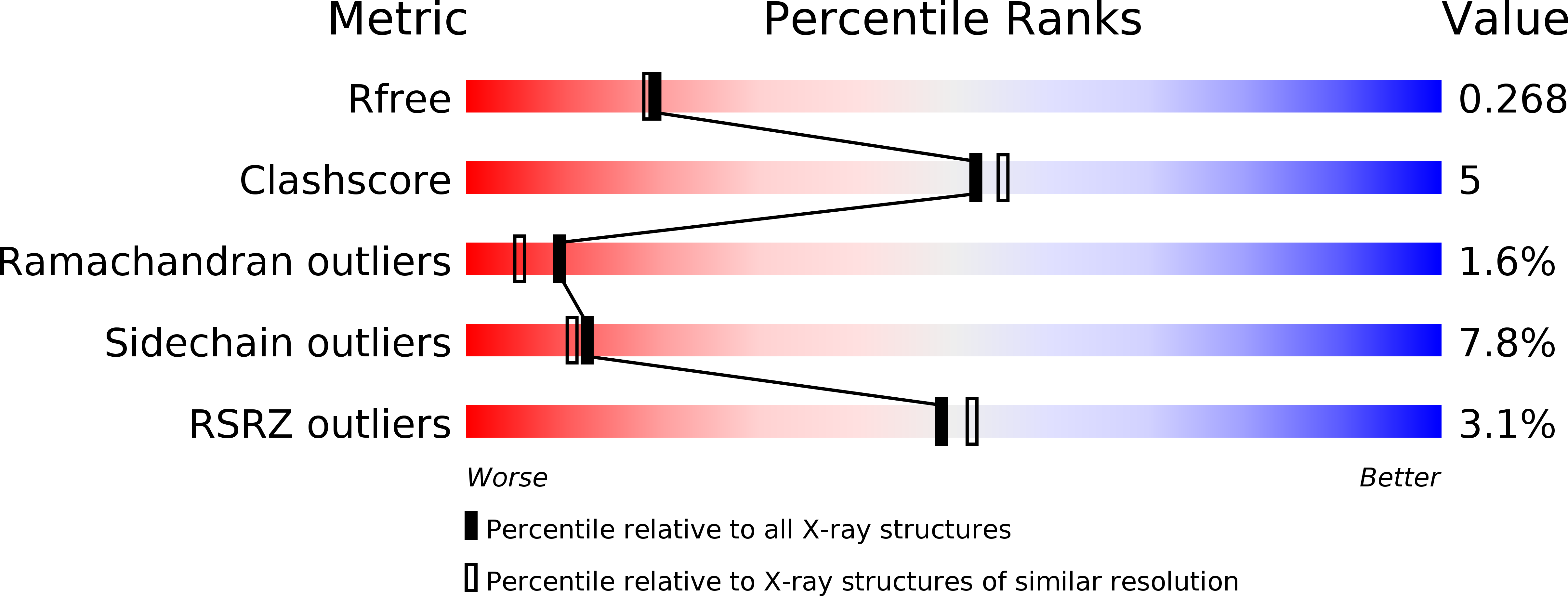
Macromolecular Entities
Structures with similar UniProt ID
Protein Blast
Polymer Type:polypeptide(L)
Molecule:Ephrin type-A receptor 2
Gene (Uniprot):EPHA2
Chain IDs:A
Chain Length:193
Number of Molecules:1
Biological Source:Homo sapiens
Polymer Type:polypeptide(L)
Molecule:ALA-ARG-ASP-CYS-PRO-LEU-VAL-ASN-PRO-LEU-CYS-LEU-HIS-PRO-GLY-TRP-THR-CYS
Chain IDs:B
Chain Length:18
Number of Molecules:1
Biological Source:synthetic construct
Primary Citation
Identification and Optimization of EphA2-Selective Bicycles for the Delivery of Cytotoxic Payloads.
J.Med.Chem. 63 4107 4116 (2020)
PMID: 32202781 DOI: 10.1021/acs.jmedchem.9b02129

Abstact

Bicycles are constrained bicyclic peptides that represent a promising binding modality for use in targeted drug conjugates. A phage display screen against EphA2, a receptor tyrosine kinase highly expressed in a number of solid tumors, identified a number of Bicycle families with low nanomolar affinity. A Bicycle toxin conjugate (BTC) was generated by derivatization of one of these Bicycles with the potent cytotoxin DM1 via a cleavable linker. This BTC demonstrated potent antitumor activity in vivo but was poorly tolerated, which was hypothesized to be the result of undesired liver uptake caused by poor physicochemical properties. Chemical optimization of a second Bicycle, guided by structural biology, provided a high affinity, metabolically stable Bicycle with improved physicochemical properties. A BTC incorporating this Bicycle also demonstrated potent antitumor activity and was very well tolerated when compared to the initial BTC. Phage display selection followed by chemical optimization of Bicycles can deliver potent drug conjugates with favorable pharmaceutical properties.

Legend

Protein

Chemical

Disease

Primary Citation of related structures
Feedback Form
Name
Email
Institute
Feedback