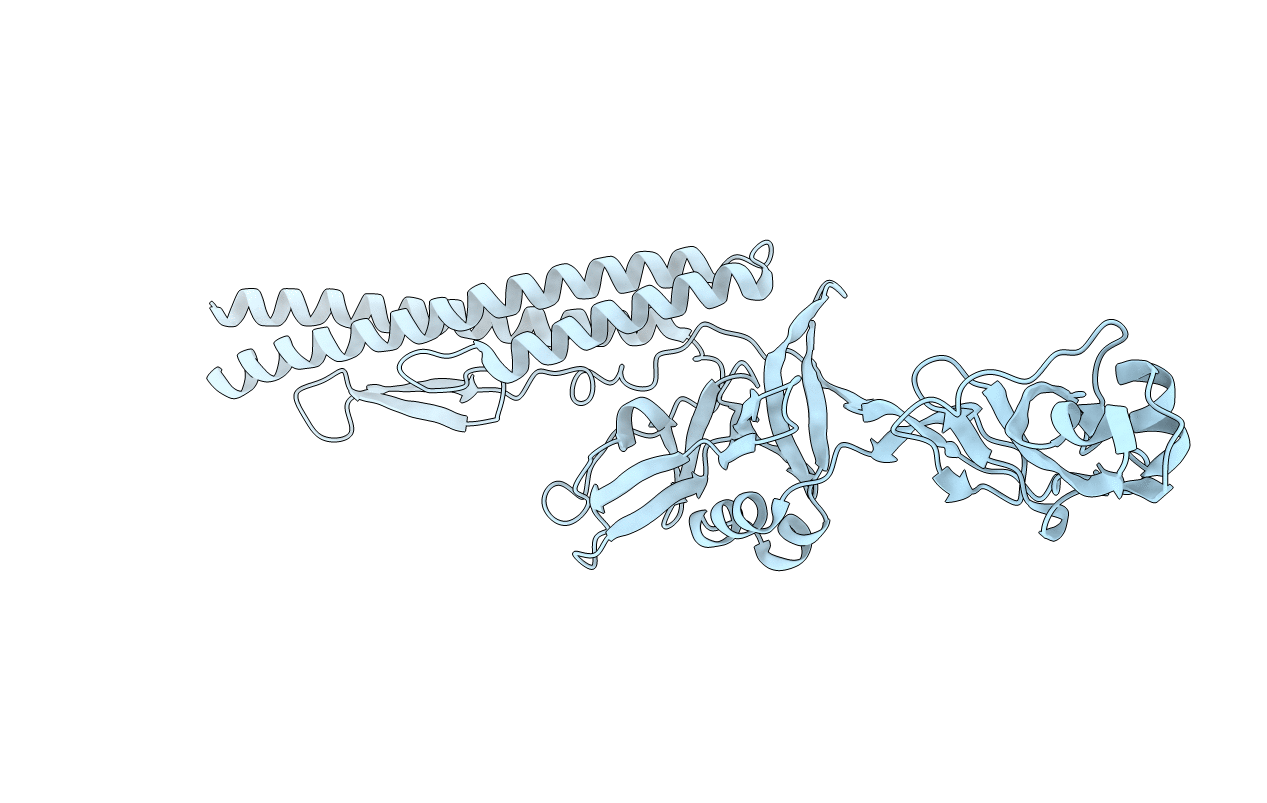
6RGV image
Deposition Date 2019-04-17
Release Date 2020-03-11
Last Version Date 2024-01-24
Entry Detail
PDB ID:
6RGV
Title:
Truncated FljB phase 2 flagellin
Biological Source:
Source Organism:
Host Organism:
Method Details:
Experimental Method:
Resolution:
2.00 Å
R-Value Free:
0.25
R-Value Work:
0.21
Space Group:
C 1 2 1

Macromolecular Entities
Structures with similar UniProt ID
Protein Blast
Polymer Type:polypeptide(L)
Molecule:Flagellin
Mutagens:A190V
Chain IDs:A
Chain Length:431
Number of Molecules:1
Biological Source:Salmonella typhimurium (strain SL1344)
Primary Citation
Methylation of Salmonella Typhimurium flagella promotes bacterial adhesion and host cell invasion.
Nat Commun 11 2013 2013 (2020)
PMID: 32332720 DOI: 10.1038/s41467-020-15738-3

Abstact

The long external filament of bacterial flagella is composed of several thousand copies of a single protein, flagellin. Here, we explore the role played by lysine methylation of flagellin in Salmonella, which requires the methylase FliB. We show that both flagellins of Salmonella enterica serovar Typhimurium, FliC and FljB, are methylated at surface-exposed lysine residues by FliB. A Salmonella Typhimurium mutant deficient in flagellin methylation is outcompeted for gut colonization in a gastroenteritis mouse model, and methylation of flagellin promotes bacterial invasion of epithelial cells in vitro. Lysine methylation increases the surface hydrophobicity of flagellin, and enhances flagella-dependent adhesion of Salmonella to phosphatidylcholine vesicles and epithelial cells. Therefore, posttranslational methylation of flagellin facilitates adhesion of Salmonella Typhimurium to hydrophobic host cell surfaces, and contributes to efficient gut colonization and host infection.

Legend

Protein

Chemical

Disease

Primary Citation of related structures
Feedback Form
Name
Email
Institute
Feedback