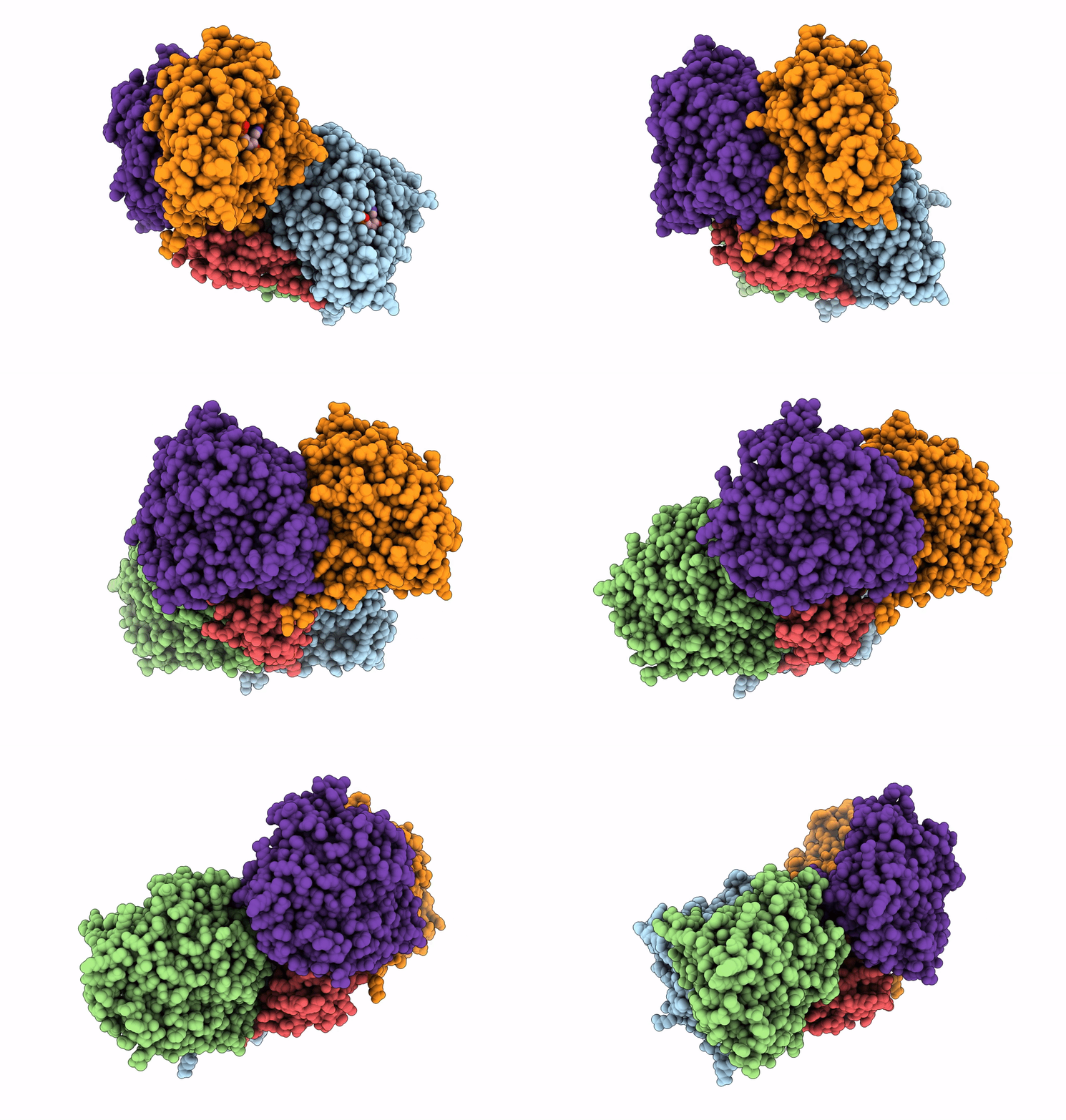
6REV image
Deposition Date 2019-04-12
Release Date 2020-05-13
Last Version Date 2024-05-22
Entry Detail
PDB ID:
6REV
Title:
Cryo-EM structure of the N-terminal DC repeat (NDC) of human doublecortin (DCX) bound to 13-protofilament GDP-microtubule
Biological Source:
Source Organism:
Homo sapiens (Taxon ID: 9606)
Bos taurus (Taxon ID: 9913)
Host Organism:
Method Details:
Experimental Method:
Resolution:
3.80 Å
Aggregation State:
FILAMENT
Reconstruction Method:
SINGLE PARTICLE

Macromolecular Entities
Structures with similar UniProt ID
Protein Blast
Polymer Type:polypeptide(L)
Molecule:Tubulin alpha-1B chain
Chain IDs:C (auth: A), E (auth: a)
Chain Length:432
Number of Molecules:2
Biological Source:Bos taurus
Structures with similar UniProt ID
Protein Blast
Polymer Type:polypeptide(L)
Molecule:Neuronal migration protein doublecortin
Gene (Uniprot):DCX
Chain IDs:A (auth: N)
Chain Length:99
Number of Molecules:1
Biological Source:Homo sapiens
Structures with similar UniProt ID
Protein Blast
Polymer Type:polypeptide(L)
Molecule:Tubulin beta-2B chain
Gene (Uniprot):TUBB2B
Chain IDs:B (auth: b), D (auth: B)
Chain Length:429
Number of Molecules:2
Biological Source:Bos taurus
Primary Citation
Pseudo-repeats in doublecortin make distinct mechanistic contributions to microtubule regulation.
Embo Rep. 21 e51534 e51534 (2020)
PMID: 33051979 DOI: 10.15252/embr.202051534

Abstact

Doublecortin (DCX) is a neuronal microtubule-associated protein (MAP) indispensable for brain development. Its flexibly linked doublecortin (DC) domains-NDC and CDC-mediate microtubule (MT) nucleation and stabilization, but it is unclear how. Using high-resolution time-resolved cryo-EM, we mapped NDC and CDC interactions with tubulin at different MT polymerization stages and studied their functional effects on MT dynamics using TIRF microscopy. Although coupled, each DC repeat within DCX appears to have a distinct role in MT nucleation and stabilization: CDC is a conformationally plastic module that appears to facilitate MT nucleation and stabilize tubulin-tubulin contacts in the nascent MT lattice, while NDC appears to be favored along the mature lattice, providing MT stabilization. Our structures of MT-bound DC domains also explain in unprecedented detail the DCX mutation-related brain defects observed in the clinic. This modular composition of DCX reflects a common design principle among MAPs where pseudo-repeats of tubulin/MT binding elements chaperone or stabilize distinct conformational transitions to regulate distinct stages of MT dynamic instability.

Legend

Protein

Chemical

Disease

Primary Citation of related structures
Feedback Form
Name
Email
Institute
Feedback