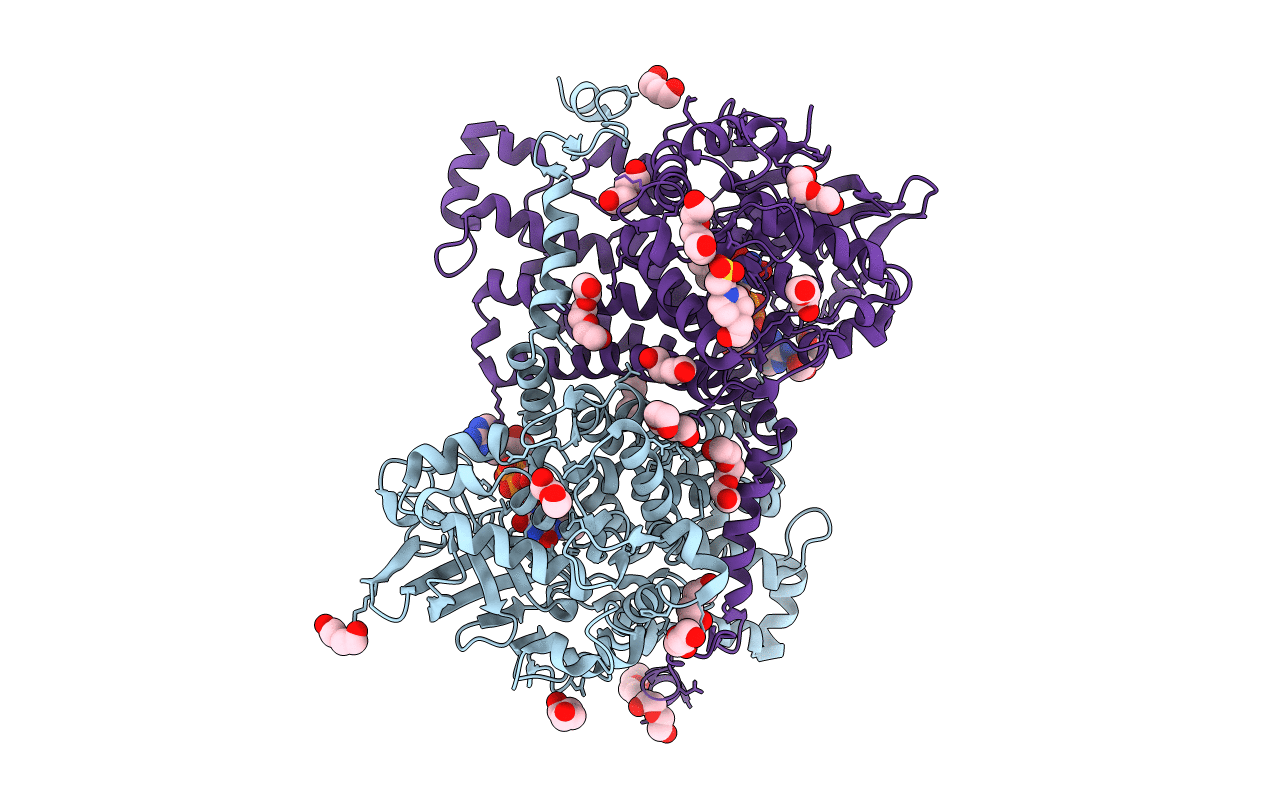
6QYI image
Deposition Date 2019-03-09
Release Date 2019-06-12
Last Version Date 2024-05-15
Entry Detail
PDB ID:
6QYI
Keywords:
Title:
Structure of HPAB from E.coli in complex with FAD
Biological Source:
Source Organism:
Escherichia coli (Taxon ID: 562)
Host Organism:
Method Details:
Experimental Method:
Resolution:
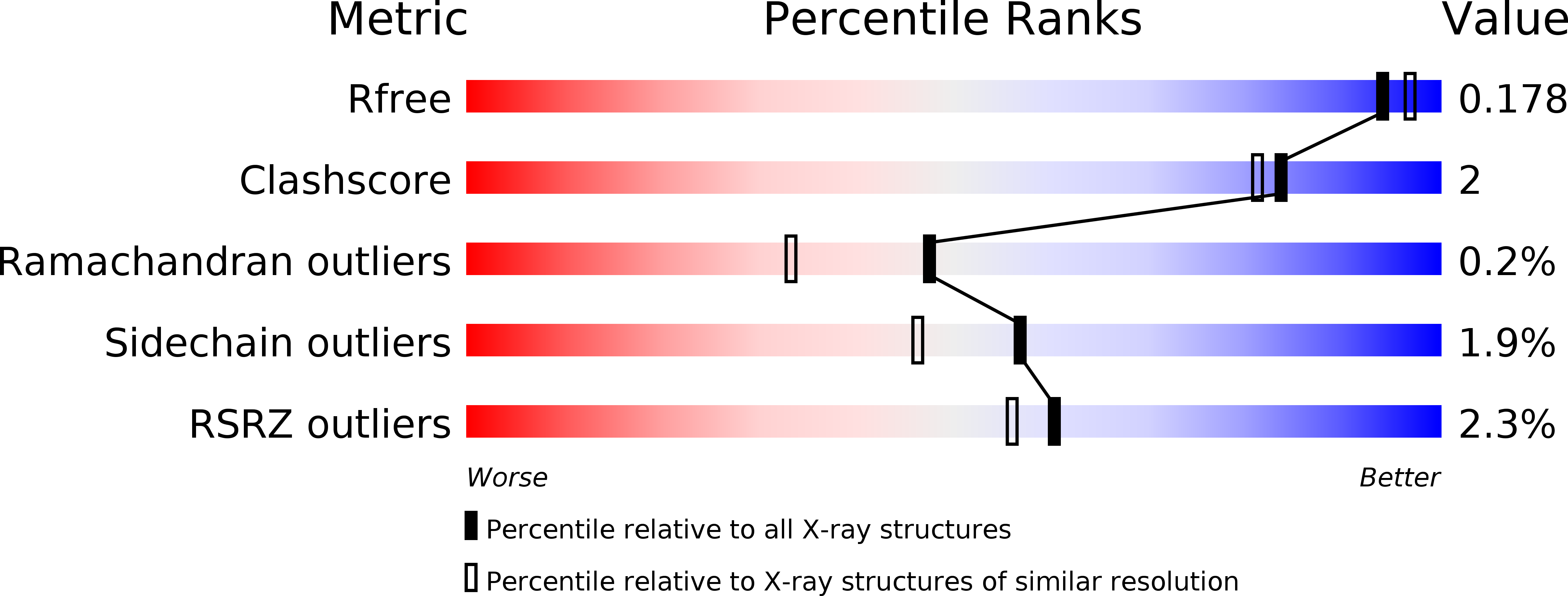
1.80 Å
R-Value Free:
0.17
R-Value Work:
0.16
R-Value Observed:
0.16
Space Group:
P 65 2 2
Macromolecular Entities
Structures with similar UniProt ID
Protein Blast
Polymer Type:polypeptide(L)
Molecule:4-hydroxyphenylacetate 3-monooxygenase oxygenase component
Chain IDs:A, B
Chain Length:520
Number of Molecules:2
Biological Source:Escherichia coli
Primary Citation
Structural and Functional Characterization of 4-Hydroxyphenylacetate 3-Hydroxylase from Escherichia coli.
Chembiochem 21 163 170 (2020)
PMID: 31155821 DOI: 10.1002/cbic.201900277

Abstact

The hydroxylation of phenols into polyphenols, which are valuable chemicals and pharmaceutical products, is a challenging reaction. The search for green synthetic processes has led to considering microorganisms and pure hydroxylases as catalysts for phenol hydroxylation. Herein, we report the structural and functional characterization of the flavin adenine dinucleotide (FAD)-dependent 4-hydroxyphenylacetate 3-monooxygenase from Escherichia coli, named HpaB. It is shown that this enzyme enjoys a relatively broad substrate specificity, which allows the conversion of a number of non-natural phenolic compounds, such as tyrosol, hydroxymandelic acid, coumaric acid, hydroxybenzoic acid and its methyl ester, and phenol, into the corresponding catechols. The reaction can be performed by using a simple chemical assay based on formate as the electron donor and the organometallic complex [Rh(bpy)Cp*(H2 O)]2+ (Cp*: 1,2,3,4,5-pentamethylcyclopentadiene, bpy: 2,2'-bipyridyl) as the catalyst for FAD reduction. The availability of a crystal structure of HpaB in complex with FAD at 1.8 Å resolution opens up the possibility of the rational tuning of the substrate specificity and activity of this interesting class of phenol hydroxylases.

Legend

Protein

Chemical

Disease

Primary Citation of related structures
Feedback Form
Name
Email
Institute
Feedback