6QXH image
Deposition Date 2019-03-07
Release Date 2019-04-10
Last Version Date 2024-01-24
Entry Detail
PDB ID:
6QXH
Keywords:
Title:
Crystal structure of His-tag human thymidylate synthase (HT-hTS) in complex with dUMP
Biological Source:
Source Organism:
Homo sapiens (Taxon ID: 9606)
Method Details:
Experimental Method:
Resolution:
2.04 Å
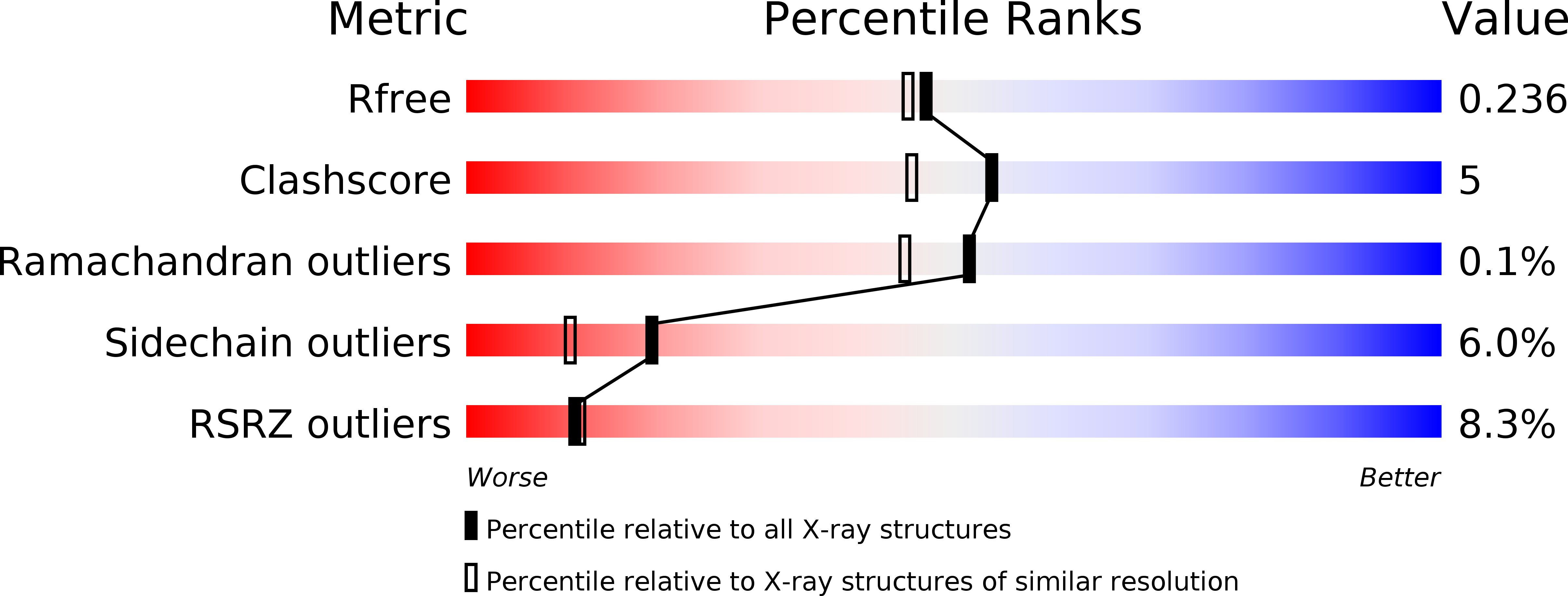
R-Value Free:
0.23
R-Value Work:
0.18
R-Value Observed:
0.19
Space Group:
C 1 2 1
Macromolecular Entities
Structures with similar UniProt ID
Protein Blast
Polymer Type:polypeptide(L)
Molecule:Thymidylate synthase
Gene (Uniprot):TYMS
Chain IDs:A, B, C
Chain Length:325
Number of Molecules:3
Biological Source:Homo sapiens
Modified Residue
Compound ID Chain ID Parent Comp ID Details 2D Image
SCH A CYS modified residue
Primary Citation
Structural Comparison ofEnterococcus faecalisand Human Thymidylate Synthase Complexes with the Substrate dUMP and Its Analogue FdUMP Provides Hints about Enzyme Conformational Variabilities.
Molecules 24 ? ? (2019)
PMID: 30935102 DOI: 10.3390/molecules24071257

Abstact

Thymidylate synthase (TS) is an enzyme of paramount importance as it provides the only de novo source of deoxy-thymidine monophosphate (dTMP). dTMP, essential for DNA synthesis, is produced by the TS-catalyzed reductive methylation of 2'-deoxyuridine-5'-monophosphate (dUMP) using N⁵,N10-methylenetetrahydrofolate (mTHF) as a cofactor. TS is ubiquitous and a validated drug target. TS enzymes from different organisms differ in sequence and structure, but are all obligate homodimers. The structural and mechanistic differences between the human and bacterial enzymes are exploitable to obtain selective inhibitors of bacterial TSs that can enrich the currently available therapeutic tools against bacterial infections. Enterococcus faecalis is a pathogen fully dependent on TS for dTMP synthesis. In this study, we present four new crystal structures of Enterococcus faecalis and human TSs in complex with either the substrate dUMP or the inhibitor FdUMP. The results provide new clues about the half-site reactivity of Enterococcus faecalis TS and the mechanisms underlying the conformational changes occurring in the two enzymes. We also identify relevant differences in cofactor and inhibitor binding between Enterococcus faecalis and human TS that can guide the design of selective inhibitors against bacterial TSs.

Legend

Protein

Chemical

Disease

Primary Citation of related structures
Feedback Form
Name
Email
Institute
Feedback