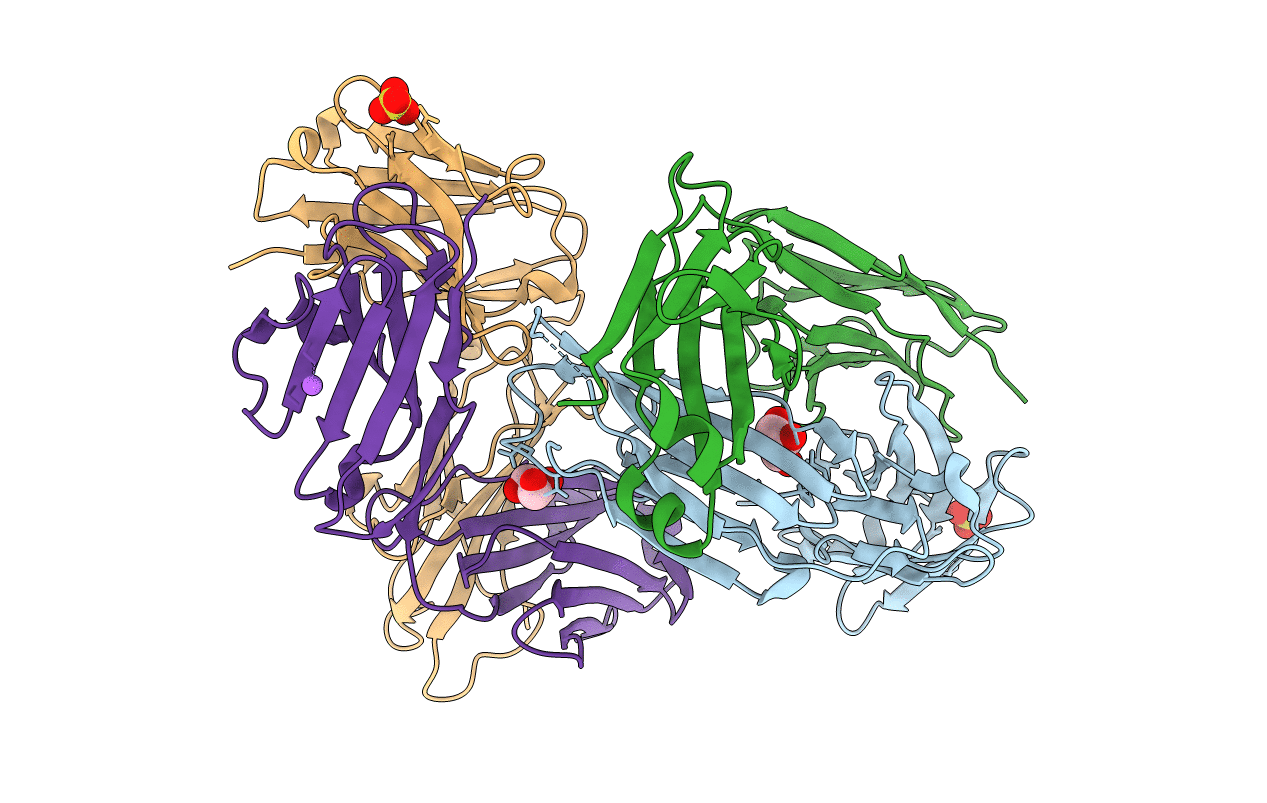
6QU9 image
Deposition Date 2019-02-26
Release Date 2020-03-18
Last Version Date 2024-11-20
Entry Detail
PDB ID:
6QU9
Keywords:
Title:
Fab fragment of an antibody that inhibits polymerisation of alpha-1-antitrypsin
Biological Source:
Source Organism:
Mus musculus (Taxon ID: 10090)
Method Details:
Experimental Method:
Resolution:
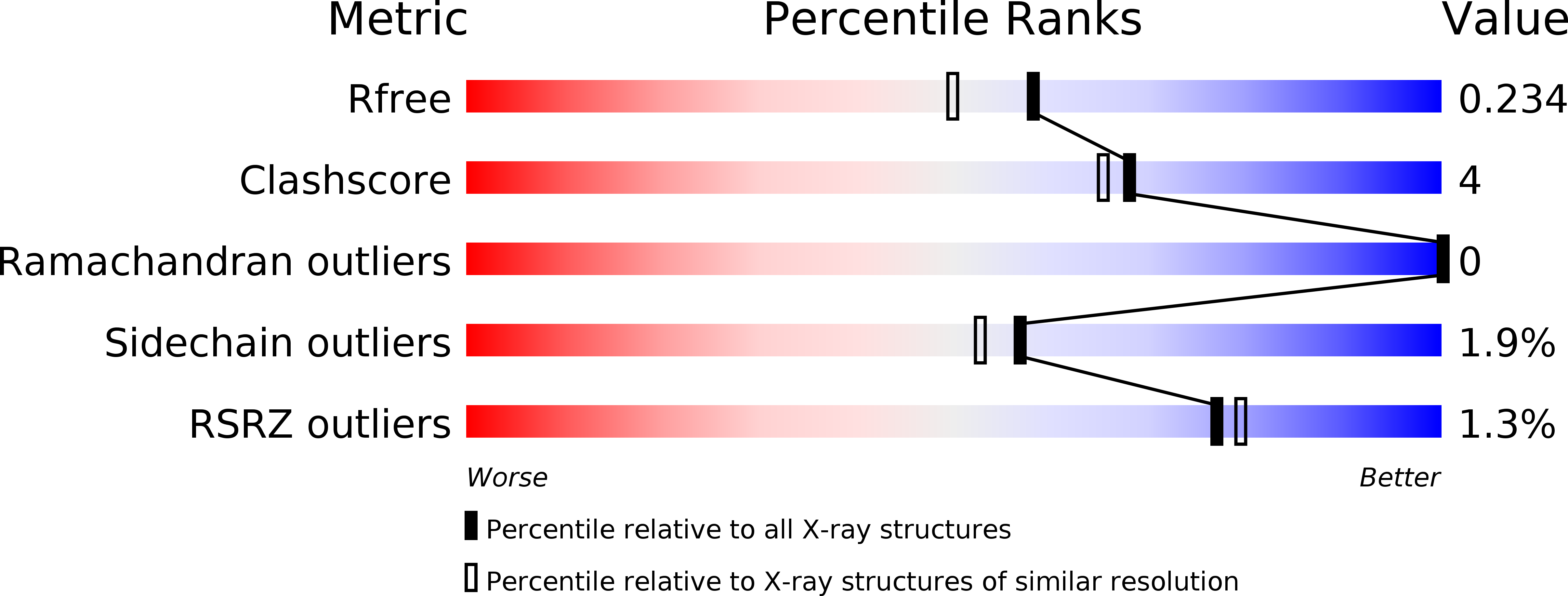
1.90 Å
R-Value Free:
0.23
R-Value Work:
0.20
R-Value Observed:
0.20
Space Group:
P 21 21 21
Macromolecular Entities
Polymer Type:polypeptide(L)
Molecule:FAB 4B12 heavy chain
Chain IDs:A (auth: H), C (auth: A)
Chain Length:215
Number of Molecules:2
Biological Source:Mus musculus
Polymer Type:polypeptide(L)
Molecule:FAB 4B12 light chain
Chain IDs:B (auth: L), D (auth: B)
Chain Length:212
Number of Molecules:2
Biological Source:Mus musculus
Primary Citation
The structural basis for Z alpha 1 -antitrypsin polymerization in the liver.
Sci Adv 6 ? ? (2020)
PMID: 33087346 DOI: 10.1126/sciadv.abc1370

Abstact

The serpinopathies are among a diverse set of conformational diseases that involve the aberrant self-association of proteins into ordered aggregates. α1-Antitrypsin deficiency is the archetypal serpinopathy and results from the formation and deposition of mutant forms of α1-antitrypsin as "polymer" chains in liver tissue. No detailed structural analysis has been performed of this material. Moreover, there is little information on the relevance of well-studied artificially induced polymers to these disease-associated molecules. We have isolated polymers from the liver tissue of Z α1-antitrypsin homozygotes (E342K) who have undergone transplantation, labeled them using a Fab fragment, and performed single-particle analysis of negative-stain electron micrographs. The data show structural equivalence between heat-induced and ex vivo polymers and that the intersubunit linkage is best explained by a carboxyl-terminal domain swap between molecules of α1-antitrypsin.

Legend

Protein

Chemical

Disease

Primary Citation of related structures
Feedback Form
Name
Email
Institute
Feedback