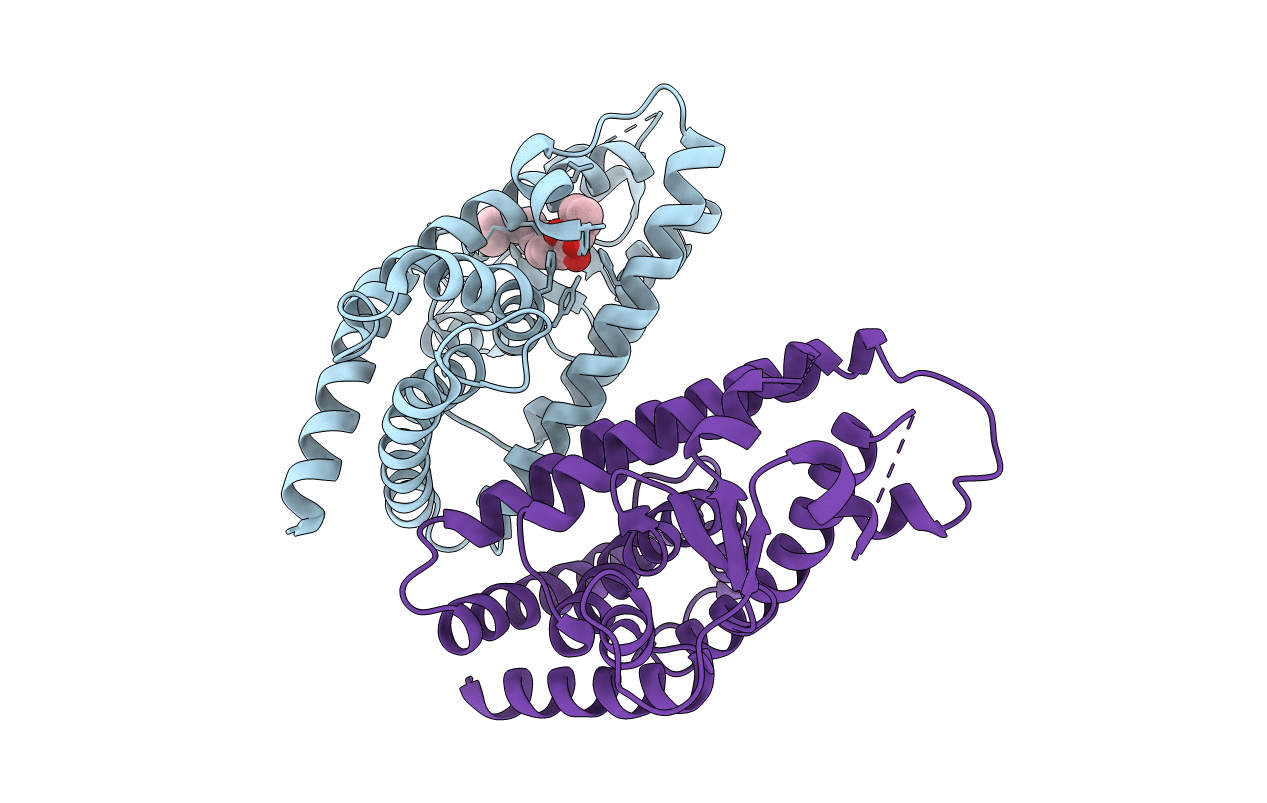
6QJ5 image
Deposition Date 2019-01-22
Release Date 2020-02-05
Last Version Date 2024-01-24
Entry Detail
PDB ID:
6QJ5
Title:
X-ray structure of PPARgamma LBD with the ligand NV1380
Biological Source:
Source Organism(s):
Homo sapiens (Taxon ID: 9606)
Expression System(s):
Method Details:
Experimental Method:
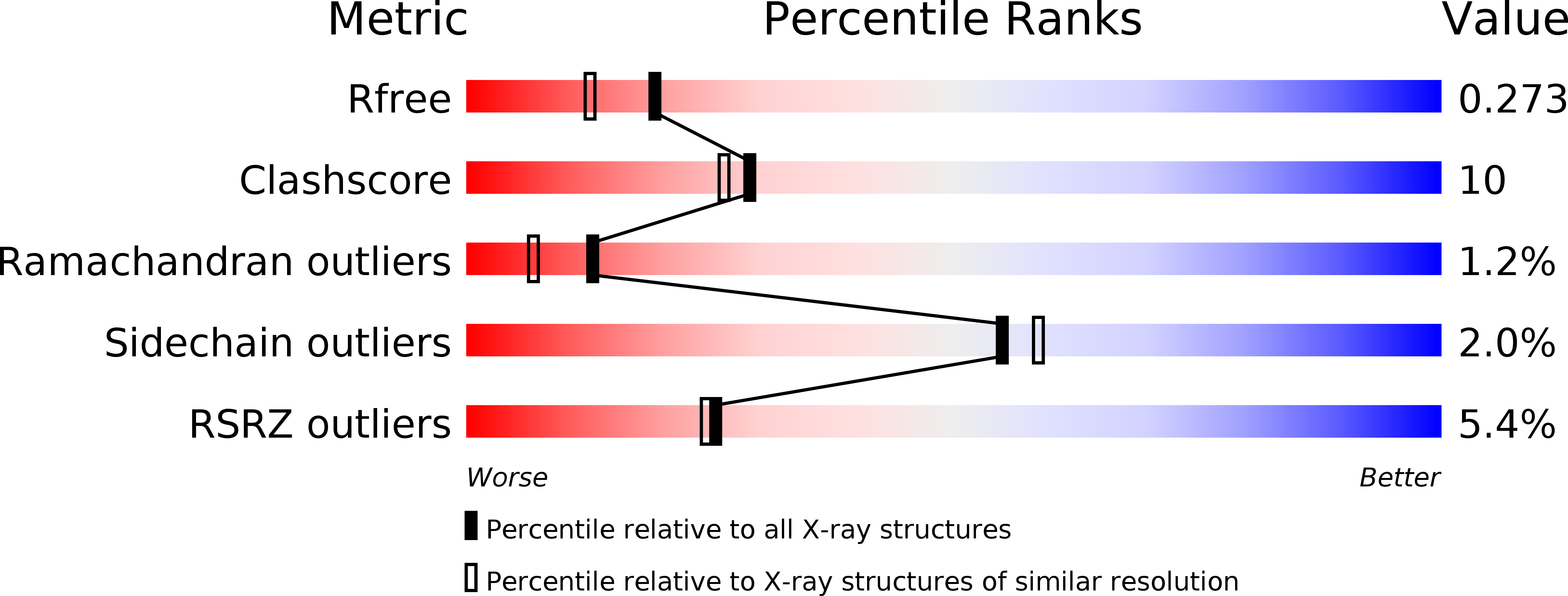
Resolution:
2.00 Å
R-Value Free:
0.27
R-Value Work:
0.23
R-Value Observed:
0.23
Space Group:
C 1 2 1
Macromolecular Entities
Structures with similar UniProt ID
Protein Blast
Polymer Type:polypeptide(L)
Molecule:Peroxisome proliferator-activated receptor gamma
Gene (Uniprot):PPARG
Chain IDs:A, B
Chain Length:304
Number of Molecules:2
Biological Source:Homo sapiens
Ligand Molecules
Primary Citation
A Novel N-Substituted Valine Derivative with Unique Peroxisome Proliferator-Activated Receptor gamma Binding Properties and Biological Activities.
J.Med.Chem. 63 13124 13139 (2020)
PMID: 33142057 DOI: 10.1021/acs.jmedchem.0c01555

Abstact

A proprietary library of novel N-aryl-substituted amino acid derivatives bearing a hydroxamate head group allowed the identification of compound 3a that possesses weak proadipogenic and peroxisome proliferator-activated receptor γ (PPARγ) activating properties. The systematic optimization of 3a, in order to improve its PPARγ agonist activity, led to the synthesis of compound 7j (N-aryl-substituted valine derivative) that possesses dual PPARγ/PPARα agonistic activity. Structural and kinetic analyses reveal that 7j occupies the typical ligand binding domain of the PPARγ agonists with, however, a unique high-affinity binding mode. Furthermore, 7j is highly effective in preventing cyclin-dependent kinase 5-mediated phosphorylation of PPARγ serine 273. Although less proadipogenic than rosiglitazone, 7j significantly increases adipocyte insulin-stimulated glucose uptake and efficiently promotes white-to-brown adipocyte conversion. In addition, 7j prevents oleic acid-induced lipid accumulation in hepatoma cells. The unique biochemical properties and biological activities of compound 7j suggest that it would be a promising candidate for the development of compounds to reduce insulin resistance, obesity, and nonalcoholic fatty liver disease.

Legend

Protein

Chemical

Disease

Primary Citation of related structures
Feedback Form
Name
Email
Institute
Feedback