6QHN image
Deposition Date 2019-01-17
Release Date 2020-02-05
Last Version Date 2024-01-24
Entry Detail
PDB ID:
6QHN
Keywords:
Title:
Metagenome-derived salicylaldehyde dehydrogenase from alpine soil in complex with protocatechuic acid
Biological Source:
Source Organism:
Host Organism:
Method Details:
Experimental Method:
Resolution:
1.90 Å
R-Value Free:
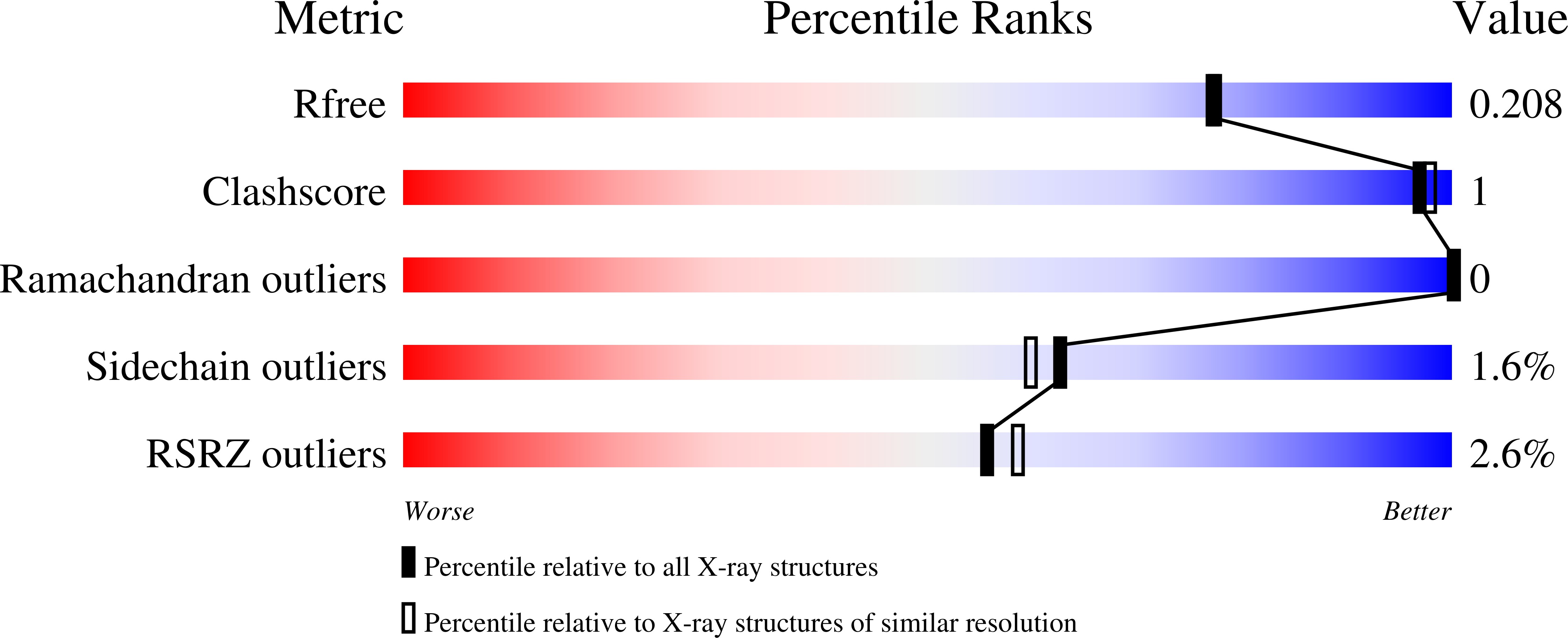
0.20
R-Value Work:
0.18
R-Value Observed:
0.18
Space Group:
C 2 2 21
Macromolecular Entities
Polymer Type:polypeptide(L)
Molecule:SALICYLALDEHYDE DEHYDROGENASE
Chain IDs:A, B, C, D
Chain Length:470
Number of Molecules:4
Biological Source:Alphaproteobacteria
Primary Citation
Expression, purification and crystallization of a novel metagenome-derived salicylaldehyde dehydrogenase from Alpine soil.
Acta Crystallogr.,Sect.F 78 161 169 (2022)
PMID: 35400668 DOI: 10.1107/S2053230X22002345

Abstact

Salicylaldehyde dehydrogenase (SALD) catalyses the last reaction in the upper pathway of naphthalene degradation: the oxidation of salicylaldehyde to salicylate. This enzyme has been isolated and studied from a few organisms that belong to the betaproteobacteria and gammaproteobacteria, predominantly Pseudomonas putida. Furthermore, there is only one crystal structure of this enzyme, which was obtained from P. putida G7. Here, crystallographic studies and analysis of the crystal structure of an Alpine soil metagenome-derived SALD (SALDAP) from an alphaproteobacterium are presented. The SALDAP gene was discovered using gene-targeted sequence assembly and it was cloned into a pLATE51 vector. The recombinant protein was overexpressed in Escherichia coli BL21 (DE3) cells and the soluble protein was purified to homogeneity. The protein crystallized at 20°C and diffraction data from the crystals were collected at a resolution of 1.9 Å. The crystal belonged to the orthorhombic space group C2221, with unit-cell parameters a = 116.8, b = 121.7, c = 318.0 Å. Analysis of the crystal structure revealed its conformation to be similar to the organization of the aldehyde dehydrogenase superfamily with three domains: the catalytic, NAD+-binding and bridging domains. The crystal structure of NahF from P. putida G7 was found to be the best structural homologue of SALDAP, even though the enzymes share only 48% amino-acid identity. Interestingly, a carboxylic acid (protocatechuic acid) was found to be a putative ligand of the enzyme and differential scanning fluorimetry was employed to confirm ligand binding. These findings open up the possibility of studying the mechanism(s) of product inhibition and biocatalysis of carboxylic acids using this enzyme and other related aldehyde dehydrogenases.

Legend

Protein

Chemical

Disease

Primary Citation of related structures
Feedback Form
Name
Email
Institute
Feedback