6QHG image
Deposition Date 2019-01-16
Release Date 2019-05-22
Last Version Date 2024-11-13
Entry Detail
PDB ID:
6QHG
Keywords:
Title:
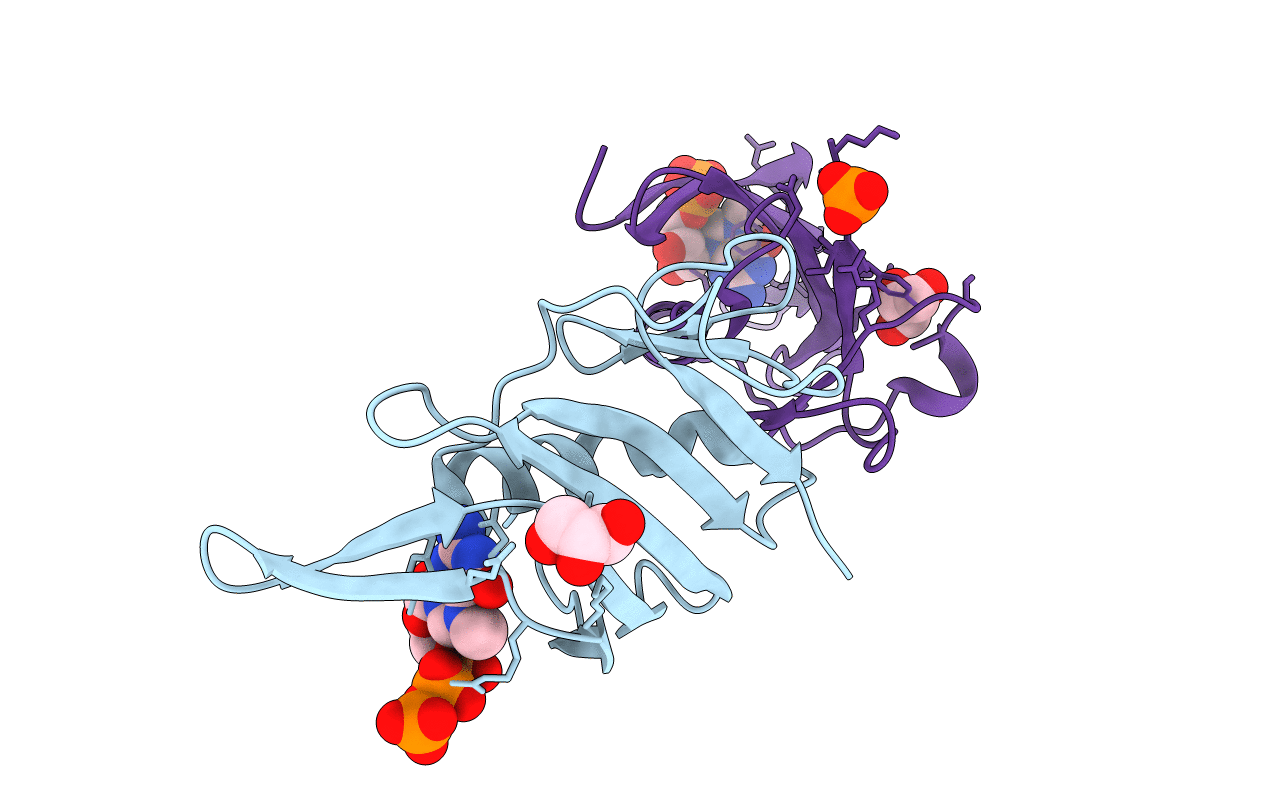
Structure of the cap-binding domain of Rift Valley Fever virus L protein
Biological Source:
Source Organism:
Host Organism:
Method Details:
Experimental Method:
Resolution:
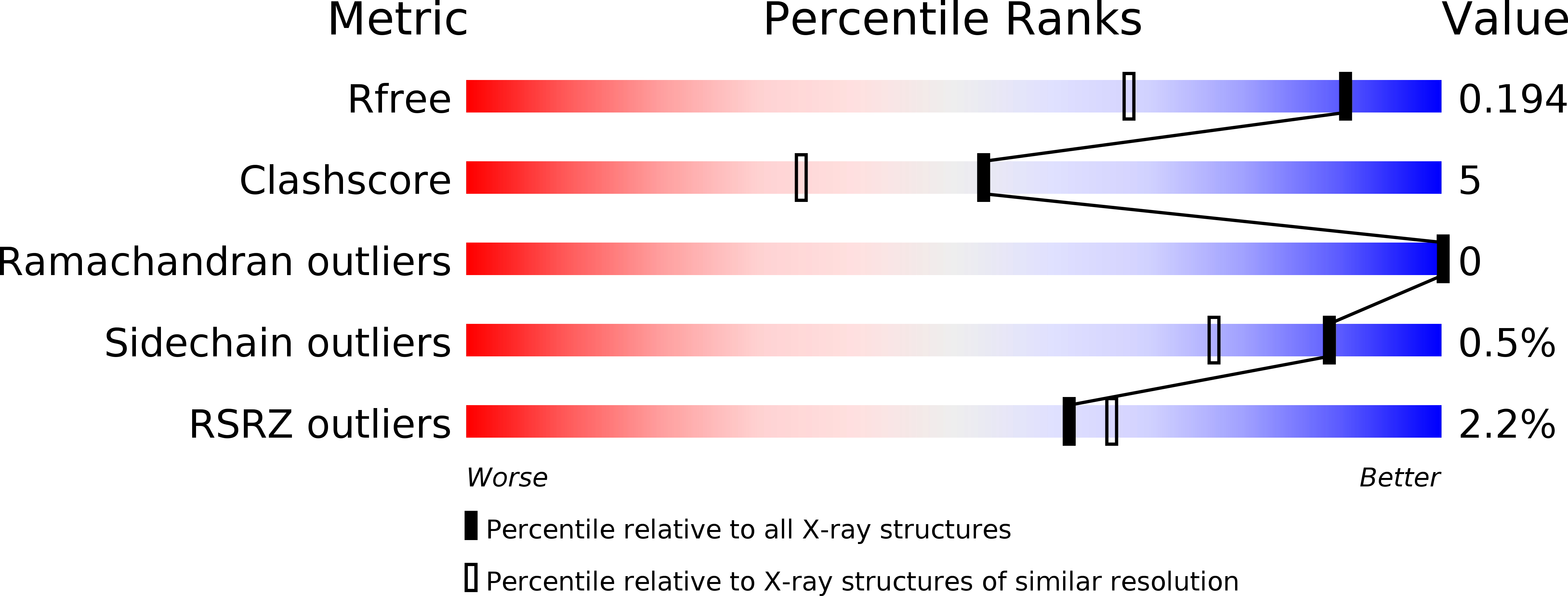
1.48 Å
R-Value Free:
0.19
R-Value Work:
0.15
R-Value Observed:
0.15
Space Group:
P 21 21 21
Macromolecular Entities
Structures with similar UniProt ID
Protein Blast
Polymer Type:polypeptide(L)
Molecule:Polymerase
Chain IDs:A, B
Chain Length:119
Number of Molecules:2
Biological Source:Rift valley fever virus
Modified Residue
Compound ID Chain ID Parent Comp ID Details 2D Image
MSE A MET modified residue
Primary Citation
Structure of a functional cap-binding domain in Rift Valley fever virus L protein.
Plos Pathog. 15 e1007829 e1007829 (2019)
PMID: 31136637 DOI: 10.1371/journal.ppat.1007829

Abstact

Rift Valley fever virus (RVFV) belongs to the family of Phenuiviridae within the order of Bunyavirales. The virus may cause fatal disease both in livestock and humans, and therefore, is of great economical and public health relevance. In analogy to the influenza virus polymerase complex, the bunyavirus L protein is assumed to bind to and cleave off cap structures of cellular mRNAs to prime viral transcription. However, even though the presence of an endonuclease in the N-terminal domain of the L protein has been demonstrated for several bunyaviruses, there is no evidence for a cap-binding site within the L protein. We solved the structure of a C-terminal 117 amino acid-long domain of the RVFV L protein by X-ray crystallography. The overall fold of the domain shows high similarity to influenza virus PB2 cap-binding domain and the putative non-functional cap-binding domain of reptarenaviruses. Upon co-crystallization with m7GTP, we detected the cap-analogue bound between two aromatic side chains as it has been described for other cap-binding proteins. We observed weak but specific interaction with m7GTP rather than GTP in vitro using isothermal titration calorimetry. The importance of m7GTP-binding residues for viral transcription was validated using a RVFV minigenome system. In summary, we provide structural and functional evidence for a cap-binding site located within the L protein of a virus from the Bunyavirales order.

Legend

Protein

Chemical

Disease

Primary Citation of related structures
Feedback Form
Name
Email
Institute
Feedback