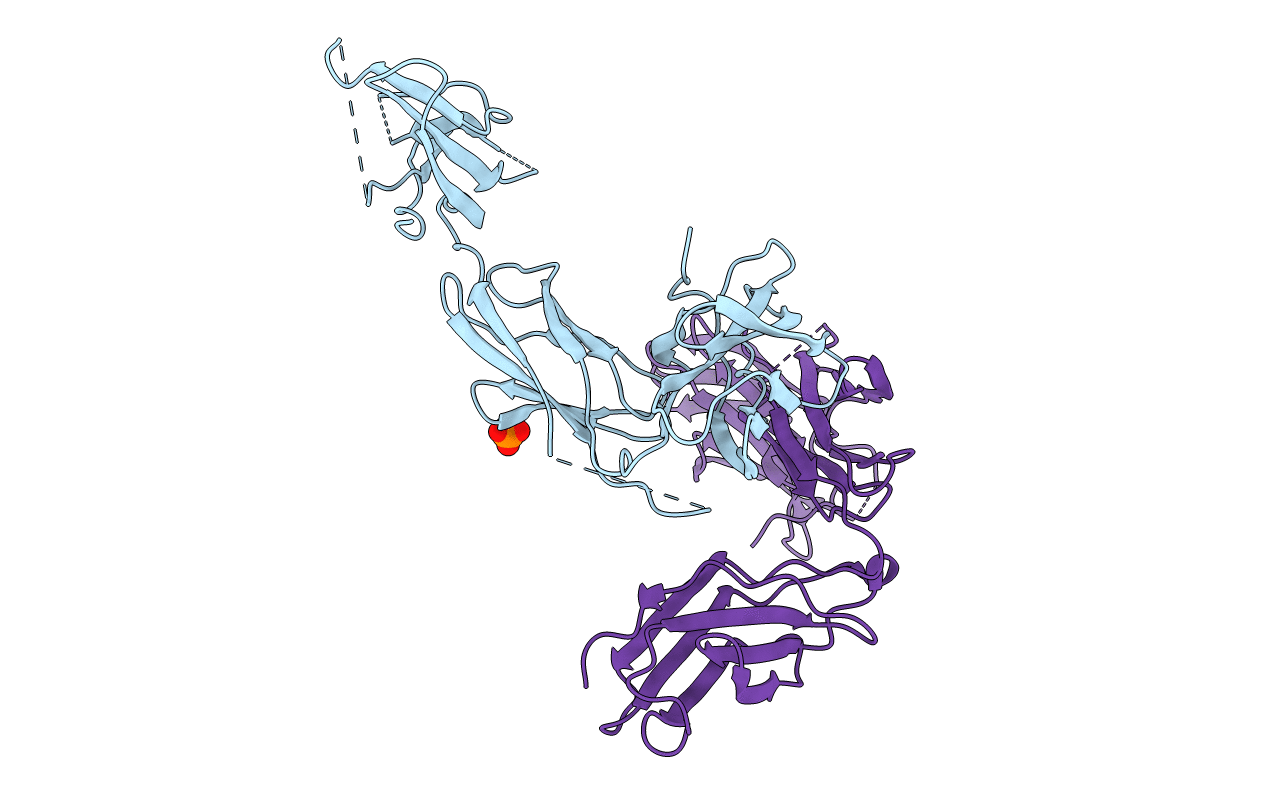
6Q9M image
Deposition Date 2018-12-18
Release Date 2020-01-15
Last Version Date 2024-05-15
Entry Detail
PDB ID:
6Q9M
Keywords:
Title:
Central Fibronectin-III array of RIM-binding protein
Biological Source:
Source Organism:
Host Organism:
Method Details:
Experimental Method:
Resolution:
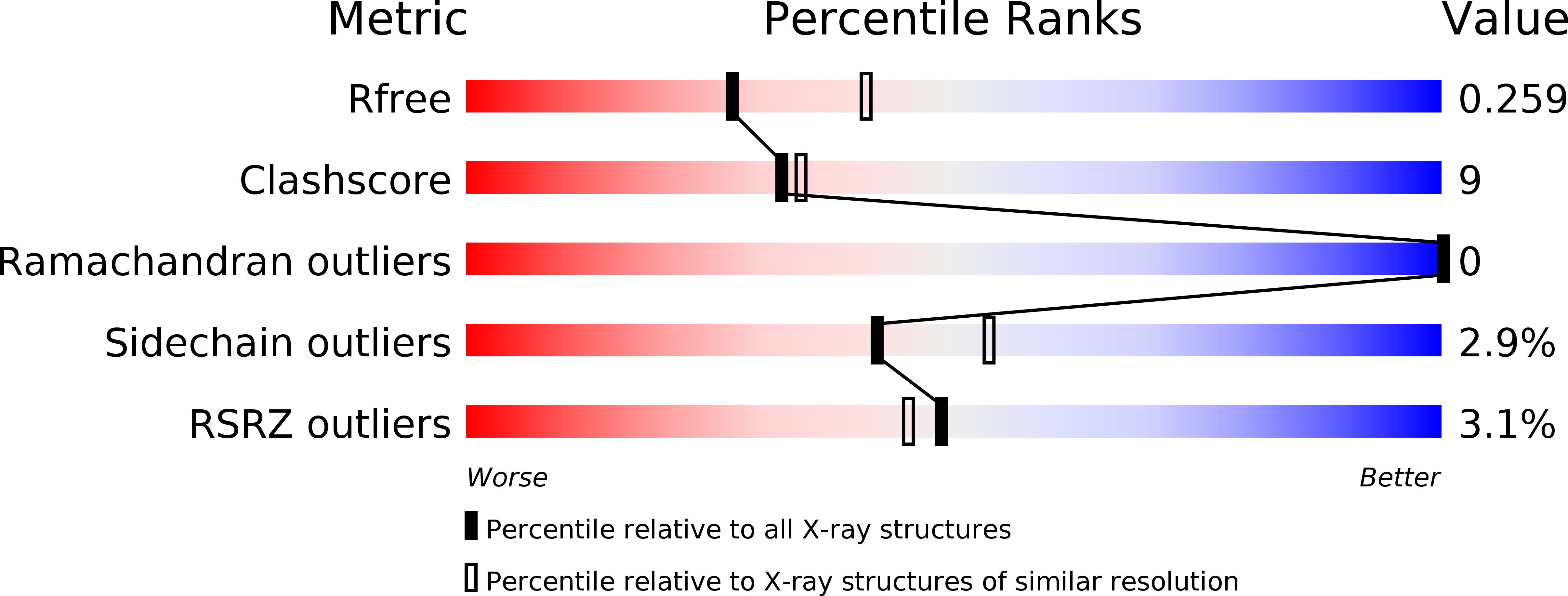
2.45 Å
R-Value Free:
0.25
R-Value Work:
0.21
R-Value Observed:
0.21
Space Group:
P 1 21 1
Macromolecular Entities
Structures with similar UniProt ID
Protein Blast
Polymer Type:polypeptide(L)
Molecule:RIM-binding protein, isoform F
Gene (Uniprot):Rbp
Chain IDs:A, B
Chain Length:303
Number of Molecules:2
Biological Source:Drosophila melanogaster
Ligand Molecules
Primary Citation
RIM-binding protein couples synaptic vesicle recruitment to release sites.
J.Cell Biol. 219 ? ? (2020)
PMID: 32369542 DOI: 10.1083/jcb.201902059

Abstact

At presynaptic active zones, arrays of large conserved scaffold proteins mediate fast and temporally precise release of synaptic vesicles (SVs). SV release sites could be identified by clusters of Munc13, which allow SVs to dock in defined nanoscale relation to Ca2+ channels. We here show in Drosophila that RIM-binding protein (RIM-BP) connects release sites physically and functionally to the ELKS family Bruchpilot (BRP)-based scaffold engaged in SV recruitment. The RIM-BP N-terminal domain, while dispensable for SV release site organization, was crucial for proper nanoscale patterning of the BRP scaffold and needed for SV recruitment of SVs under strong stimulation. Structural analysis further showed that the RIM-BP fibronectin domains form a "hinge" in the protein center, while the C-terminal SH3 domain tandem binds RIM, Munc13, and Ca2+ channels release machinery collectively. RIM-BPs' conserved domain architecture seemingly provides a relay to guide SVs from membrane far scaffolds into membrane close release sites.

Legend

Protein

Chemical

Disease

Primary Citation of related structures
Feedback Form
Name
Email
Institute
Feedback