6PS7 image
Deposition Date 2019-07-12
Release Date 2019-11-13
Last Version Date 2024-11-06
Entry Detail
PDB ID:
6PS7
Title:
XFEL A2aR structure by ligand exchange from LUF5843 to ZM241385.
Biological Source:
Source Organism(s):
Homo sapiens (Taxon ID: 9606)
Escherichia coli (Taxon ID: 562)
Expression System(s):
Method Details:
Experimental Method:
Resolution:
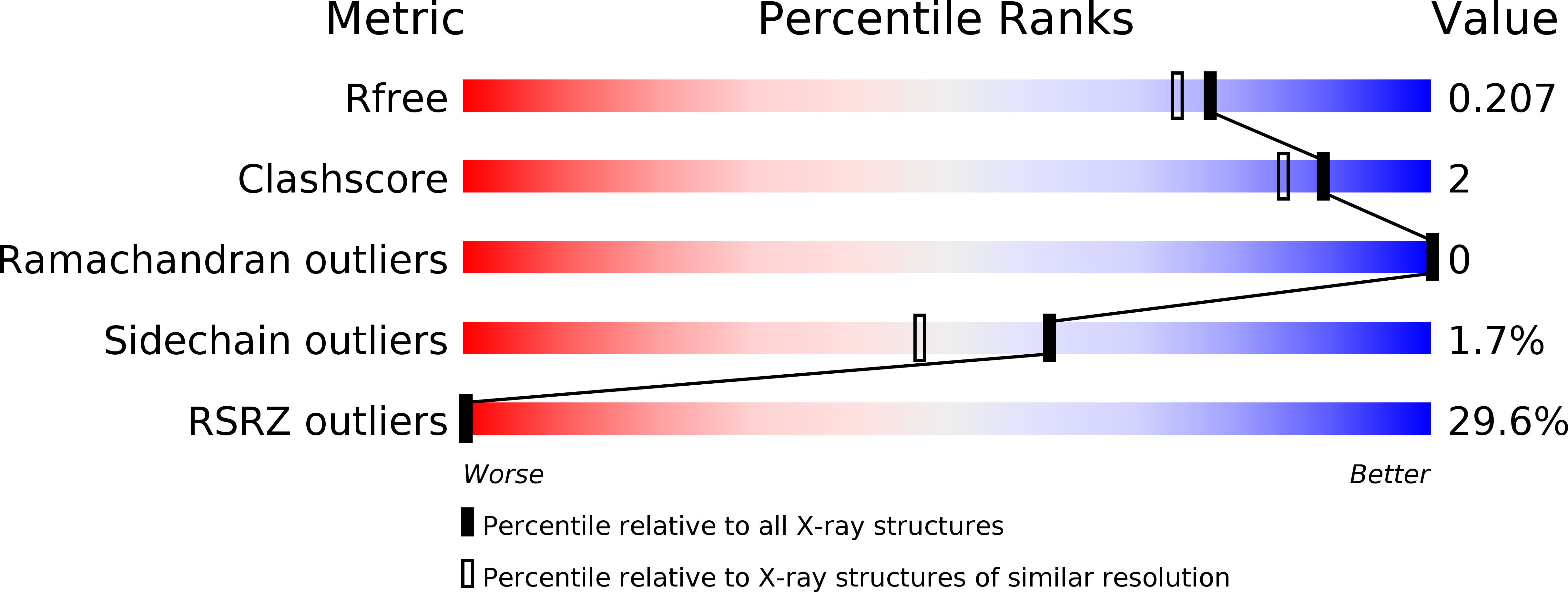
1.85 Å
R-Value Free:
0.20
R-Value Work:
0.17
R-Value Observed:
0.17
Space Group:
C 2 2 21
Macromolecular Entities
Protein Blast
Polymer Type:polypeptide(L)
Molecule:Adenosine receptor A2a,Soluble cytochrome b562,Adenosine receptor A2a
Gene (Uniprot):cybC, ADORA2A
Chain IDs:A
Chain Length:442
Number of Molecules:1
Biological Source:Homo sapiens, Escherichia coli
Primary Citation
Toward G protein-coupled receptor structure-based drug design using X-ray lasers.
Iucrj 6 1106 1119 (2019)
PMID: 31709066 DOI: 10.1107/S2052252519013137

Abstact

Rational structure-based drug design (SBDD) relies on the availability of a large number of co-crystal structures to map the ligand-binding pocket of the target protein and use this information for lead-compound optimization via an iterative process. While SBDD has proven successful for many drug-discovery projects, its application to G protein-coupled receptors (GPCRs) has been limited owing to extreme difficulties with their crystallization. Here, a method is presented for the rapid determination of multiple co-crystal structures for a target GPCR in complex with various ligands, taking advantage of the serial femtosecond crystallography approach, which obviates the need for large crystals and requires only submilligram quantities of purified protein. The method was applied to the human β2-adrenergic receptor, resulting in eight room-temperature co-crystal structures with six different ligands, including previously unreported structures with carvedilol and propranolol. The generality of the proposed method was tested with three other receptors. This approach has the potential to enable SBDD for GPCRs and other difficult-to-crystallize membrane proteins.

Legend

Protein

Chemical

Disease

Primary Citation of related structures
Feedback Form
Name
Email
Institute
Feedback