6PJV image
Deposition Date 2019-06-28
Release Date 2019-11-13
Last Version Date 2023-10-11
Entry Detail
PDB ID:
6PJV
Title:
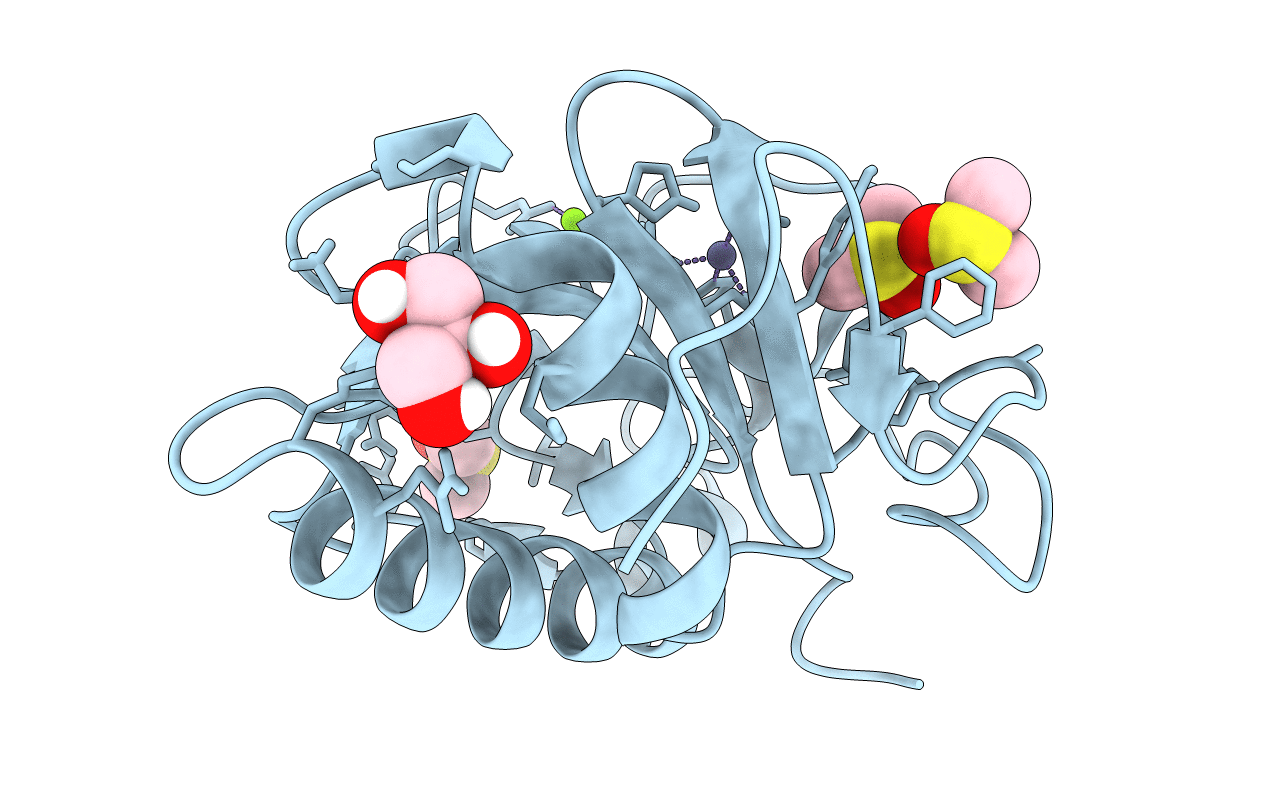
Structure of Human Sonic Hedgehog in complex with Zinc and Magnesium
Biological Source:
Source Organism:
Homo sapiens (Taxon ID: 9606)
Method Details:
Experimental Method:
Resolution:
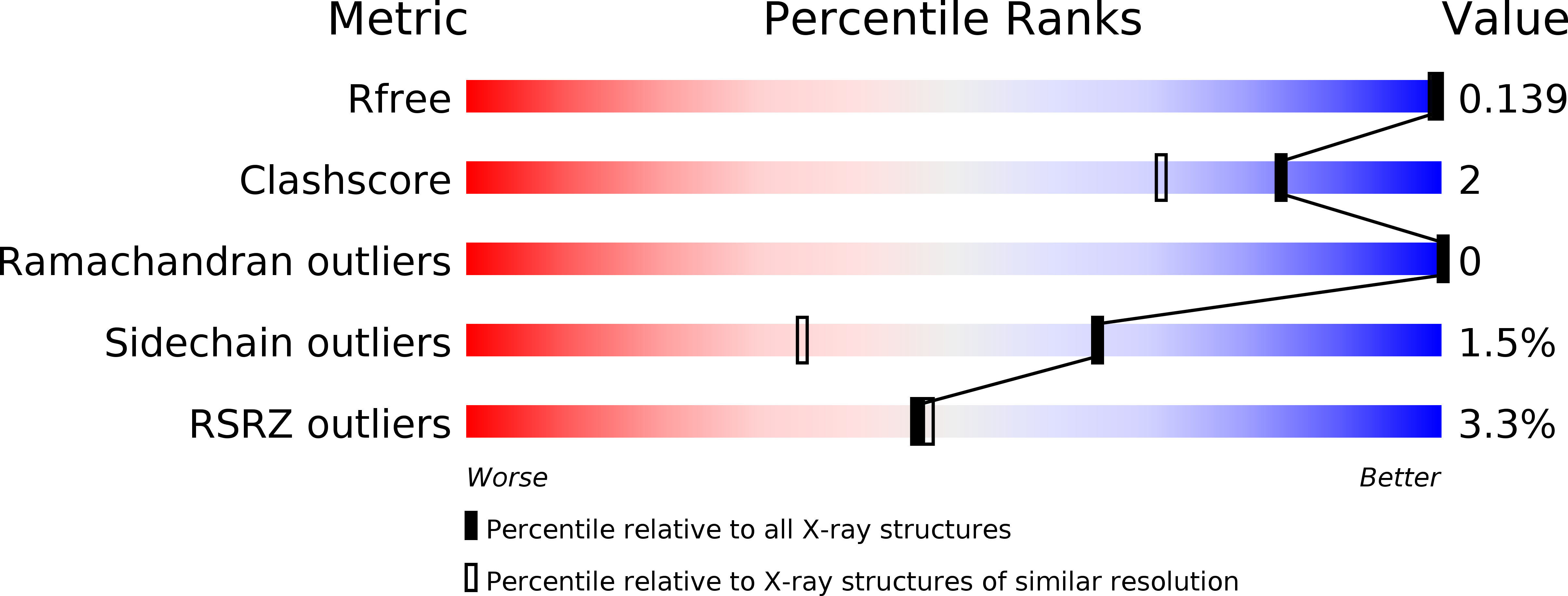
1.43 Å
R-Value Free:
0.13
R-Value Work:
0.12
R-Value Observed:
0.12
Space Group:
I 2 3
Macromolecular Entities
Structures with similar UniProt ID
Protein Blast
Polymer Type:polypeptide(L)
Molecule:Sonic hedgehog protein
Gene (Uniprot):SHH
Chain IDs:A
Chain Length:169
Number of Molecules:1
Biological Source:Homo sapiens
Primary Citation
Structure of Sonic Hedgehog protein in complex with zinc(II) and magnesium(II) reveals ion-coordination plasticity relevant to peptide drug design.
Acta Crystallogr D Struct Biol 75 969 979 (2019)
PMID: 31692471 DOI: 10.1107/S2059798319012890

Abstact

The Hedgehog pathway is an essential cell-signaling paradigm implicated in cancer tumorigenesis and the developmental disorder holoprosencephaly, making it an attractive target for therapeutic design. The N-terminal domain of the Sonic Hedgehog protein (Shh-N) is the essential signaling molecule in the Hedgehog pathway. In this role Shh-N interacts with its cognate membrane receptor Patched, as well as the regulatory proteins HHIP and CDO, by utilizing interfaces harboring one or more divalent ions. Here, the crystal structure of human Shh-N is presented at 1.43 Å resolution, representing a landmark in the characterization of this protein. The structure reveals that the conserved Zn2+-binding site adopts an atypical octahedral coordination geometry, whereas an adjacent binding site, normally occupied by binuclear Ca2+, has been supplanted by a single octahedrally bound Mg2+. Both divalent sites are compared with those in previous Shh-N structures, which demonstrates a significant degree of plasticity of the Shh-N protein in terms of divalent ion binding. The presence of a high Mg2+ concentration in the crystallization medium appears to have influenced metal loading at both metal ion-binding sites. These observations have technical and design implications for efforts focused on the development of inhibitors that target Shh-N-mediated protein-protein interactions.

Legend

Protein

Chemical

Disease

Primary Citation of related structures
Feedback Form
Name
Email
Institute
Feedback