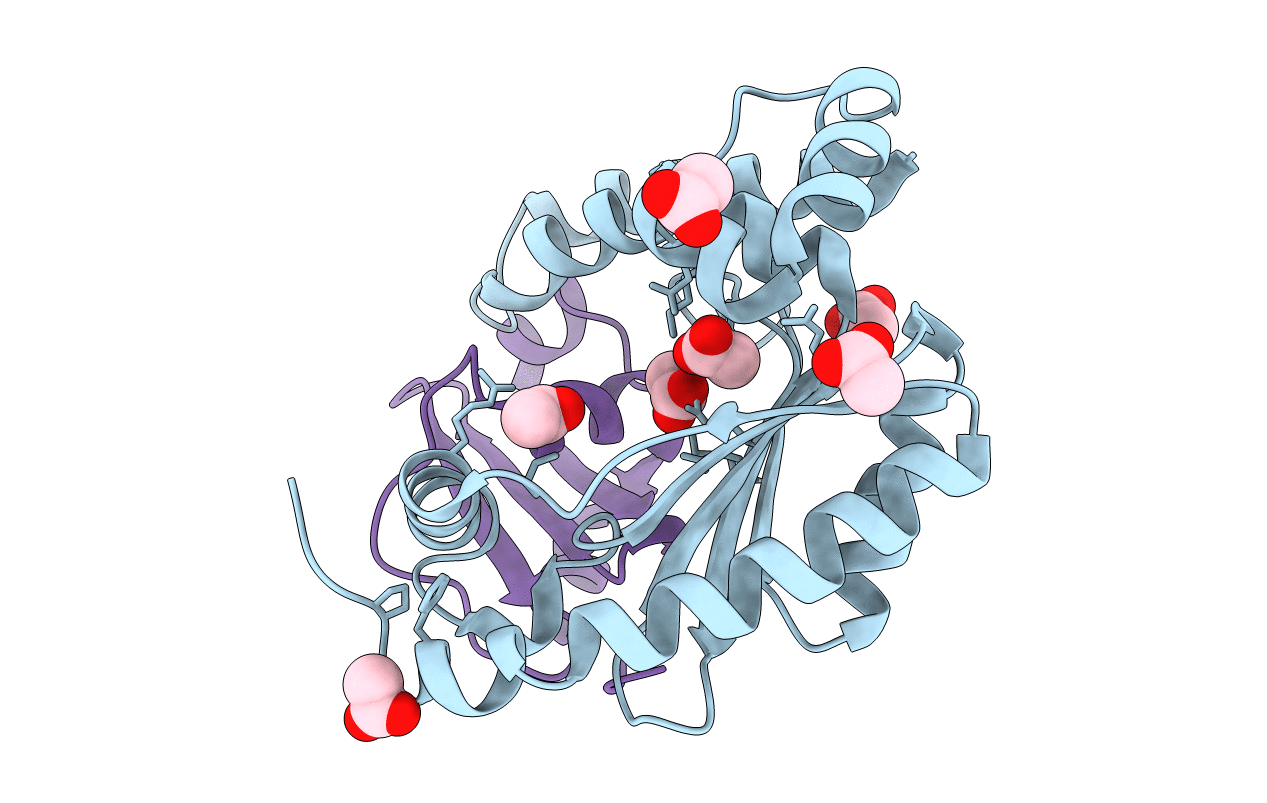
6OX6 image
Deposition Date 2019-05-13
Release Date 2019-09-18
Last Version Date 2024-10-30
Entry Detail
PDB ID:
6OX6
Keywords:
Title:
Crystal structure of the complex between the Type VI effector Tas1 and its immunity protein
Biological Source:
Source Organism:
Method Details:
Experimental Method:
Resolution:
2.17 Å
R-Value Free:
0.23
R-Value Work:
0.18
R-Value Observed:
0.18
Space Group:
P 43 21 2

Macromolecular Entities
Structures with similar UniProt ID
Protein Blast
Polymer Type:polypeptide(L)
Molecule:Tas1
Chain IDs:A
Chain Length:439
Number of Molecules:1
Biological Source:Pseudomonas aeruginosa
Structures with similar UniProt ID
Protein Blast
Polymer Type:polypeptide(L)
Molecule:PA14_01140
Gene (Uniprot):tis1
Chain IDs:B
Chain Length:77
Number of Molecules:1
Biological Source:Pseudomonas aeruginosa
Modified Residue
Compound ID Chain ID Parent Comp ID Details 2D Image
MSE A MET modified residue
Ligand Molecules
Primary Citation
An interbacterial toxin inhibits target cell growth by synthesizing (p)ppApp.
Nature 575 674 678 (2019)
PMID: 31695193 DOI: 10.1038/s41586-019-1735-9

Abstact

Bacteria have evolved sophisticated mechanisms to inhibit the growth of competitors1. One such mechanism involves type VI secretion systems, which bacteria can use to inject antibacterial toxins directly into neighbouring cells. Many of these toxins target the integrity of the cell envelope, but the full range of growth inhibitory mechanisms remains unknown2. Here we identify a type VI secretion effector, Tas1, in the opportunistic pathogen Pseudomonas aeruginosa. The crystal structure of Tas1 shows that it is similar to enzymes that synthesize (p)ppGpp, a broadly conserved signalling molecule in bacteria that modulates cell growth rate, particularly in response to nutritional stress3. However, Tas1 does not synthesize (p)ppGpp; instead, it pyrophosphorylates adenosine nucleotides to produce (p)ppApp at rates of nearly 180,000 molecules per minute. Consequently, the delivery of Tas1 into competitor cells drives rapid accumulation of (p)ppApp, depletion of ATP, and widespread dysregulation of essential metabolic pathways, thereby resulting in target cell death. Our findings reveal a previously undescribed mechanism for interbacterial antagonism and demonstrate a physiological role for the metabolite (p)ppApp in bacteria.

Legend

Protein

Chemical

Disease

Primary Citation of related structures
Feedback Form
Name
Email
Institute
Feedback