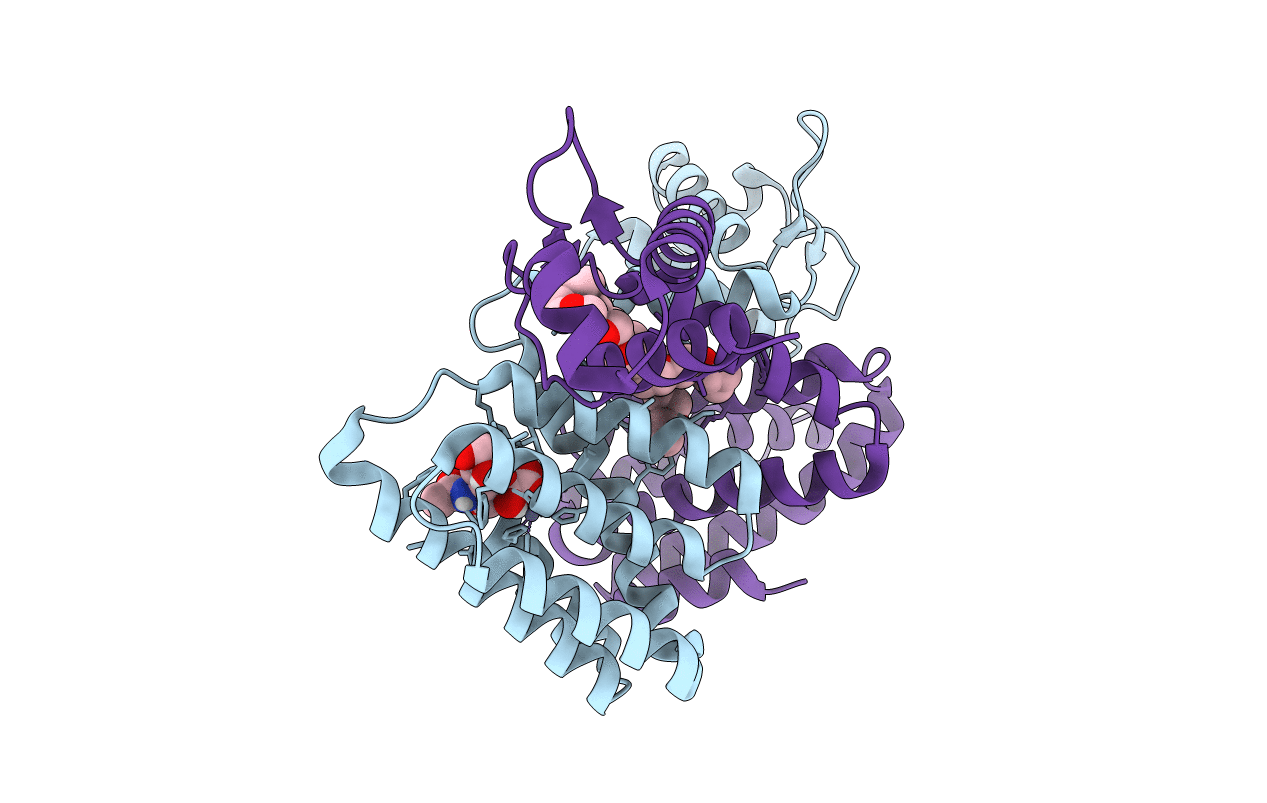
6ON4 image
Deposition Date 2019-04-19
Release Date 2020-07-08
Last Version Date 2024-03-13
Entry Detail
PDB ID:
6ON4
Title:
Crystal structure of the GntR-type sialoregulator NanR from Escherichia coli, in complex with sialic acid
Biological Source:
Source Organism:
Method Details:
Experimental Method:
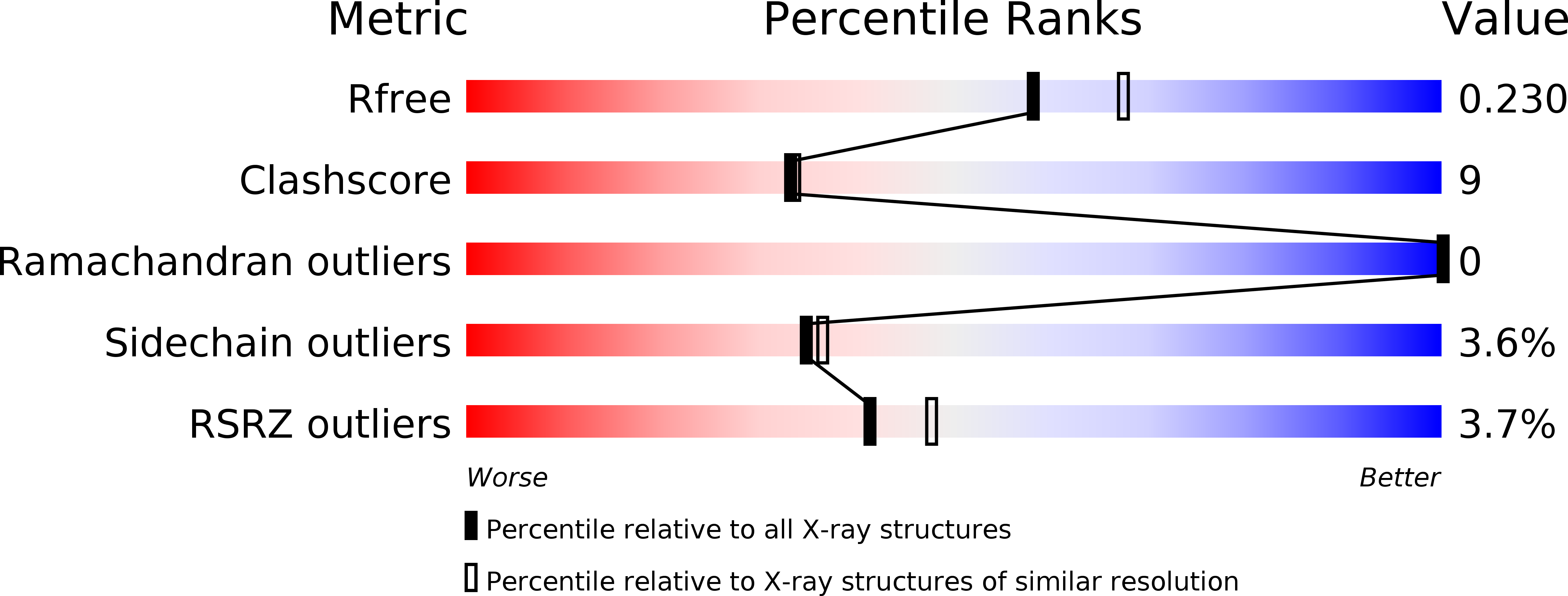
Resolution:
2.10 Å
R-Value Free:
0.22
R-Value Work:
0.18
R-Value Observed:
0.18
Space Group:
P 1 21 1
Macromolecular Entities
Structures with similar UniProt ID
Protein Blast
Polymer Type:polypeptide(L)
Molecule:HTH-type transcriptional repressor NanR
Gene (Uniprot):nanR
Chain IDs:A, B
Chain Length:263
Number of Molecules:2
Biological Source:Escherichia coli K-12
Primary Citation
Control of the Escherichia coli sialoregulon by transcriptional repressor NanR.
J. Bacteriol. 195 4689 4701 (2013)
PMID: 23935044 DOI: 10.1128/JB.00692-13

Abstact

NanR, one of >8,500 GntR superfamily helix-turn-helix transcriptional regulators, controls expression of the genes required for catabolism of sialic acids in Escherichia coli. It is predicted to do the same in related bacteria harboring orthologs of nanR. The sialic acids are a family of over 40 naturally occurring nine-carbon keto-sugar acids found mainly in the animal lineage, which includes starfish to humans in the deuterostome lineage. Sialic acids function in development, immunity, protein localization and stability, and homeostasis. They also serve as microbial carbon and nitrogen sources and ligands for cell recognition during host colonization. The importance of microbial sialic acid metabolism for host-microbe interactions has made it a target for therapeutic development. Exploiting this target depends on understanding sialometabolic pathways in a wide range of evolutionarily distinct bacteria. Here, we show by transcriptome, genetic, and biochemical analyses that the most common sialic acid, N-acetylneuraminate, induces the nanATEK-yhcH, yjhATS (nanCMS), and yjhBC operons by directly inactivating NanR, converting the predominantly dimeric form of the repressor to an inactive monomer of approximately 30-kDa. Additionally, other results identify critical amino acid residues and nucleotides in the regulator and operator, respectively. The combined results better define how sialic acids, acting through NanR, affect the metabolic flux of an important group of host-derived metabolites. Thus, E. coli serves as a valuable model for understanding sialocatabolic pathways in bacteria.

Legend

Protein

Chemical

Disease

Primary Citation of related structures
Feedback Form
Name
Email
Institute
Feedback