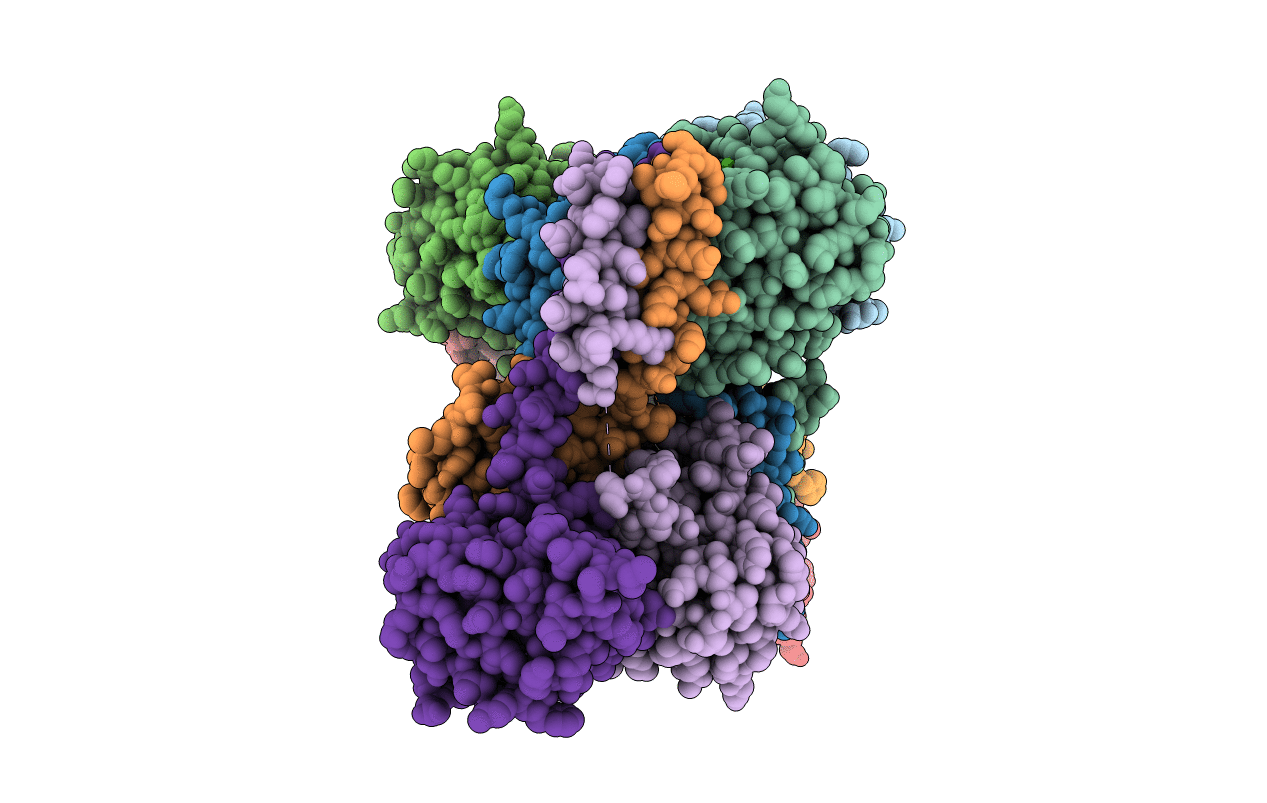
6OEC image
Deposition Date 2019-03-27
Release Date 2019-04-24
Last Version Date 2023-10-11
Entry Detail
PDB ID:
6OEC
Title:
Yeast Spc42 Trimeric Coiled-Coil Amino Acids 181-211 fused to PDB: 3H5I
Biological Source:
Method Details:
Experimental Method:
Resolution:
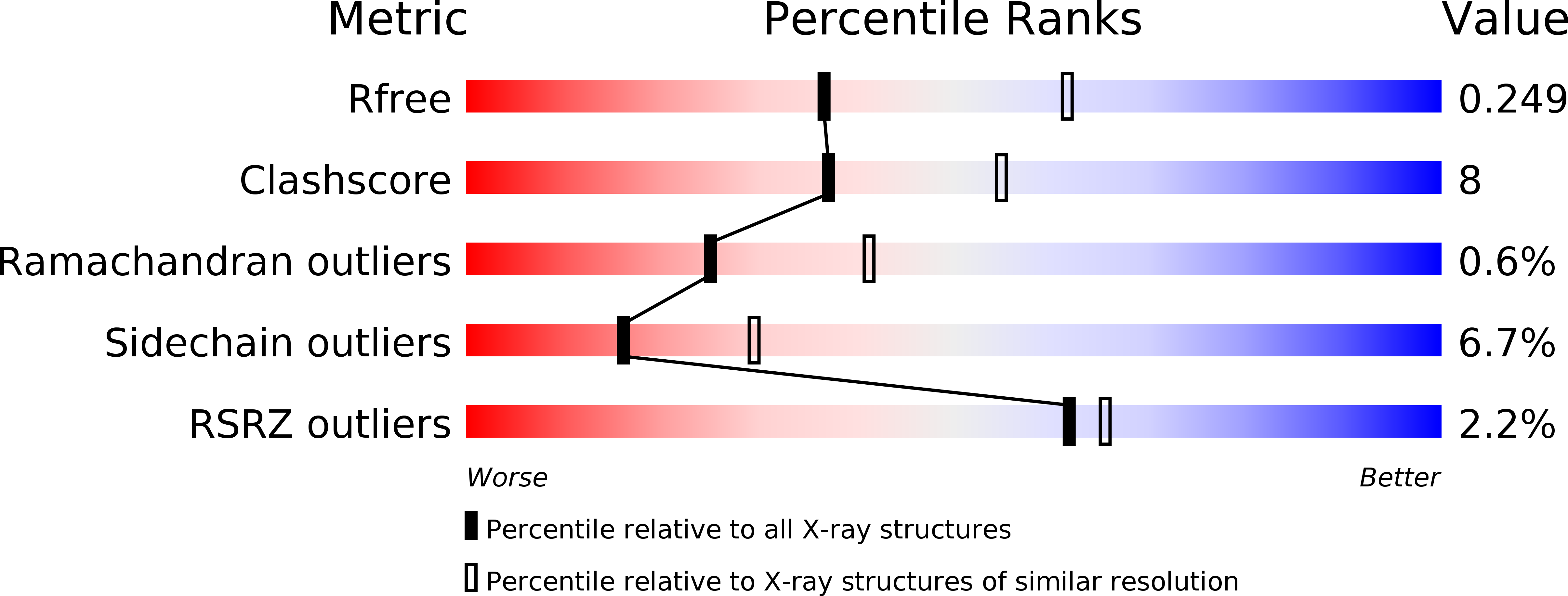
2.51 Å
R-Value Free:
0.24
R-Value Work:
0.19
R-Value Observed:
0.19
Space Group:
P 21 21 2
Macromolecular Entities
Protein Blast
Polymer Type:polypeptide(L)
Molecule:Response regulator/sensory box protein/GGDEF domain protein,Spindle pole body component SPC42
Gene (Uniprot):SPC42, CHY_0880
Mutagens:T193E, S195E
Chain IDs:A, B, C, D, E, F, G, H, I, J, K, L
Chain Length:162
Number of Molecules:12
Biological Source:Carboxydothermus hydrogenoformans (strain ATCC BAA-161 / DSM 6008 / Z-2901), Saccharomyces cerevisiae (strain ATCC 204508 / S288c)
Ligand Molecules
Primary Citation
Structure and function of Spc42 coiled-coils in yeast centrosome assembly and duplication.
Mol.Biol.Cell 30 1505 1522 (2019)
PMID: 30969903 DOI: 10.1091/mbc.E19-03-0167

Abstact

Centrosomes and spindle pole bodies (SPBs) are membraneless organelles whose duplication and assembly is necessary for bipolar mitotic spindle formation. The structural organization and functional roles of major proteins in these organelles can provide critical insights into cell division control. Spc42, a phosphoregulated protein with an N-terminal dimeric coiled-coil (DCC), assembles into a hexameric array at the budding yeast SPB core, where it functions as a scaffold for SPB assembly. Here, we present in vitro and in vivo data to elucidate the structural arrangement and biological roles of Spc42 elements. Crystal structures reveal details of two additional coiled-coils in Spc42: a central trimeric coiled-coil and a C-terminal antiparallel DCC. Contributions of the three Spc42 coiled-coils and adjacent undetermined regions to the formation of an ∼145 Å hexameric lattice in an in vitro lipid monolayer assay and to SPB duplication and assembly in vivo reveal structural and functional redundancy in Spc42 assembly. We propose an updated model that incorporates the inherent symmetry of these Spc42 elements into a lattice, and thereby establishes the observed sixfold symmetry. The implications of this model for the organization of the central SPB core layer are discussed.

Legend

Protein

Chemical

Disease

Primary Citation of related structures
Feedback Form
Name
Email
Institute
Feedback