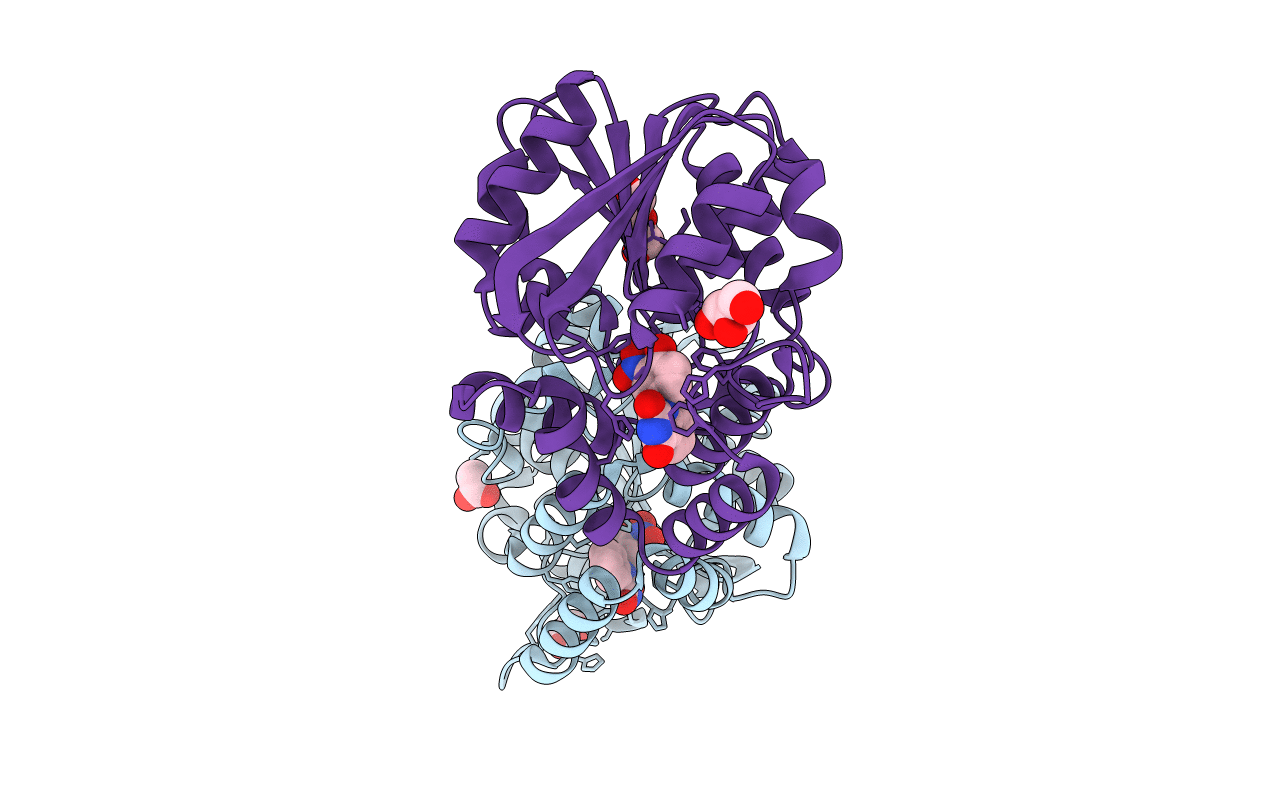
6O5J image
Deposition Date 2019-03-03
Release Date 2019-06-26
Last Version Date 2023-10-11
Entry Detail
PDB ID:
6O5J
Keywords:
Title:
Crystal Structure of DAD2 bound to quinazolinone derivative
Biological Source:
Source Organism:
Petunia hybrida (Taxon ID: 4102)
Host Organism:
Method Details:
Experimental Method:
Resolution:
1.63 Å
R-Value Free:
0.18
R-Value Work:
0.14
R-Value Observed:
0.14
Space Group:
P 1
Macromolecular Entities
Structures with similar UniProt ID
Protein Blast
Polymer Type:polypeptide(L)
Molecule:Probable strigolactone esterase DAD2
Gene (Uniprot):DAD2
Mutagens:C89Q
Chain IDs:A, B
Chain Length:264
Number of Molecules:2
Biological Source:Petunia hybrida
Primary Citation
Chemical synthesis and characterization of a new quinazolinedione competitive antagonist for strigolactone receptors with an unexpected binding mode.
Biochem.J. 476 1843 1856 (2019)
PMID: 31186286 DOI: 10.1042/BCJ20190288

Abstact

Strigolactones (SLs) are multifunctional plant hormones regulating essential physiological processes affecting growth and development. In vascular plants, SLs are recognized by α/β hydrolase-fold proteins from the D14/DAD2 (Dwarf14/Decreased Apical Dominance 2) family in the initial step of the signaling pathway. We have previously discovered that N-phenylanthranilic acid derivatives (e.g. tolfenamic acid) are potent antagonists of SL receptors, prompting us to design quinazolinone and quinazolinedione derivatives (QADs and QADDs, respectively) as second-generation antagonists. Initial in silico docking studies suggested that these compounds would bind to DAD2, the petunia SL receptor, with higher affinity than the first-generation compounds. However, only one of the QADs/QADDs tested in in vitro assays acted as a competitive antagonist of SL receptors, with reduced affinity and potency compared with its N-phenylanthranilic acid 'parent'. X-ray crystal structure analysis revealed that the binding mode of the active QADD inside DAD2's cavity was not that predicted in silico, highlighting a novel inhibition mechanism for SL receptors. Despite a ∼10-fold difference in potency in vitro, the QADD and tolfenamic acid had comparable activity in planta, suggesting that the QADD compensates for lower potency with increased bioavailability. Altogether, our results establish this QADD as a novel lead compound towards the development of potent and bioavailable antagonists of SL receptors.

Legend

Protein

Chemical

Disease

Primary Citation of related structures
Feedback Form
Name
Email
Institute
Feedback