6NTF image
Deposition Date 2019-01-29
Release Date 2019-09-18
Last Version Date 2024-12-25
Entry Detail
PDB ID:
6NTF
Keywords:
Title:
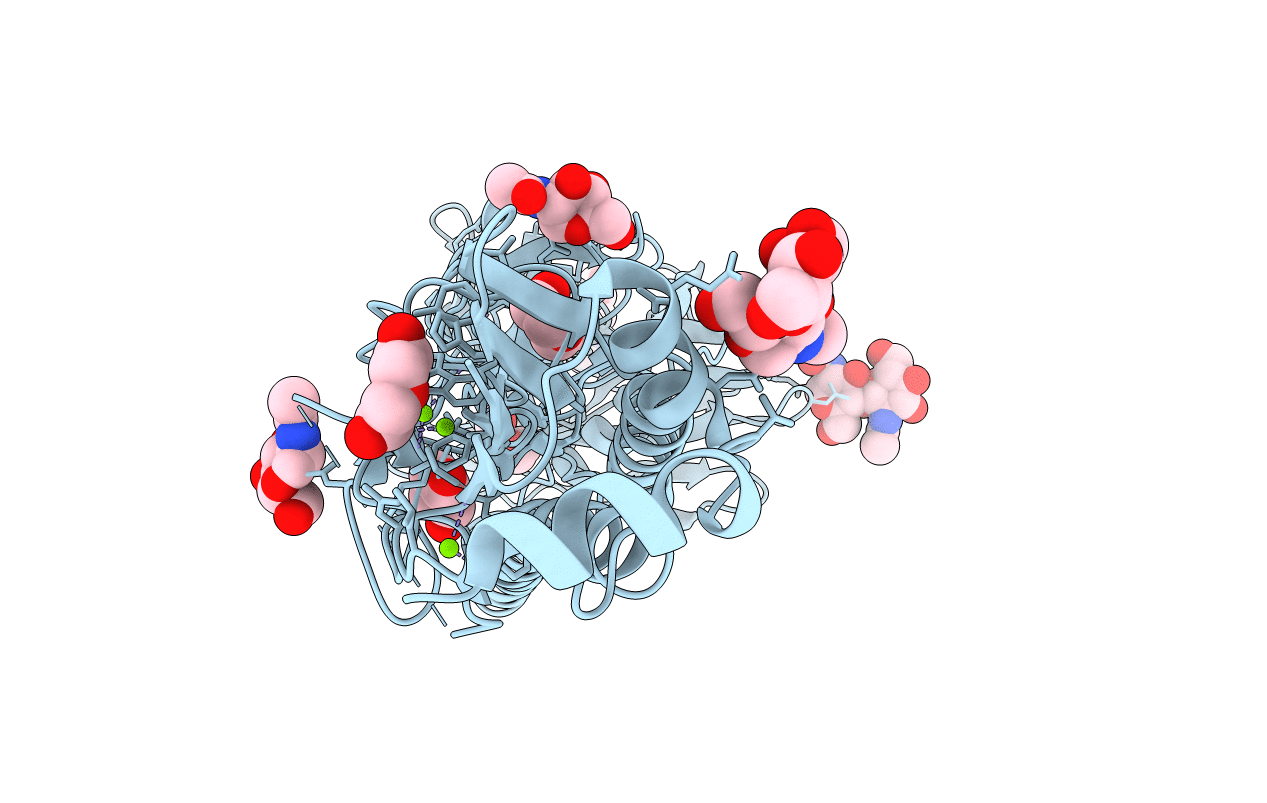
Crystal structure of a computationally optimized H5 influenza hemagglutinin
Biological Source:
Source Organism:
Host Organism:
Method Details:
Experimental Method:
Resolution:
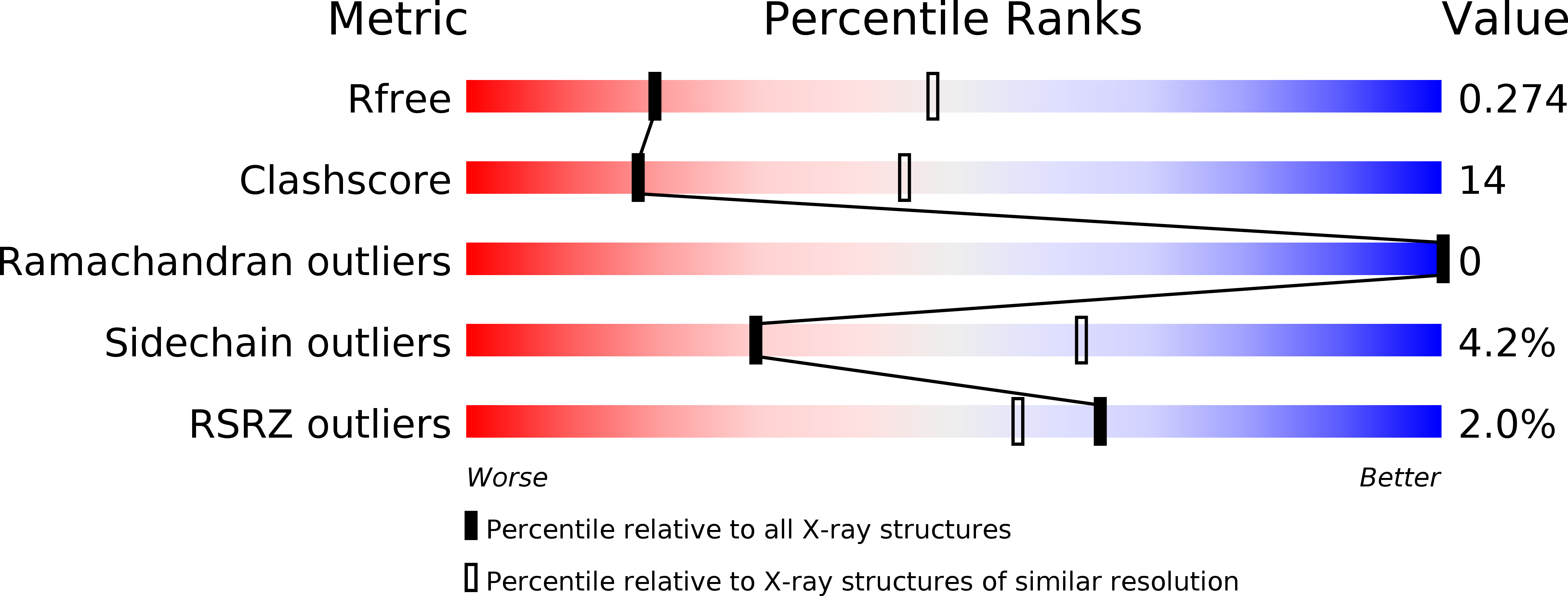
2.80 Å
R-Value Free:
0.27
R-Value Work:
0.23
R-Value Observed:
0.23
Space Group:
H 3 2
Macromolecular Entities
Polymer Type:polypeptide(L)
Molecule:Hemagglutinin
Chain IDs:A
Chain Length:557
Number of Molecules:1
Biological Source:unidentified influenza virus
Primary Citation
Structural and antigenic characterization of a computationally-optimized H5 hemagglutinin influenza vaccine.
Vaccine 37 6022 6029 (2019)
PMID: 31481254 DOI: 10.1016/j.vaccine.2019.08.062

Abstact

Influenza A virus is a leading cause of death worldwide. Viruses of the H5 subtype have the potential to induce high mortality, and no vaccines are currently available to protect against H5 influenza viruses in the event of an outbreak. Experimental vaccination with one clade 2 virus does not protect against other subclades. The computationally optimized broadly reactive (COBRA) methodology was previously used to generate a H5 hemagglutinin (HA) antigen (COBRA2) that elicited increased serological breadth against multiple clade 2 H5N1 influenza viruses. In this report, we structurally and antigenically characterized the COBRA2 HA antigen. We examined the biochemical characteristics of the COBRA2 protein and determined the protein is correctly cleaved, properly folded into a trimeric structure, and antigenically correct by probing with HA head- and stem-specific monoclonal antibodies (mAbs). We further probed the antigenicity by examining binding of a panel of H5 mouse mAbs to the COBRA2 antigen, as well as several other HA antigens. We determined the X-ray crystal structure of the COBRA2 HA antigen to 2.8 Å and the protein was observed to be in the expected trimeric form. The COBRA2 HA was structurally similar to the naturally occurring H5 HA antigens and suggests the protein folds similar to known HA structures. Overall, our data allow us to formulate a hypothesis on the mechanism of increased breadth due to vaccination with the COBRA2 HA antigen, which is that the protein incorporates antigenic sites from numerous HA antigens, and elicits mAbs with limited breadth, but with diversity in targeted antigenic sites.

Legend

Protein

Chemical

Disease

Primary Citation of related structures
Feedback Form
Name
Email
Institute
Feedback