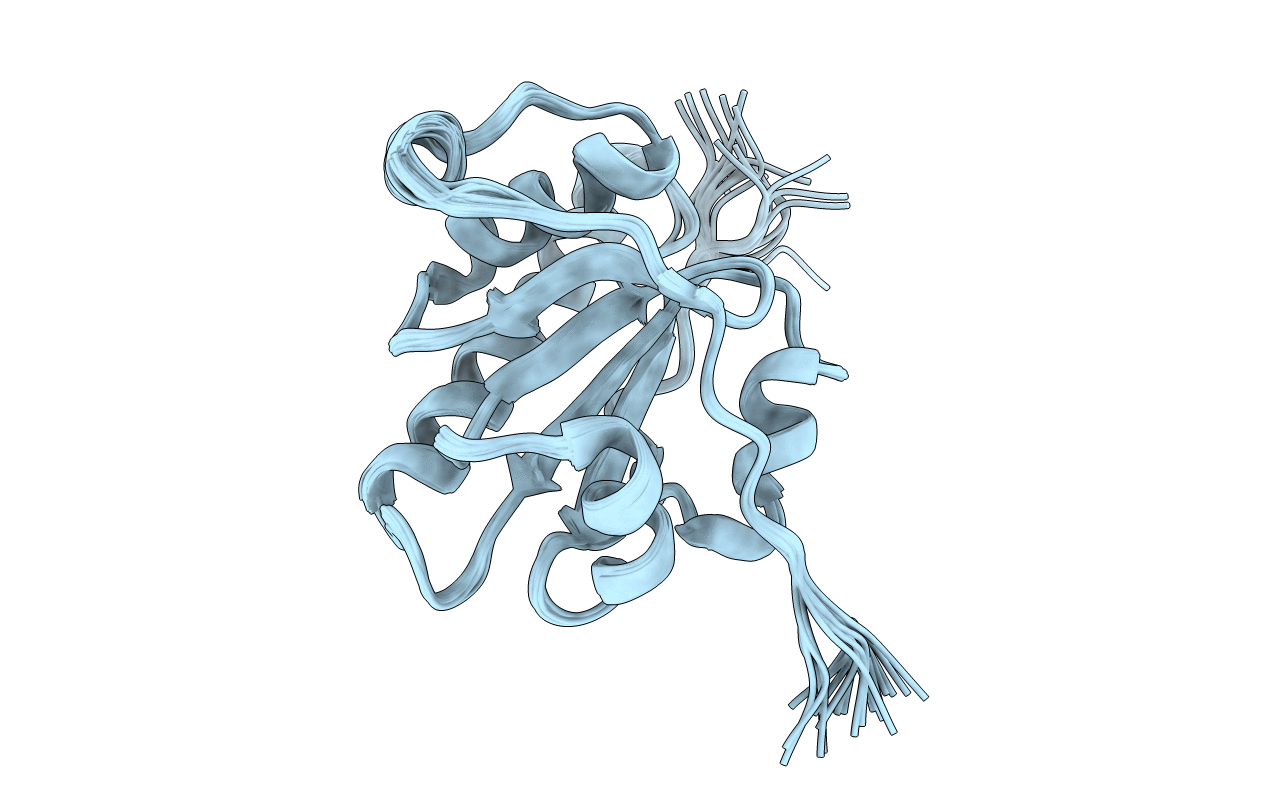
6NE8 image
Deposition Date 2018-12-17
Release Date 2019-12-25
Last Version Date 2024-05-15
Entry Detail
PDB ID:
6NE8
Keywords:
Title:
Solution Structure of the Thioredoxin-like Domain of Arabidopsis NCP (NUCLEAR CONTROL OF PEP ACTIVITY)
Biological Source:
Source Organism(s):
Expression System(s):
Method Details:
Experimental Method:
Conformers Calculated:
100
Conformers Submitted:
20
Selection Criteria:
structures with the lowest energy
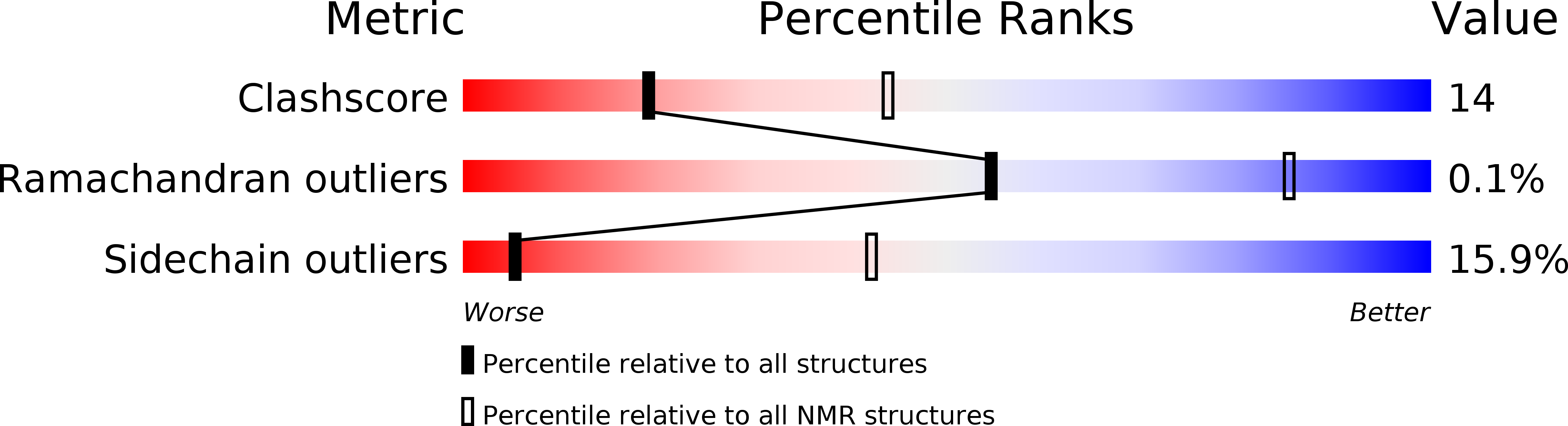
Macromolecular Entities
Structures with similar UniProt ID
Protein Blast
Polymer Type:polypeptide(L)
Molecule:Thioredoxin-like fold domain-containing protein MRL7L, chloroplastic
Gene (Uniprot):MRL7L
Chain IDs:A
Chain Length:146
Number of Molecules:1
Biological Source:Arabidopsis thaliana
Ligand Molecules
Primary Citation
NCP activates chloroplast transcription by controlling phytochrome-dependent dual nuclear and plastidial switches.
Nat Commun 10 2630 2630 (2019)
PMID: 31201314 DOI: 10.1038/s41467-019-10517-1

Abstact

Phytochromes initiate chloroplast biogenesis by activating genes encoding the photosynthetic apparatus, including photosynthesis-associated plastid-encoded genes (PhAPGs). PhAPGs are transcribed by a bacterial-type RNA polymerase (PEP), but how phytochromes in the nucleus activate chloroplast gene expression remains enigmatic. We report here a forward genetic screen in Arabidopsis that identified NUCLEAR CONTROL OF PEP ACTIVITY (NCP) as a necessary component of phytochrome signaling for PhAPG activation. NCP is dual-targeted to plastids and the nucleus. While nuclear NCP mediates the degradation of two repressors of chloroplast biogenesis, PIF1 and PIF3, NCP in plastids promotes the assembly of the PEP complex for PhAPG transcription. NCP and its paralog RCB are non-catalytic thioredoxin-like proteins that diverged in seed plants to adopt nonredundant functions in phytochrome signaling. These results support a model in which phytochromes control PhAPG expression through light-dependent double nuclear and plastidial switches that are linked by evolutionarily conserved and dual-localized regulatory proteins.

Legend

Protein

Chemical

Disease

Primary Citation of related structures
Feedback Form
Name
Email
Institute
Feedback