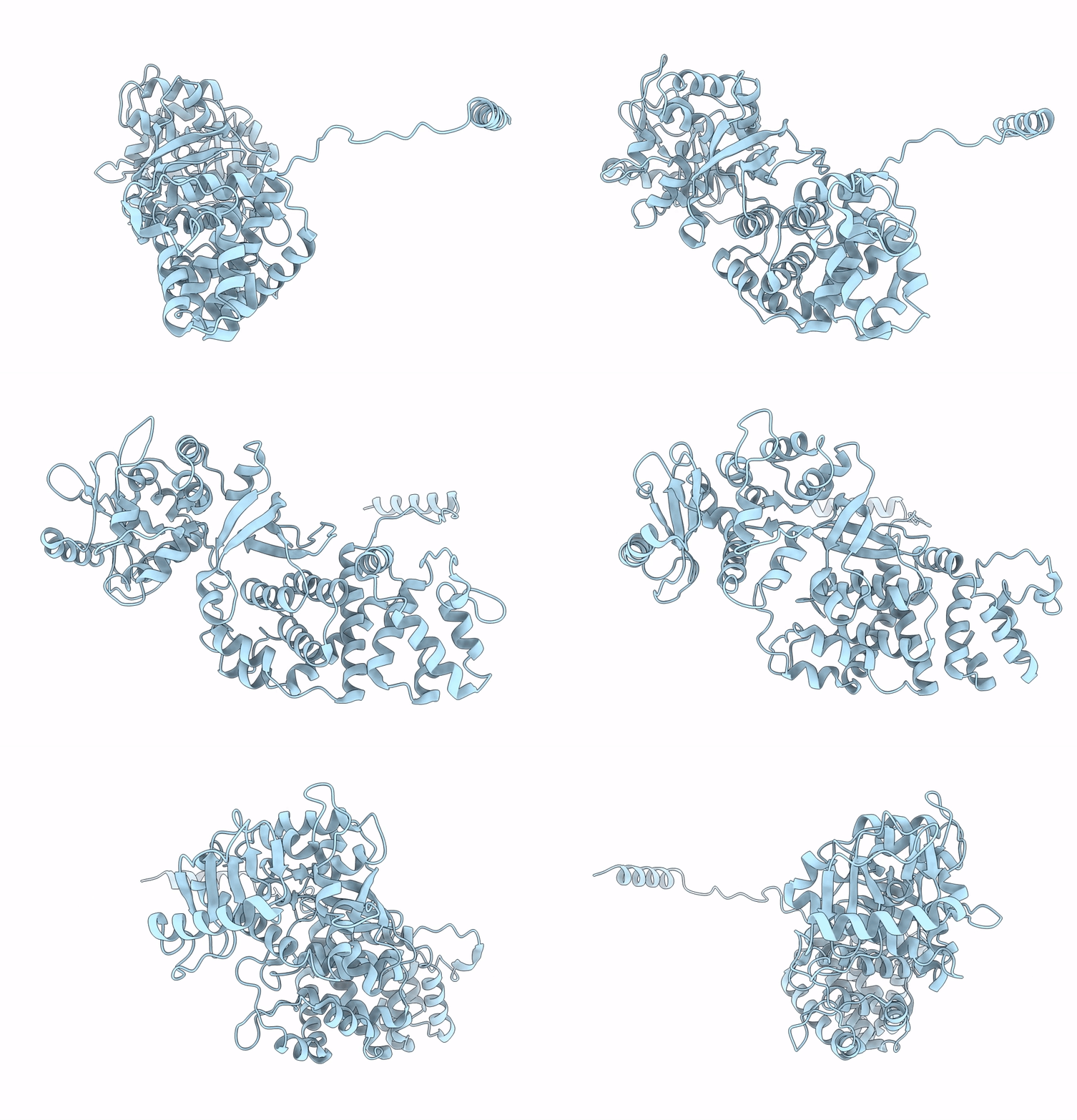
6N9Y image
Deposition Date 2018-12-04
Release Date 2019-03-13
Last Version Date 2024-03-20
Entry Detail
PDB ID:
6N9Y
Keywords:
Title:
Atomic structure of Non-Structural protein 1 of bluetongue virus
Biological Source:
Source Organism:
Method Details:
Experimental Method:
Resolution:
4.00 Å
Aggregation State:
HELICAL ARRAY
Reconstruction Method:
HELICAL

Macromolecular Entities
Structures with similar UniProt ID
Protein Blast
Polymer Type:polypeptide(L)
Molecule:Non-structural protein 1
Gene (Uniprot):NS1
Chain IDs:A
Chain Length:552
Number of Molecules:1
Biological Source:Bluetongue virus 23
Ligand Molecules
Primary Citation
Atomic structure of the translation regulatory protein NS1 of bluetongue virus.
Nat Microbiol 4 837 845 (2019)
PMID: 30778144 DOI: 10.1038/s41564-019-0369-x

Abstact

Bluetongue virus (BTV) non-structural protein 1 (NS1) regulates viral protein synthesis and exists as tubular and non-tubular forms in infected cells, but how tubules assemble and how protein synthesis is regulated are unknown. Here, we report near-atomic resolution structures of two NS1 tubular forms determined by cryo-electron microscopy. The two tubular forms are different helical assemblies of the same NS1 monomer, consisting of an amino-terminal foot, a head and body domains connected to an extended carboxy-terminal arm, which wraps atop the head domain of another NS1 subunit through hydrophobic interactions. Deletion of the C terminus prevents tubule formation but not viral replication, suggesting an active non-tubular form. Two zinc-finger-like motifs are present in each NS1 monomer, and tubules are disrupted by divalent cation chelation and restored by cation addition, including Zn2+, suggesting a regulatory role of divalent cations in tubule formation. In vitro luciferase assays show that the NS1 non-tubular form upregulates BTV mRNA translation, whereas zinc-finger disruption decreases viral mRNA translation, tubule formation and virus replication, confirming a functional role for the zinc-fingers. Thus, the non-tubular form of NS1 is sufficient for viral protein synthesis and infectious virus replication, and the regulatory mechanism involved operates through divalent cation-dependent conversion between the non-tubular and tubular forms.

Legend

Protein

Chemical

Disease

Primary Citation of related structures
Feedback Form
Name
Email
Institute
Feedback