6N6Q image
Deposition Date 2018-11-26
Release Date 2019-06-05
Last Version Date 2024-03-13
Entry Detail
PDB ID:
6N6Q
Keywords:
Title:
Crystal structure of a Cytochrome P450 (CYP102L1)
Biological Source:
Source Organism:
Host Organism:
Method Details:
Experimental Method:
Resolution:
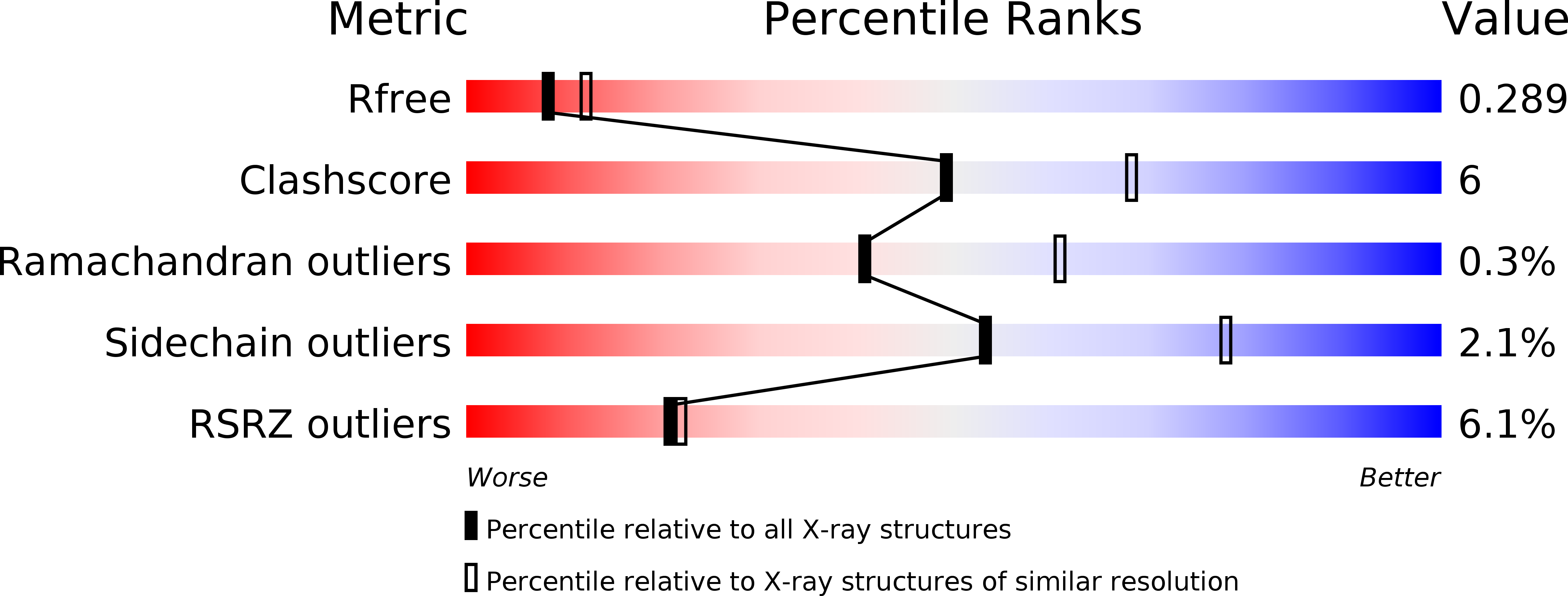
2.50 Å
R-Value Free:
0.28
R-Value Work:
0.23
R-Value Observed:
0.23
Space Group:
I 2 2 2
Macromolecular Entities
Structures with similar UniProt ID
Protein Blast
Polymer Type:polypeptide(L)
Molecule:Cytochrome P450 (CYP102L1)
Gene (Uniprot):MaF1660_ph0012
Chain IDs:A, B, C, D
Chain Length:471
Number of Molecules:4
Biological Source:Mycobacterium phage Adler
Primary Citation
On the occurrence of cytochrome P450 in viruses.
Proc.Natl.Acad.Sci.USA 116 12343 12352 (2019)
PMID: 31167942 DOI: 10.1073/pnas.1901080116

Abstact

Genes encoding cytochrome P450 (CYP; P450) enzymes occur widely in the Archaea, Bacteria, and Eukarya, where they play important roles in metabolism of endogenous regulatory molecules and exogenous chemicals. We now report that genes for multiple and unique P450s occur commonly in giant viruses in the Mimiviridae, Pandoraviridae, and other families in the proposed order Megavirales. P450 genes were also identified in a herpesvirus (Ranid herpesvirus 3) and a phage (Mycobacterium phage Adler). The Adler phage P450 was classified as CYP102L1, and the crystal structure of the open form was solved at 2.5 Å. Genes encoding known redox partners for P450s (cytochrome P450 reductase, ferredoxin and ferredoxin reductase, and flavodoxin and flavodoxin reductase) were not found in any viral genome so far described, implying that host redox partners may drive viral P450 activities. Giant virus P450 proteins share no more than 25% identity with the P450 gene products we identified in Acanthamoeba castellanii, an amoeba host for many giant viruses. Thus, the origin of the unique P450 genes in giant viruses remains unknown. If giant virus P450 genes were acquired from a host, we suggest it could have been from an as yet unknown and possibly ancient host. These studies expand the horizon in the evolution and diversity of the enormously important P450 superfamily. Determining the origin and function of P450s in giant viruses may help to discern the origin of the giant viruses themselves.

Legend

Protein

Chemical

Disease

Primary Citation of related structures
Feedback Form
Name
Email
Institute
Feedback