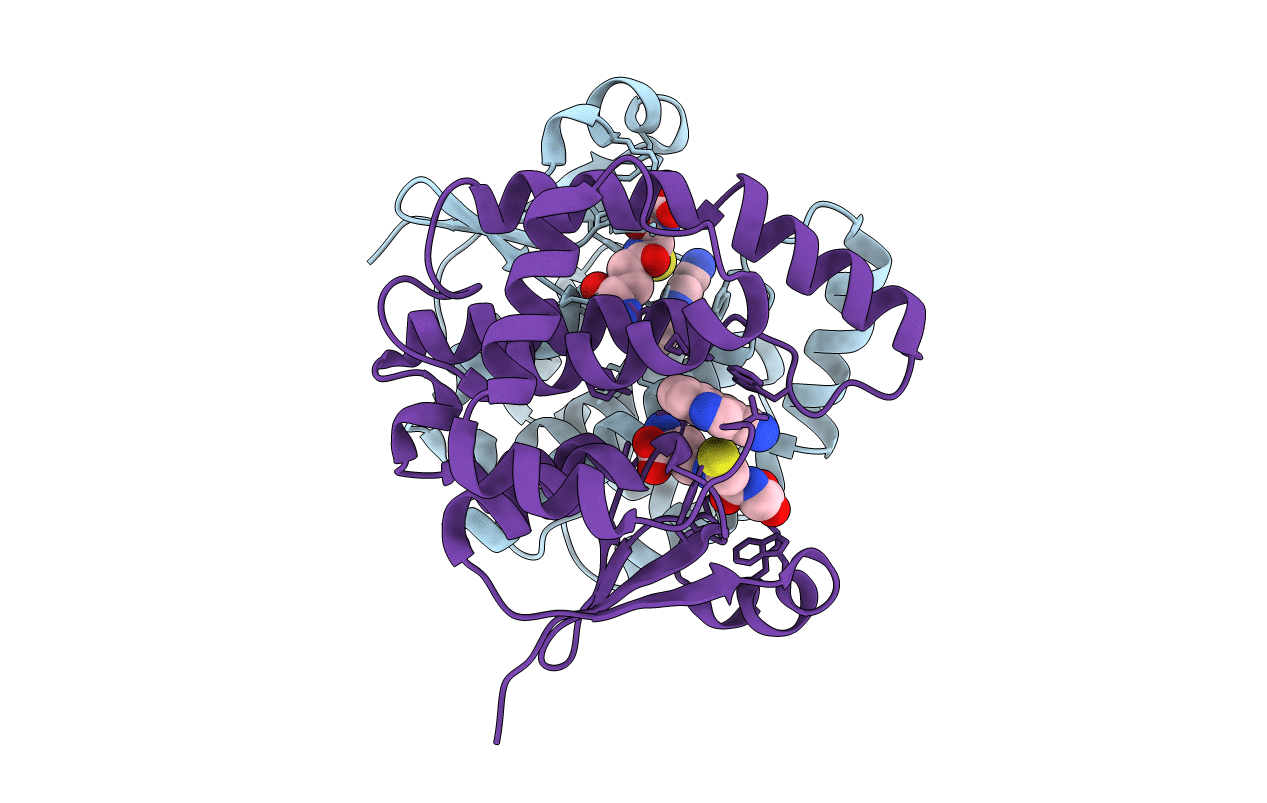
6N69 image
Deposition Date 2018-11-26
Release Date 2019-03-27
Last Version Date 2024-03-13
Entry Detail
PDB ID:
6N69
Keywords:
Title:
rat hPGDS complexed with a quinoline
Biological Source:
Source Organism:
Method Details:
Experimental Method:
Resolution:
2.00 Å
R-Value Free:
0.23
R-Value Work:
0.18
R-Value Observed:
0.18
Space Group:
P 21 21 21
Macromolecular Entities
Structures with similar UniProt ID
Protein Blast
Polymer Type:polypeptide(L)
Molecule:Hematopoietic prostaglandin D synthase
Gene (Uniprot):Hpgds
Chain IDs:A, B
Chain Length:202
Number of Molecules:2
Biological Source:Rattus norvegicus
Primary Citation

Abstact

With the goal of discovering more selective anti-inflammatory drugs, than COX inhibitors, to attenuate prostaglandin signaling, a fragment-based screen of hematopoietic prostaglandin D synthase was performed. The 76 crystallographic hits were sorted into similar groups, with the 3-cyano-quinoline 1a (FP IC50 = 220,000 nM, LE = 0.43) being a potent member of the 6,6-fused heterocyclic cluster. Employing SAR insights gained from structural comparisons of other H-PGDS fragment binding mode clusters, the initial hit 1a was converted into the 70-fold more potent quinoline 1d (IC50 = 3,100 nM, LE = 0.49). A systematic substitution of the amine moiety of 1d, utilizing structural information and array chemistry, with modifications to improve inhibitor stability, resulted in the identification of the 300-fold more active H-PGDS inhibitor tool compound 1bv (IC50 = 9.9 nM, LE = 0.42). This selective inhibitor exhibited good murine pharmacokinetics, dose-dependently attenuated PGD2 production in a mast cell degranulation assay and should be suitable to further explore H-PGDS biology.

Legend

Protein

Chemical

Disease

Primary Citation of related structures
Feedback Form
Name
Email
Institute
Feedback