6MX8 image
Deposition Date 2018-10-30
Release Date 2018-12-12
Last Version Date 2024-03-13
Entry Detail
PDB ID:
6MX8
Keywords:
Title:
Crystal structure of anaplastic lymphoma kinase (ALK) bound by Brigatinib
Biological Source:
Source Organism:
Homo sapiens (Taxon ID: 9606)
Host Organism:
Method Details:
Experimental Method:
Resolution:
1.96 Å
R-Value Free:
0.22
R-Value Work:
0.18
R-Value Observed:
0.18
Space Group:
P 21 21 21
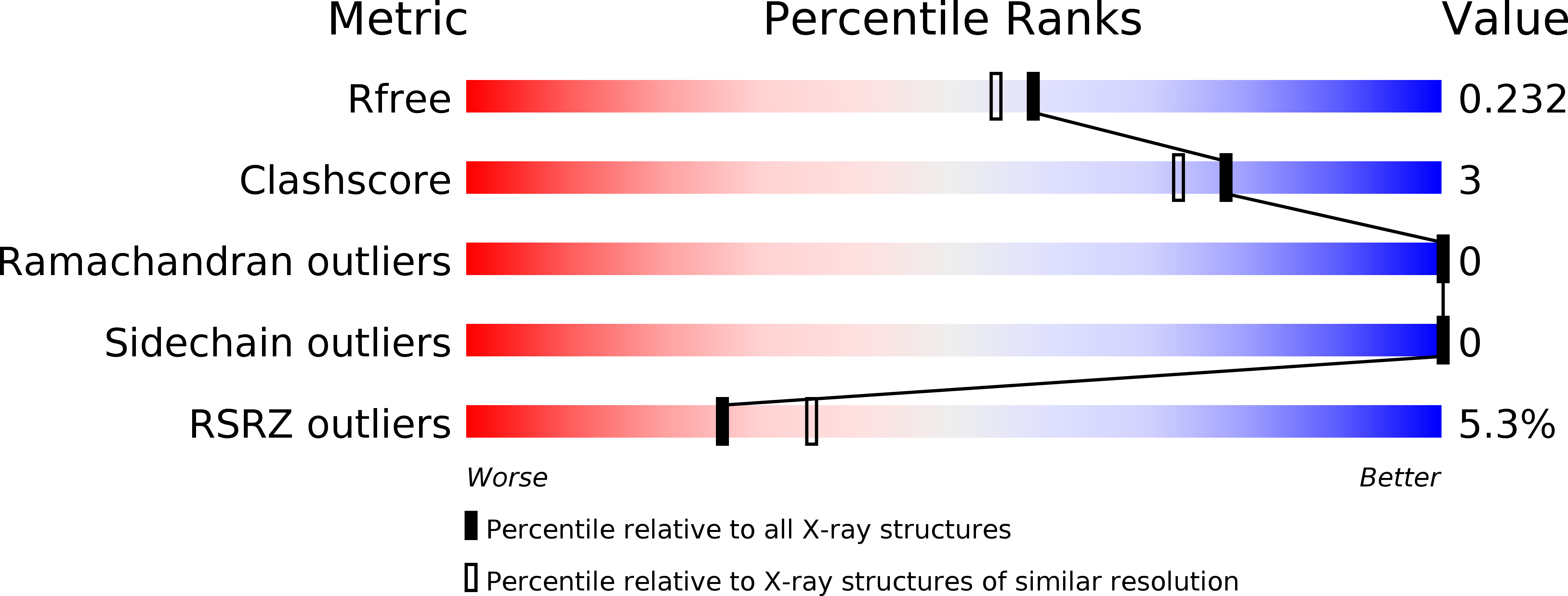
Macromolecular Entities
Structures with similar UniProt ID
Protein Blast
Polymer Type:polypeptide(L)
Molecule:ALK tyrosine kinase receptor
Gene (Uniprot):ALK
Chain IDs:A
Chain Length:307
Number of Molecules:1
Biological Source:Homo sapiens
Ligand Molecules
Primary Citation
Discovery of Brigatinib (AP26113), a Phosphine Oxide-Containing, Potent, Orally Active Inhibitor of Anaplastic Lymphoma Kinase.
J. Med. Chem. 59 4948 4964 (2016)
PMID: 27144831 DOI: 10.1021/acs.jmedchem.6b00306

Abstact

In the treatment of echinoderm microtubule-associated protein-like 4 (EML4)-anaplastic lymphoma kinase positive (ALK+) non-small-cell lung cancer (NSCLC), secondary mutations within the ALK kinase domain have emerged as a major resistance mechanism to both first- and second-generation ALK inhibitors. This report describes the design and synthesis of a series of 2,4-diarylaminopyrimidine-based potent and selective ALK inhibitors culminating in identification of the investigational clinical candidate brigatinib. A unique structural feature of brigatinib is a phosphine oxide, an overlooked but novel hydrogen-bond acceptor that drives potency and selectivity in addition to favorable ADME properties. Brigatinib displayed low nanomolar IC50s against native ALK and all tested clinically relevant ALK mutants in both enzyme-based biochemical and cell-based viability assays and demonstrated efficacy in multiple ALK+ xenografts in mice, including Karpas-299 (anaplastic large-cell lymphomas [ALCL]) and H3122 (NSCLC). Brigatinib represents the most clinically advanced phosphine oxide-containing drug candidate to date and is currently being evaluated in a global phase 2 registration trial.

Legend

Protein

Chemical

Disease

Primary Citation of related structures
Feedback Form
Name
Email
Institute
Feedback