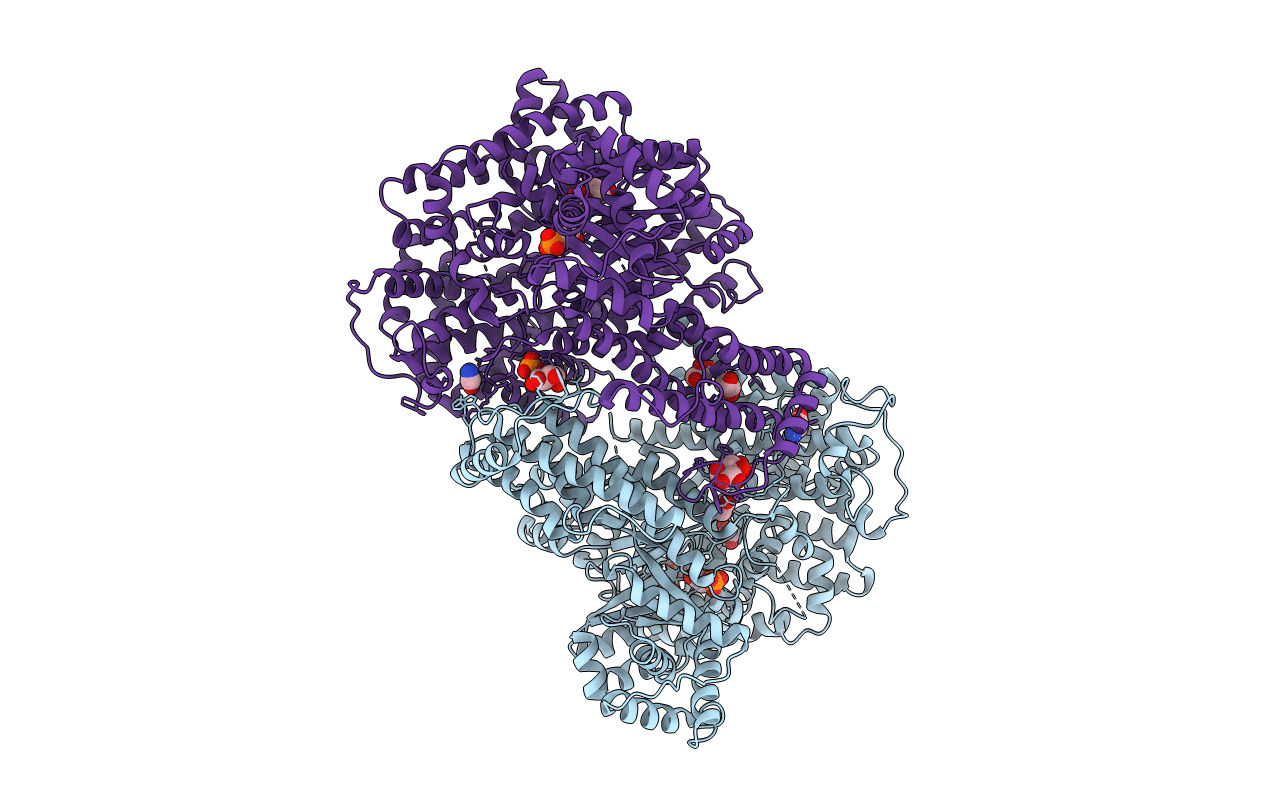
6MGI image
Deposition Date 2018-09-13
Release Date 2019-09-18
Last Version Date 2023-10-11
Entry Detail
PDB ID:
6MGI
Keywords:
Title:
Photosynthetic phosphoenolpyruvate carboxylase isoenzyme from maize complexed with the allosteric activator glucose-6-phosphate in its allosteric site
Biological Source:
Source Organism:
Zea mays (Taxon ID: 4577)
Host Organism:
Method Details:
Experimental Method:
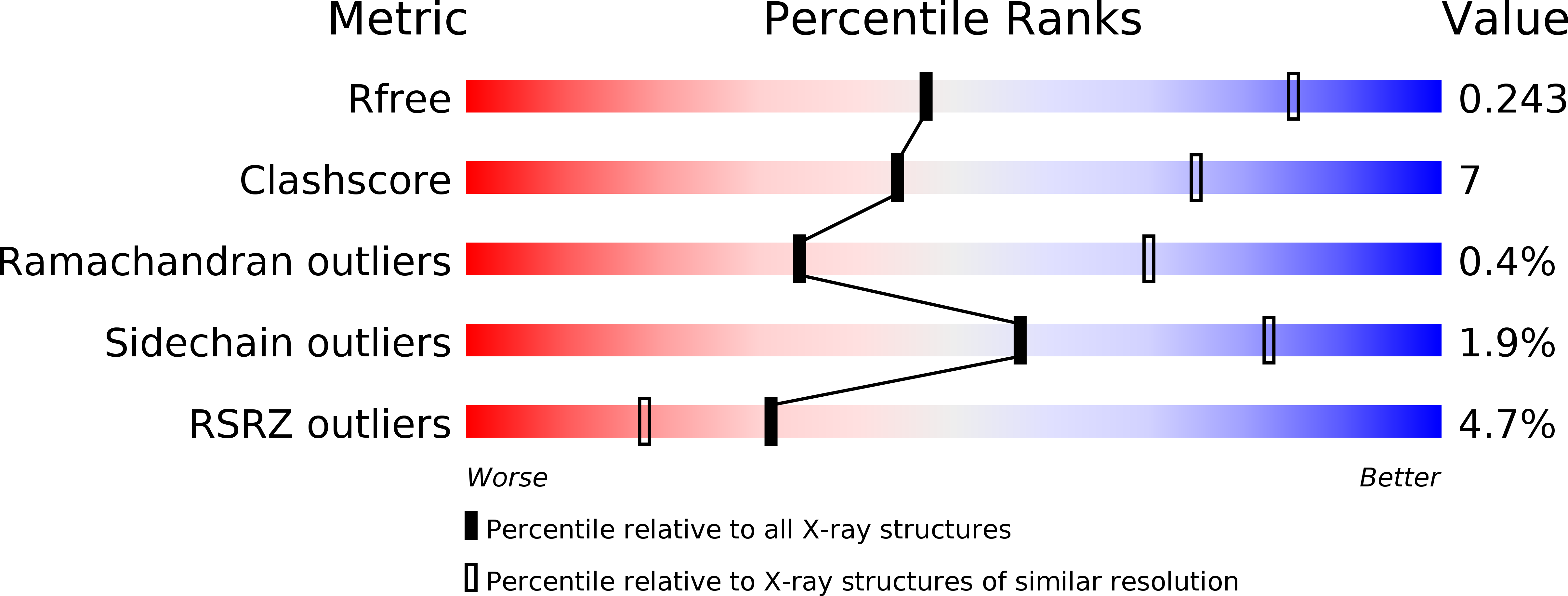
Resolution:
2.99 Å
R-Value Free:
0.24
R-Value Work:
0.20
R-Value Observed:
0.21
Space Group:
C 2 2 21
Macromolecular Entities
Structures with similar UniProt ID
Protein Blast
Polymer Type:polypeptide(L)
Molecule:Phosphoenolpyruvate carboxylase
Chain IDs:A, B
Chain Length:970
Number of Molecules:2
Biological Source:Zea mays
Primary Citation
Structural and biochemical evidence of the glucose 6-phosphate-allosteric site of maize C4-phosphoenolpyruvate carboxylase: its importance in the overall enzyme kinetics.
Biochem.J. 477 2095 2114 (2020)
PMID: 32459324 DOI: 10.1042/BCJ20200304

Abstact

Activation of phosphoenolpyruvate carboxylase (PEPC) enzymes by glucose 6-phosphate (G6P) and other phospho-sugars is of major physiological relevance. Previous kinetic, site-directed mutagenesis and crystallographic results are consistent with allosteric activation, but the existence of a G6P-allosteric site was questioned and competitive activation-in which G6P would bind to the active site eliciting the same positive homotropic effect as the substrate phosphoenolpyruvate (PEP)-was proposed. Here, we report the crystal structure of the PEPC-C4 isozyme from Zea mays with G6P well bound into the previously proposed allosteric site, unambiguously confirming its existence. To test its functionality, Asp239-which participates in a web of interactions of the protein with G6P-was changed to alanine. The D239A variant was not activated by G6P but, on the contrary, inhibited. Inhibition was also observed in the wild-type enzyme at concentrations of G6P higher than those producing activation, and probably arises from G6P binding to the active site in competition with PEP. The lower activity and cooperativity for the substrate PEP, lower activation by glycine and diminished response to malate of the D239A variant suggest that the heterotropic allosteric activation effects of free-PEP are also abolished in this variant. Together, our findings are consistent with both the existence of the G6P-allosteric site and its essentiality for the activation of PEPC enzymes by phosphorylated compounds. Furthermore, our findings suggest a central role of the G6P-allosteric site in the overall kinetics of these enzymes even in the absence of G6P or other phospho-sugars, because of its involvement in activation by free-PEP.

Legend

Protein

Chemical

Disease

Primary Citation of related structures
Feedback Form
Name
Email
Institute
Feedback