6M1U image
Deposition Date 2020-02-26
Release Date 2020-04-01
Last Version Date 2024-03-27
Entry Detail
PDB ID:
6M1U
Title:
Crystal structure of the vertebrate conserved region (VCR) of human METTL16
Biological Source:
Source Organism(s):
Homo sapiens (Taxon ID: 9606)
Expression System(s):
Method Details:
Experimental Method:
Resolution:
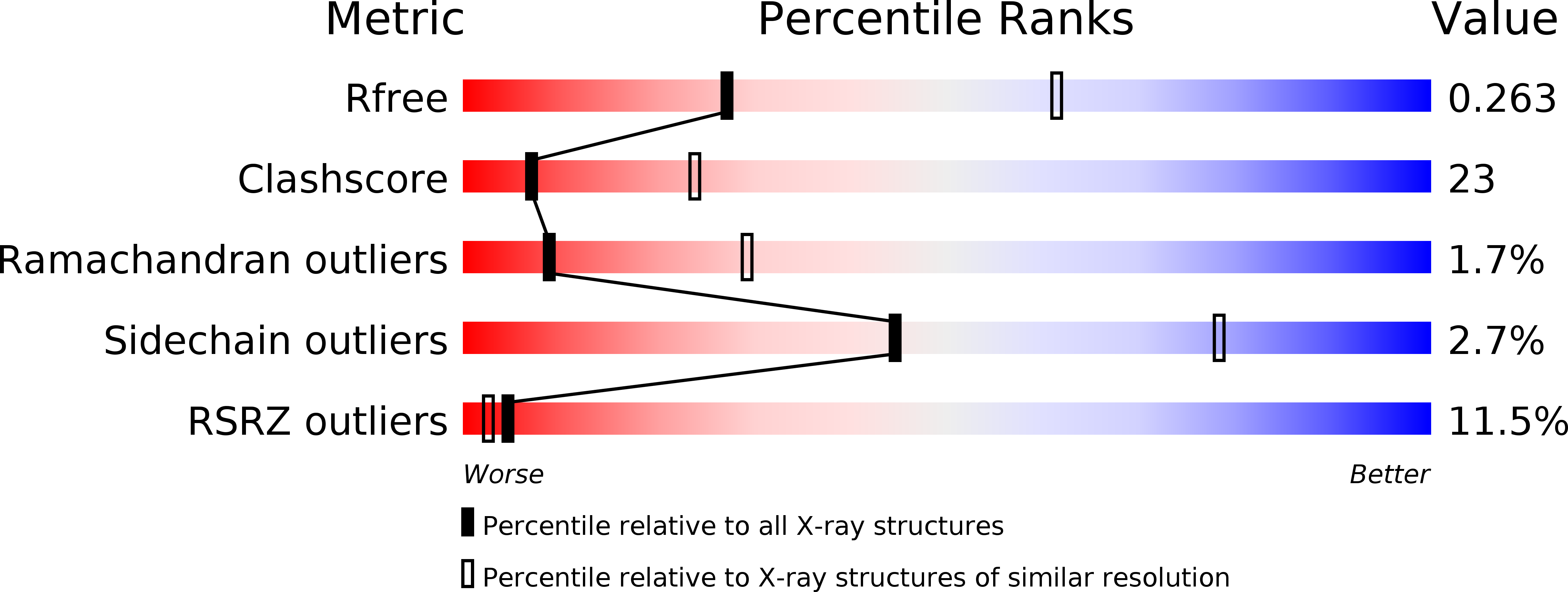
2.79 Å
R-Value Free:
0.26
R-Value Work:
0.23
R-Value Observed:
0.23
Space Group:
H 3 2
Macromolecular Entities
Structures with similar UniProt ID
Protein Blast
Polymer Type:polypeptide(L)
Molecule:RNA N6-adenosine-methyltransferase METTL16,RNA N6-adenosine-methyltransferase METTL16
Gene (Uniprot):METTL16
Mutagens:delta_1-309,delta_411-508
Chain IDs:A
Chain Length:164
Number of Molecules:1
Biological Source:Homo sapiens
Ligand Molecules
Primary Citation
Mechanistic insights into m6A modification of U6 snRNA by human METTL16.
Nucleic Acids Res. 48 5157 5168 (2020)
PMID: 32266935 DOI: 10.1093/nar/gkaa227

Abstact

The N6-methyladenosine modification at position 43 (m6A43) of U6 snRNA is catalyzed by METTL16, and is important for the 5'-splice site recognition by U6 snRNA during pre-mRNA splicing. Human METTL16 consists of the N-terminal methyltransferase domain (MTD) and the C-terminal vertebrate conserved region (VCR). While the MTD has an intrinsic property to recognize a specific sequence in the distinct structural context of RNA, the VCR functions have remained uncharacterized. Here, we present structural and functional analyses of the human METTL16 VCR. The VCR increases the affinity of METTL16 toward U6 snRNA, and the conserved basic region in VCR is important for the METTL16-U6 snRNA interaction. The VCR structure is topologically homologous to the C-terminal RNA binding domain, KA1, in U6 snRNA-specific terminal uridylyl transferase 1 (TUT1). A chimera of the N-terminal MTD of METTL16 and the C-terminal KA1 of TUT1 methylated U6 snRNA more efficiently than the MTD, indicating the functional conservation of the VCR and KA1 for U6 snRNA biogenesis. The VCR interacts with the internal stem-loop (ISL) within U6 snRNA, and this interaction would induce the conformational rearrangement of the A43-containing region of U6 snRNA, thereby modifying the RNA structure to become suitable for productive catalysis by the MTD. Therefore, the MTD and VCR in METTL16 cooperatively facilitate the m6A43 U6 snRNA modification.

Legend

Protein

Chemical

Disease

Primary Citation of related structures
Feedback Form
Name
Email
Institute
Feedback