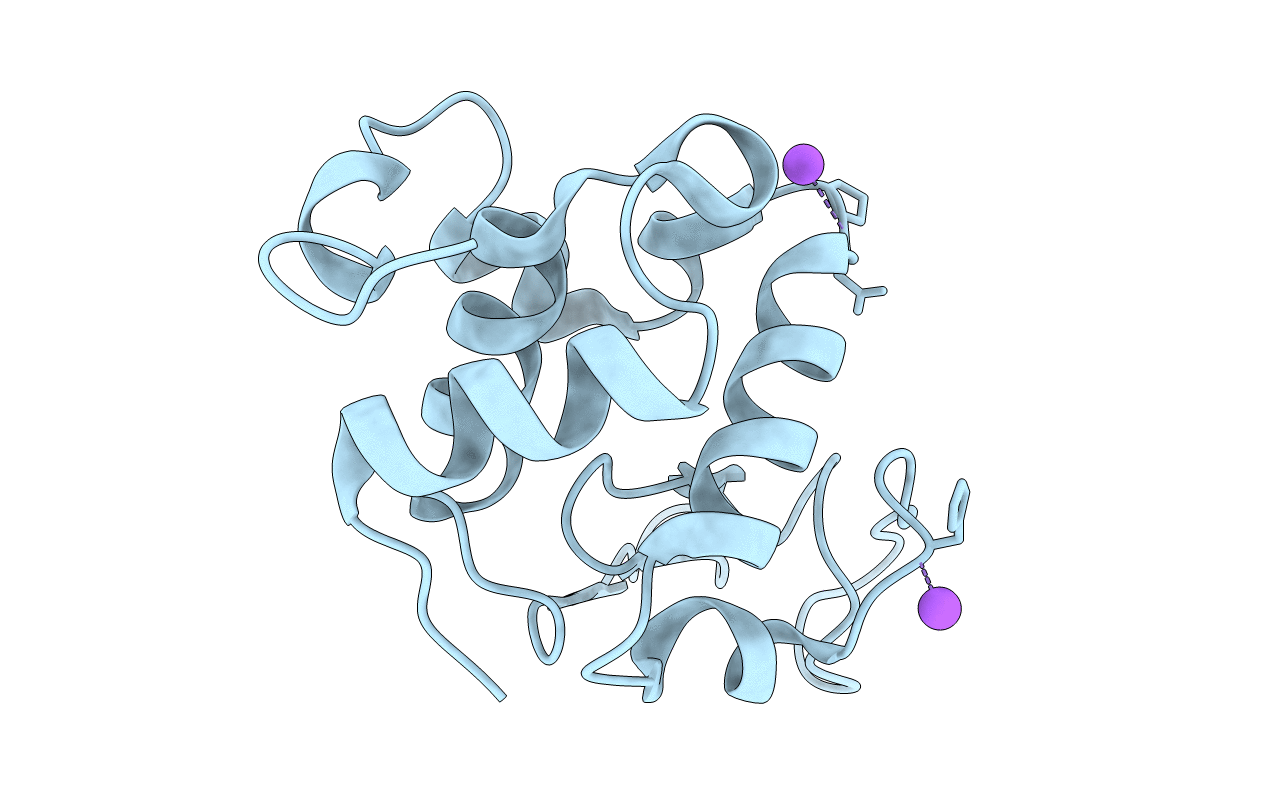
6LFH image
Deposition Date 2019-12-02
Release Date 2020-07-08
Last Version Date 2024-11-13
Entry Detail
PDB ID:
6LFH
Keywords:
Title:
X-ray crystal structure of chemically synthesized human lysozyme
Biological Source:
Source Organism:
Homo sapiens (Taxon ID: 9606)
Method Details:
Experimental Method:
Resolution:
1.46 Å
R-Value Free:
0.19
R-Value Work:
0.16
R-Value Observed:
0.16
Space Group:
P 21 21 21

Macromolecular Entities
Structures with similar UniProt ID
Protein Blast
Polymer Type:polypeptide(L)
Molecule:Lysozyme C
Gene (Uniprot):LYZ
Chain IDs:A (auth: X)
Chain Length:130
Number of Molecules:1
Biological Source:Homo sapiens
Primary Citation
Efficient Chemical Protein Synthesis using Fmoc-Masked N-Terminal Cysteine in Peptide Thioester Segments.
Angew.Chem.Int.Ed.Engl. 59 14796 14801 (2020)
PMID: 32333711 DOI: 10.1002/anie.202000491

Abstact

We report an operationally simple method to facilitate chemical protein synthesis by fully convergent and one-pot native chemical ligations utilizing the fluorenylmethyloxycarbonyl (Fmoc) moiety as an N-masking group of the N-terminal cysteine of the middle peptide thioester segment(s). The Fmoc group is stable to the harsh oxidative conditions frequently used to generate peptide thioesters from peptide hydrazide or o-aminoanilide. The ready availability of Fmoc-Cys(Trt)-OH, which is routinely used in Fmoc solid-phase peptide synthesis, where the Fmoc group is pre-installed on cysteine residue, minimizes additional steps required for the temporary protection of the N-terminal cysteinyl peptides. The Fmoc group is readily removed after ligation by short exposure (<7 min) to 20 % piperidine at pH 11 in aqueous conditions at room temperature. Subsequent native chemical ligation reactions can be performed in presence of piperidine in the same solution at pH 7.

Legend

Protein

Chemical

Disease

Primary Citation of related structures
Feedback Form
Name
Email
Institute
Feedback