6LAD image
Deposition Date 2019-11-12
Release Date 2020-08-05
Last Version Date 2024-03-27
Entry Detail
PDB ID:
6LAD
Title:
Crystal structure of Amuc_1100 from Akkermansia muciniphila
Biological Source:
Expression System(s):
Method Details:
Experimental Method:
Resolution:
2.70 Å
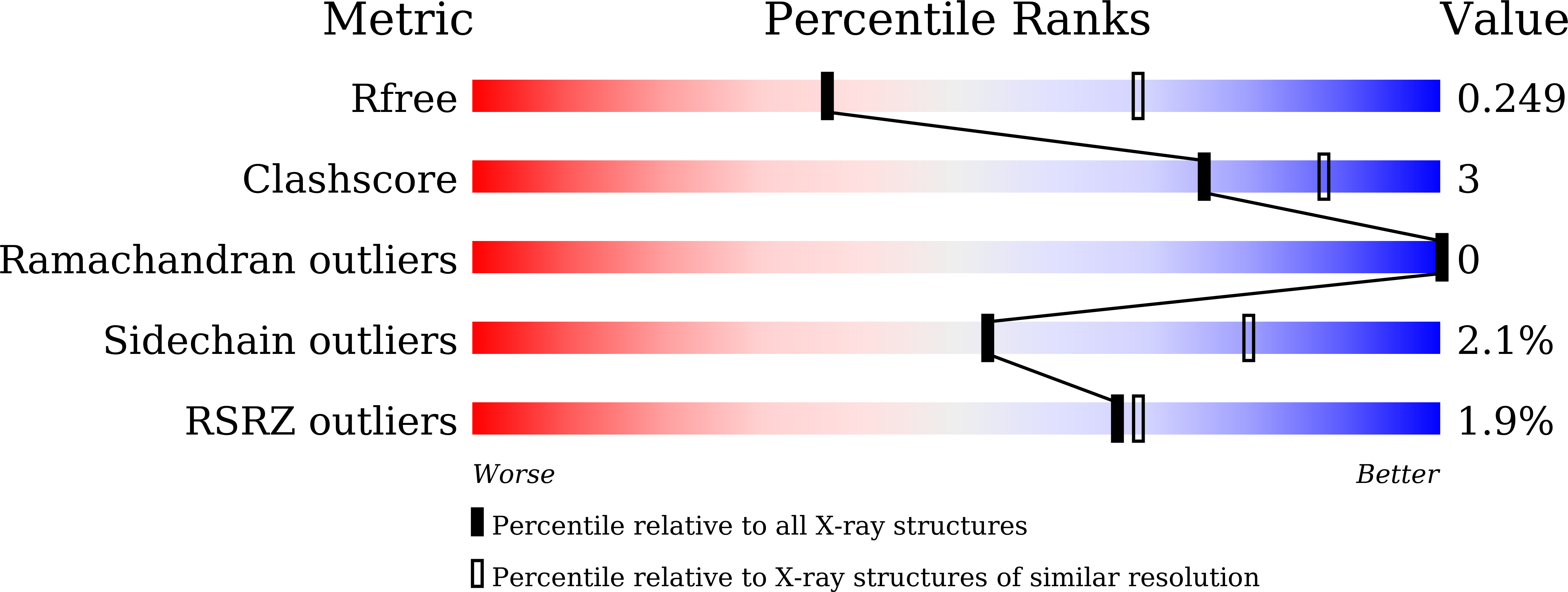
R-Value Free:
0.24
R-Value Work:
0.21
R-Value Observed:
0.21
Space Group:
P 21 21 21
Macromolecular Entities
Structures with similar UniProt ID
Protein Blast
Polymer Type:polypeptide(L)
Molecule:Amuc_1100
Gene (Uniprot):Amuc_1100
Chain IDs:A, B, C, D, E, F
Chain Length:296
Number of Molecules:6
Biological Source:Akkermansia muciniphila (strain ATCC BAA-835 / Muc)
Primary Citation
The variable oligomeric state of Amuc_1100 from Akkermansia muciniphila.
J.Struct.Biol. 212 107593 107593 (2020)
PMID: 32736072 DOI: 10.1016/j.jsb.2020.107593

Abstact

Akkermansia muciniphila is a beneficial microorganism colonized in the human gut that can reverse many intestinal metabolic-related diseases. Amuc_1100 is an outer-membrane protein of A. muciniphila. Oral administration of Amuc_1100 can reduce fat mass development, insulin resistance, and dyslipidemia in mice and activated the toll-like receptor 2 (TLR2) to regulate the immune response of the host, but the molecular mechanism remains unclear. Here we report the crystal structure of the extramembranous domain of Amuc_1100, which consists of a four-stranded antiparallel β-sheet and four α-helices. Two C-terminal helices and the four-stranded antiparallel β-sheet formed two "αββ" motifs and constituted the core domain, which shared a similar fold with type IV pili and type II Secretion system protein. Although the full-length of the extramembranous domain of Amuc_1100 existed as a monomer in solution, they formed trimer in the crystal. Elimination of the N-terminal coiled-coil helix α1 led to dimerization of Amuc_1100 both in solution and in crystal, indicating that the oligomeric state of Amuc_1100 was variable and could be influenced by α1. In addition, we identified that Amuc_1100 could directly bind human TLR2 (hTRL2) in vitro, suggesting that Amuc_1100 may serve as a new ligand for hTLR2. Dimerization of Amuc_1100 improved its hTLR2-binding affinity, suggesting that the α1-truncated Amuc_1100 could be a beneficial candidate for the development of A. muciniphila related drugs.

Legend

Protein

Chemical

Disease

Primary Citation of related structures
Feedback Form
Name
Email
Institute
Feedback