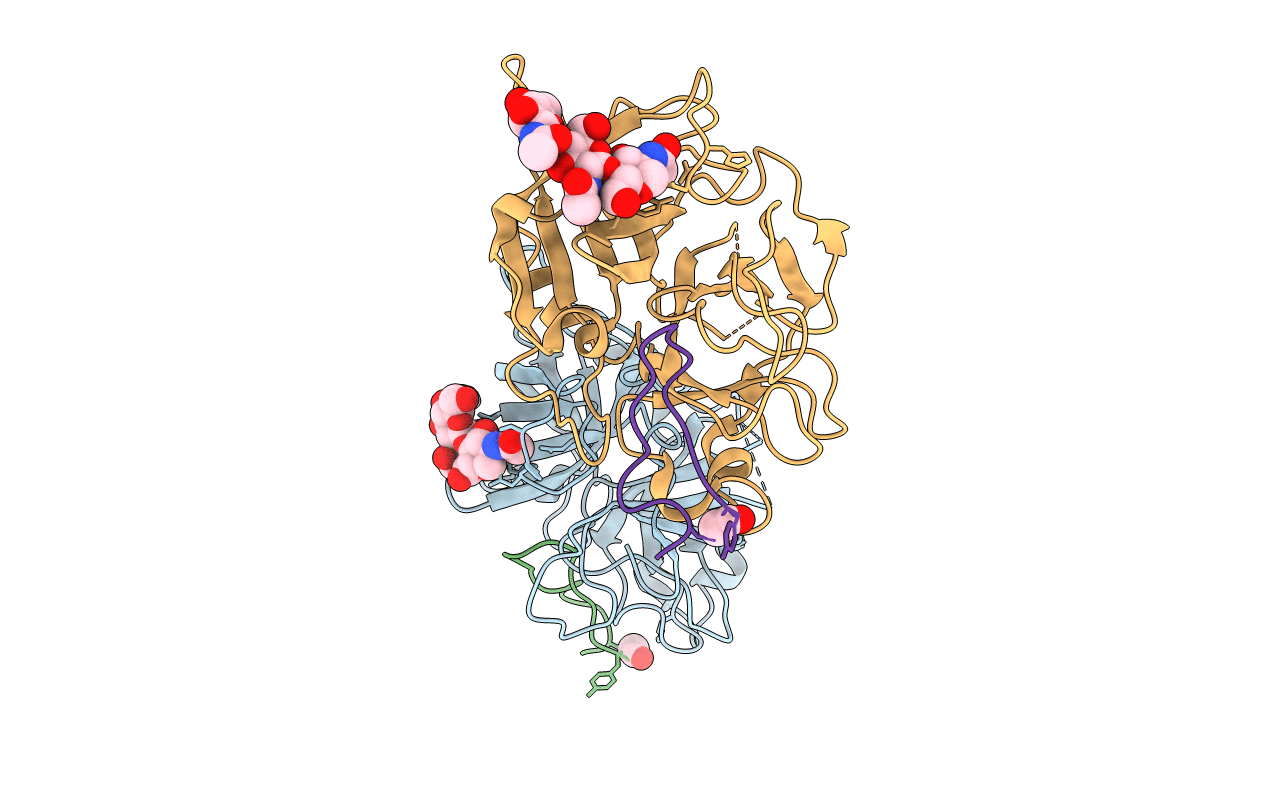
6L63 image
Deposition Date 2019-10-26
Release Date 2020-09-02
Last Version Date 2025-09-17
Entry Detail
PDB ID:
6L63
Keywords:
Title:
Human Coagulation Factor XIIa (FXIIa) bound with the macrocyclic peptide F3 containing two (1S,2S)-2-ACHC residues
Biological Source:
Source Organism:
Method Details:
Experimental Method:
Resolution:
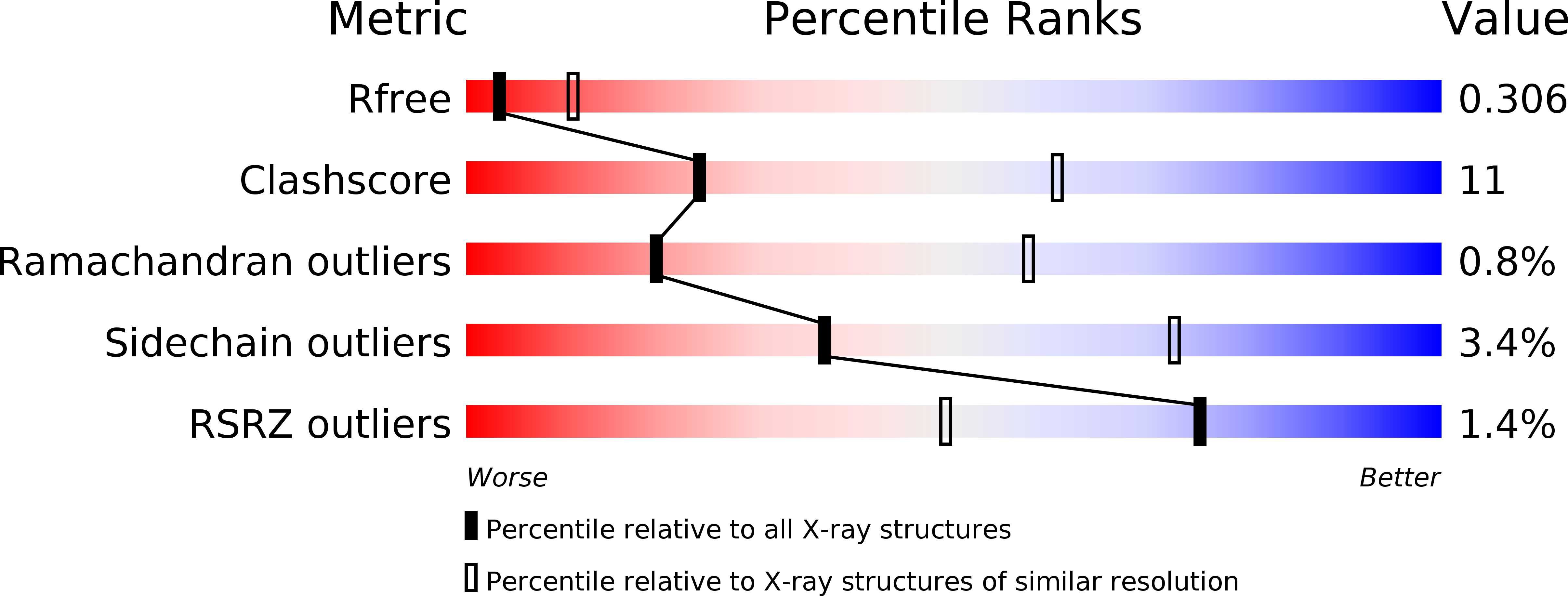
3.00 Å
R-Value Free:
0.30
R-Value Work:
0.25
R-Value Observed:
0.26
Space Group:
P 2 21 21
Macromolecular Entities
Structures with similar UniProt ID
Protein Blast
Polymer Type:polypeptide(L)
Molecule:Coagulation factor XII
Gene (Uniprot):F12
Chain IDs:A, C
Chain Length:243
Number of Molecules:2
Biological Source:Homo sapiens
Polymer Type:polypeptide(L)
Molecule:F3
Chain IDs:B, D
Chain Length:18
Number of Molecules:2
Biological Source:synthetic construct
Ligand Molecules
Peptide-like Molecules
PRD_900017
Primary Citation
Ribosomal synthesis and de novo discovery of bioactive foldamer peptides containing cyclic beta-amino acids.
Nat.Chem. 12 1081 1088 (2020)
PMID: 32839601 DOI: 10.1038/s41557-020-0525-1

Abstact

Peptides that contain β-amino acids display stable secondary structures, such as helices and sheets, and are often referred to as foldamers. Cyclic β2,3-amino acids (cβAAs), such as 2-aminocyclohexanecarboxylic acid (2-ACHC), are strong helix/turn inducers due to their restricted conformations. Here we report the ribosomal synthesis of foldamer peptides that contain multiple, up to ten, consecutive cβAAs via genetic code reprogramming. We also report the de novo discovery of macrocyclic cβAA-containing peptides capable of binding to a protein target. As a demonstration, potent binders with low-to-subnanomolar KD values were identified for human factor XIIa (hFXIIa) and interferon-gamma receptor 1, from a library of their 1012 members. One of the anti-hFXIIa macrocyclic peptides that exhibited a high inhibitory activity and serum stability was co-crystallized with hFXIIa. The X-ray structure revealed that it adopts an antiparallel β-sheet structure induced by a (1S,2S)-2-ACHC residue via the formation of two γ-turns. This work demonstrates the potential of this platform to explore the previously inaccessible sequence space of cβAA-containing peptides.

Legend

Protein

Chemical

Disease

Primary Citation of related structures
Feedback Form
Name
Email
Institute
Feedback