6KZ8 image
Deposition Date 2019-09-23
Release Date 2019-11-13
Last Version Date 2024-03-27
Entry Detail
PDB ID:
6KZ8
Keywords:
Title:
Crystal structure of plant Phospholipase D alpha complex with phosphatidic acid
Biological Source:
Source Organism:
Host Organism:
Method Details:
Experimental Method:
Resolution:
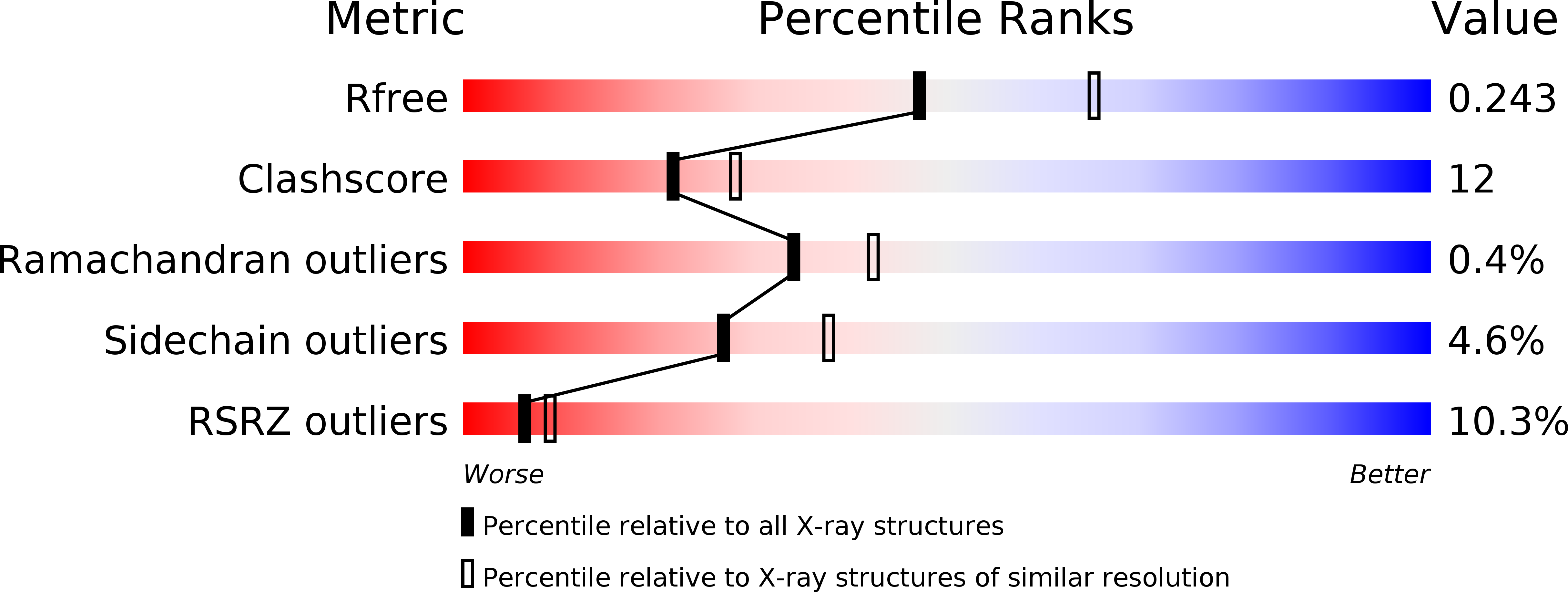
2.29 Å
R-Value Free:
0.24
R-Value Work:
0.19
R-Value Observed:
0.19
Space Group:
P 21 21 21
Macromolecular Entities
Structures with similar UniProt ID
Protein Blast
Polymer Type:polypeptide(L)
Molecule:Phospholipase D alpha 1
Gene (Uniprot):PLDALPHA1
Chain IDs:A, B
Chain Length:810
Number of Molecules:2
Biological Source:Arabidopsis thaliana
Primary Citation
Crystal structure of plant PLD alpha 1 reveals catalytic and regulatory mechanisms of eukaryotic phospholipase D.
Cell Res. 30 61 69 (2020)
PMID: 31619765 DOI: 10.1038/s41422-019-0244-6

Abstact

Phospholipase D (PLD) hydrolyzes the phosphodiester bond of glycerophospholipids and produces phosphatidic acid (PA), which acts as a second messenger in many living organisms. A large number of PLDs have been identified in eukaryotes, and are viewed as promising targets for drug design because these enzymes are known to be tightly regulated and to function in the pathophysiology of many human diseases. However, the underlying molecular mechanisms of catalysis and regulation of eukaryotic PLD remain elusive. Here, we determined the crystal structure of full-length plant PLDα1 in the apo state and in complex with PA. The structure shows that the N-terminal C2 domain hydrophobically interacts with the C-terminal catalytic domain that features two HKD motifs. Our analysis reveals the catalytic site, substrate-binding mechanism, and a new Ca2+-binding site that is required for the activation of PLD. In addition, we tested several efficient small-molecule inhibitors against PLDα1, and suggested a possible competitive inhibition mechanism according to structure-based docking analysis. This study explains many long-standing questions about PLDs and provides structural insights into PLD-targeted inhibitor/drug design.

Legend

Protein

Chemical

Disease

Primary Citation of related structures
Feedback Form
Name
Email
Institute
Feedback