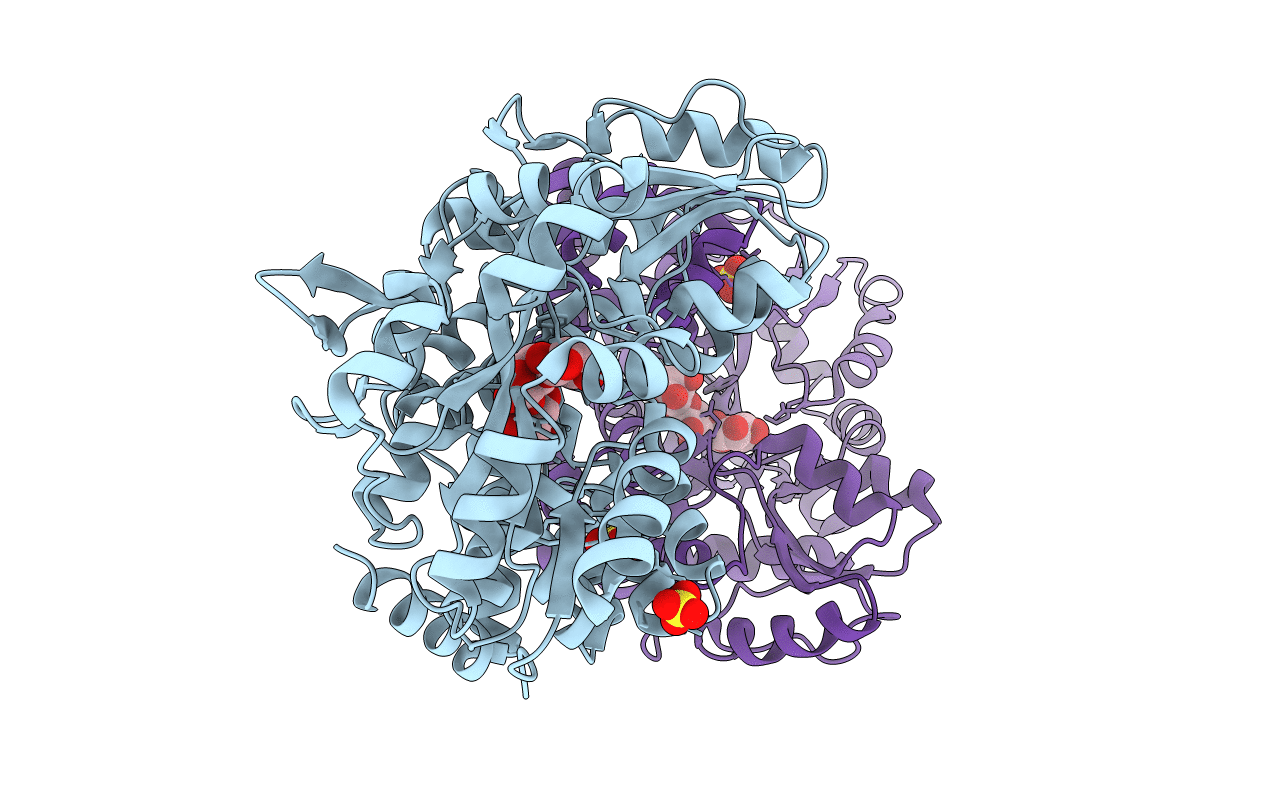
6KI0 image
Deposition Date 2019-07-16
Release Date 2020-07-22
Last Version Date 2023-11-22
Entry Detail
PDB ID:
6KI0
Keywords:
Title:
Crystal Structure of Human ASC-CARD
Biological Source:
Source Organism:
Method Details:
Experimental Method:
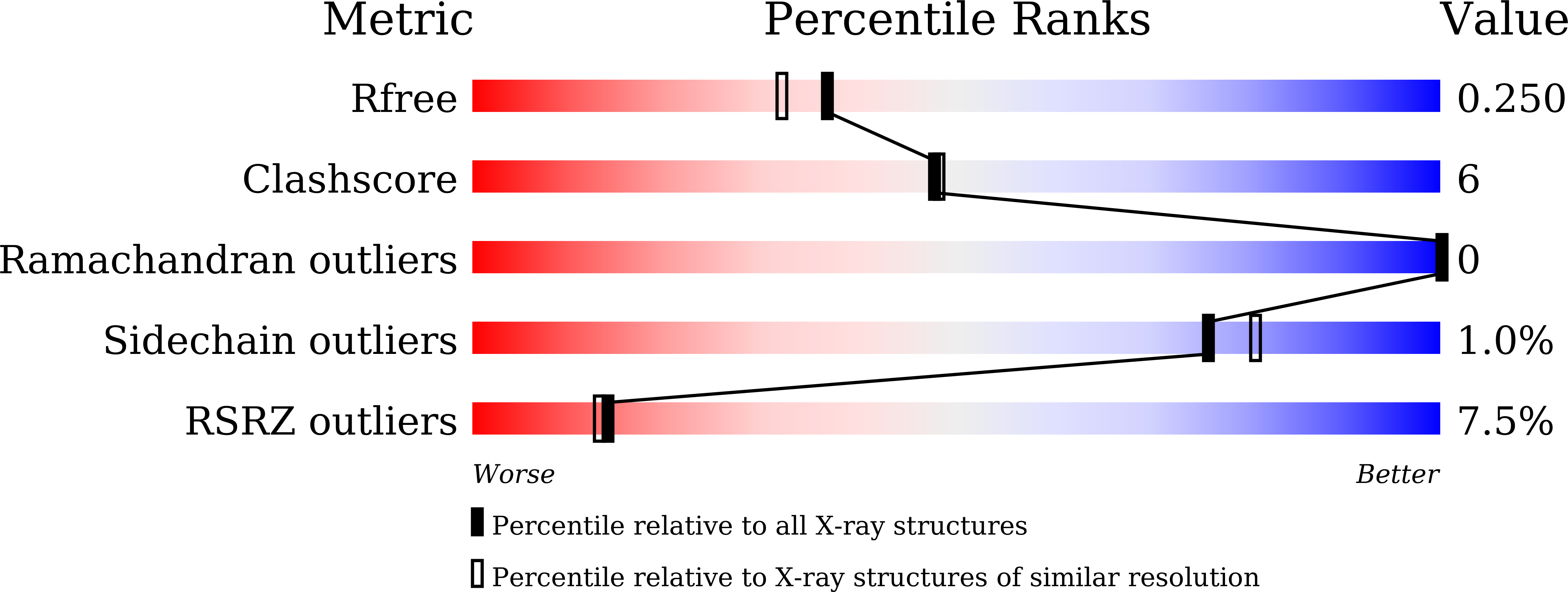
Resolution:
2.00 Å
R-Value Free:
0.25
R-Value Work:
0.22
R-Value Observed:
0.22
Space Group:
C 1 2 1
Macromolecular Entities
Protein Blast
Polymer Type:polypeptide(L)
Molecule:Maltose/maltodextrin-binding periplasmic protein,Apoptosis-associated speck-like protein containing a CARD
Gene (Uniprot):malE, PYCARD
Mutagens:D108A,K109A,E198A,N199A,K265A
Chain IDs:A, B
Chain Length:466
Number of Molecules:2
Biological Source:Escherichia coli (strain K12), Homo sapiens
Ligand Molecules
Peptide-like Molecules
PRD_900009
Primary Citation
Homotypic CARD-CARD interaction is critical for the activation of NLRP1 inflammasome.
Cell Death Dis 12 57 57 (2021)
PMID: 33431827 DOI: 10.1038/s41419-020-03342-8

Abstact

Cytosolic inflammasomes are supramolecular complexes that are formed in response to intracellular pathogens and danger signals. However, as to date, the detailed description of a homotypic caspase recruitment domain (CARD) interaction between NLRP1 and ASC has not been presented. We found the CARD-CARD interaction between purified NLRP1CARD and ASCCARD experimentally and the filamentous supramolecular complex formation in an in vitro proteins solution. Moreover, we determined a high-resolution crystal structure of the death domain fold of the human ASCCARD. Mutational and structural analysis revealed three conserved interfaces of the death domain superfamily (Type I, II, and III), which mediate the assembly of the NLRP1CARD/ASCCARD complex. In addition, we validated the role of the three major interfaces of CARDs in assembly and activation of NLRP1 inflammasome in vitro. Our findings suggest a Mosaic model of homotypic CARD interactions for the activation of NLRP1 inflammasome. The Mosaic model provides insights into the mechanisms of inflammasome assembly and signal transduction amplification.

Legend

Protein

Chemical

Disease

Primary Citation of related structures
Feedback Form
Name
Email
Institute
Feedback