6K31 image
Deposition Date 2019-05-15
Release Date 2019-11-06
Last Version Date 2024-10-23
Entry Detail
PDB ID:
6K31
Keywords:
Title:
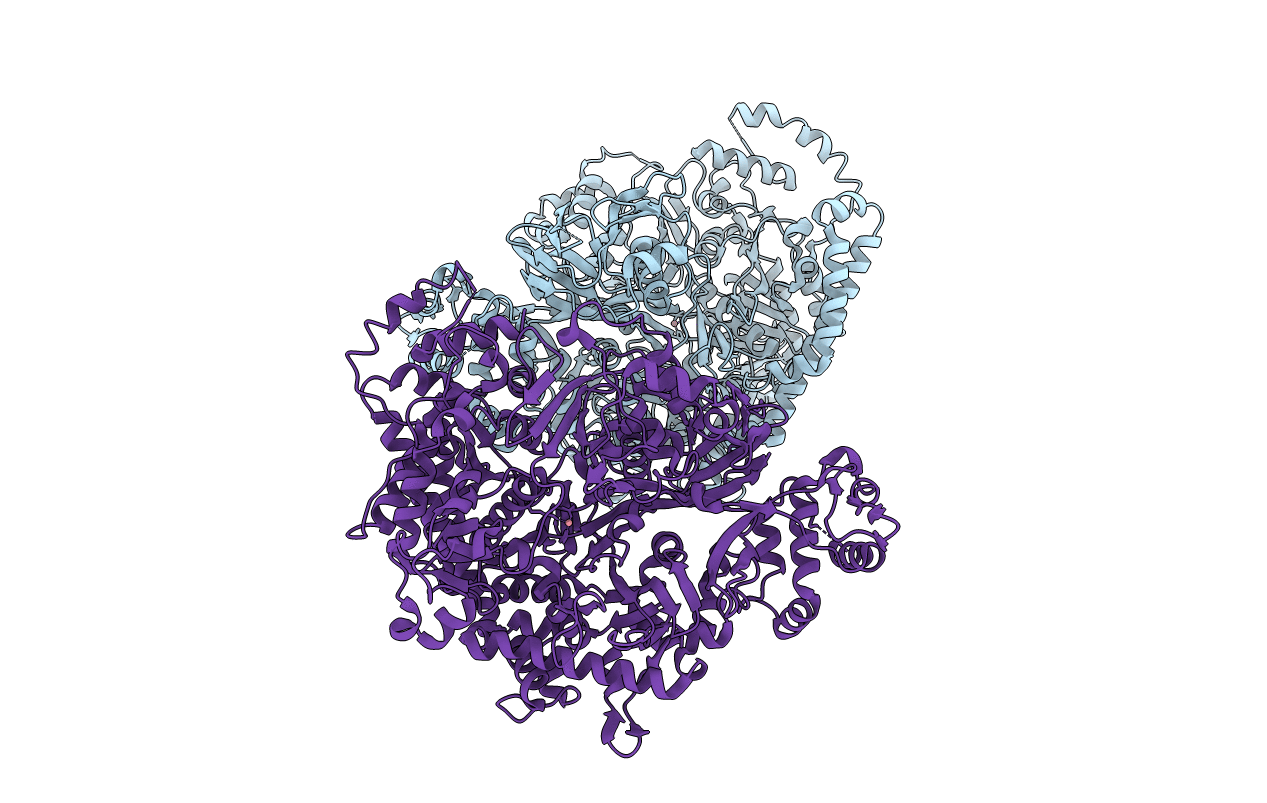
Crystal structure of pyrophosphate-dependent phosphoenolpyruvate carboxykinase (PPi-PEPCK)
Biological Source:
Source Organism(s):
Expression System(s):
Method Details:
Experimental Method:
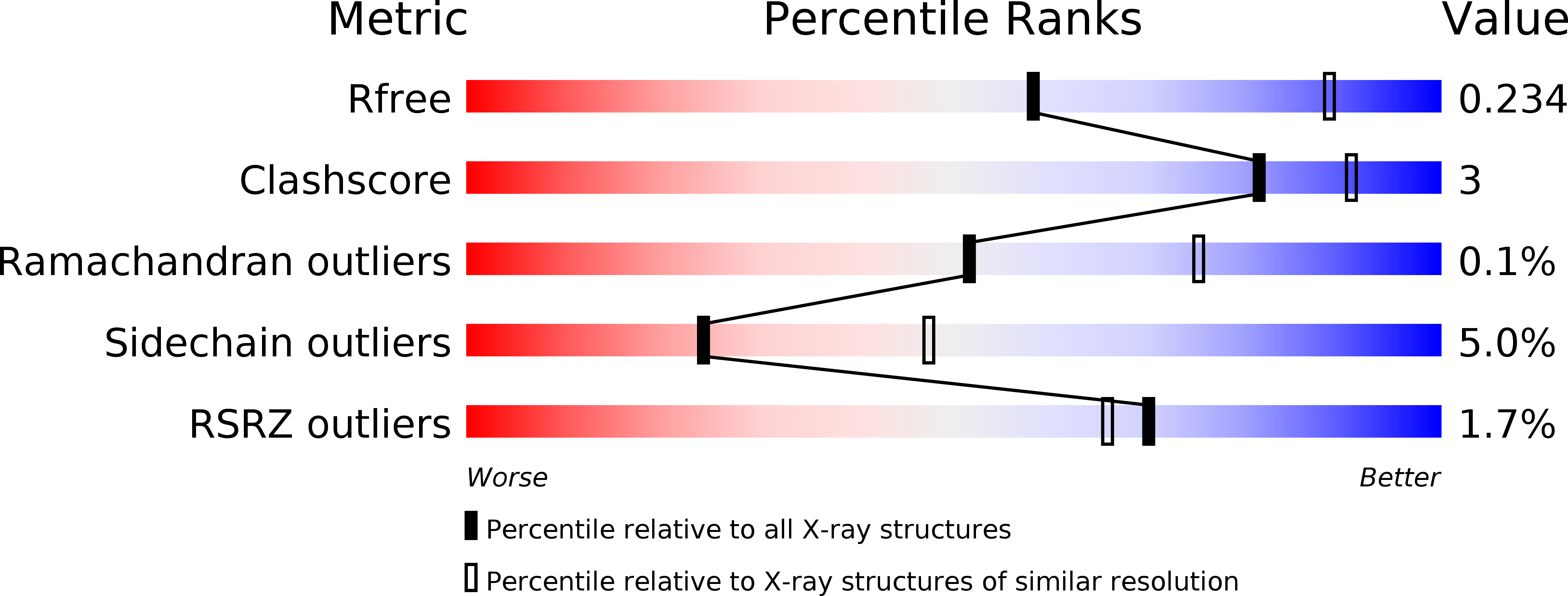
Resolution:
2.60 Å
R-Value Free:
0.24
R-Value Work:
0.19
R-Value Observed:
0.19
Space Group:
P 32 2 1
Macromolecular Entities
Structures with similar UniProt ID
Protein Blast
Polymer Type:polypeptide(L)
Molecule:AiPEPCK
Chain IDs:A, B
Chain Length:1153
Number of Molecules:2
Biological Source:Actinomyces israelii
Ligand Molecules
Primary Citation
Structural comparisons of phosphoenolpyruvate carboxykinases reveal the evolutionary trajectories of these phosphodiester energy conversion enzymes.
J.Biol.Chem. 294 19269 19278 (2019)
PMID: 31662435 DOI: 10.1074/jbc.RA119.010920

Abstact

Inorganic pyrophosphate (PPi) consists of two phosphate molecules and can act as an energy and phosphate donor in cellular reactions, similar to ATP. Several kinases use PPi as a substrate, and these kinases have recently been suggested to have evolved from ATP-dependent functional homologs, which have significant amino acid sequence similarity to PPi-utilizing enzymes. In contrast, phosphoenolpyruvate carboxykinase (PEPCK) can be divided into three types according to the phosphate donor (ATP, GTP, or PPi), and the amino acid sequence similarity of these PEPCKs is too low to confirm that they share a common ancestor. Here we solved the crystal structure of a PPi-PEPCK homolog from the bacterium Actinomyces israelii at 2.6 Å resolution and compared it with previously reported structures from ATP- and GTP-specific PEPCKs to assess the degrees of similarities and divergences among these PEPCKs. These comparisons revealed that they share a tertiary structure with significant value and that amino acid residues directly contributing to substrate recognition, except for those that recognize purine moieties, are conserved. Furthermore, the order of secondary structural elements between PPi-, ATP-, and GTP-specific PEPCKs was strictly conserved. The structure-based comparisons of the three PEPCK types provide key insights into the structural basis of PPi specificity and suggest that all of these PEPCKs are derived from a common ancestor.

Legend

Protein

Chemical

Disease

Primary Citation of related structures
Feedback Form
Name
Email
Institute
Feedback