6K2L image
Deposition Date 2019-05-14
Release Date 2019-06-12
Last Version Date 2024-03-27
Entry Detail
PDB ID:
6K2L
Keywords:
Title:
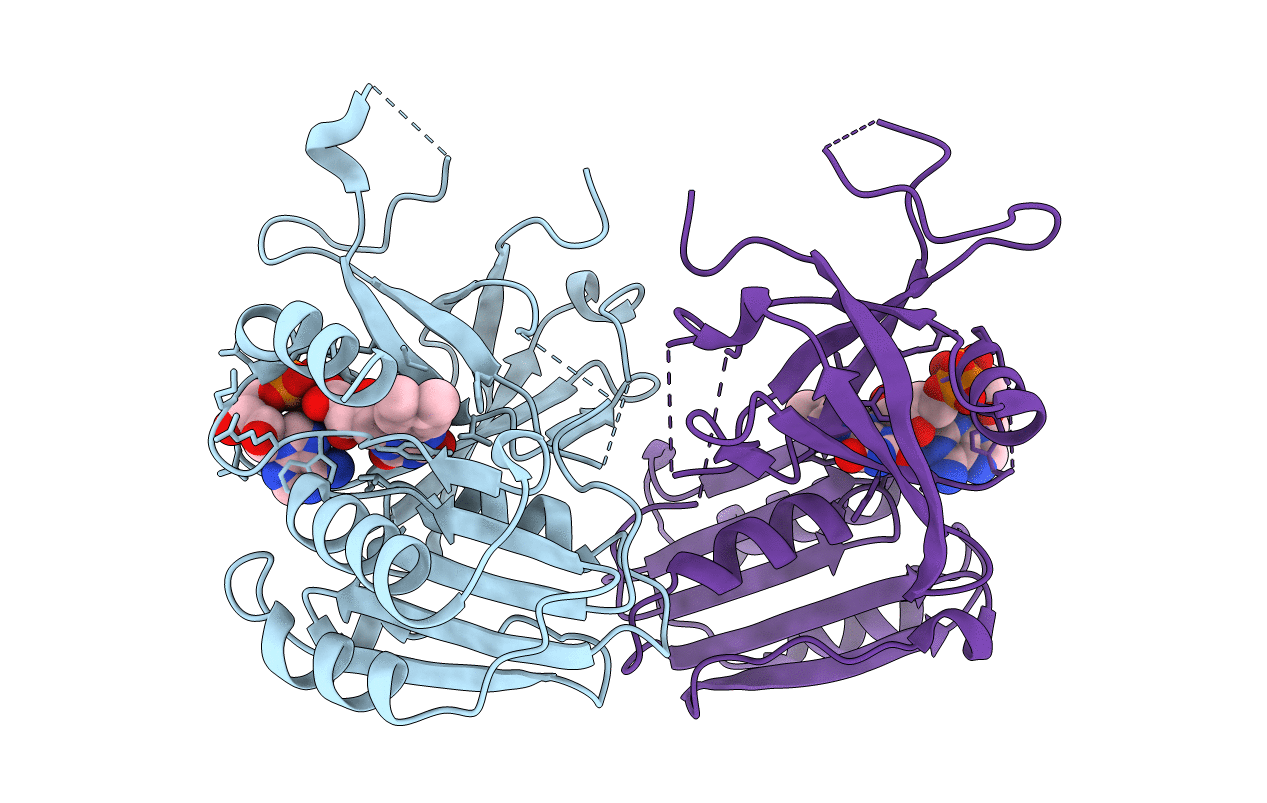
Crystal structure of the Siderophore-interacting protein SipS from Aeromonas hydrophila
Biological Source:
Source Organism:
Host Organism:
Method Details:
Experimental Method:
Resolution:
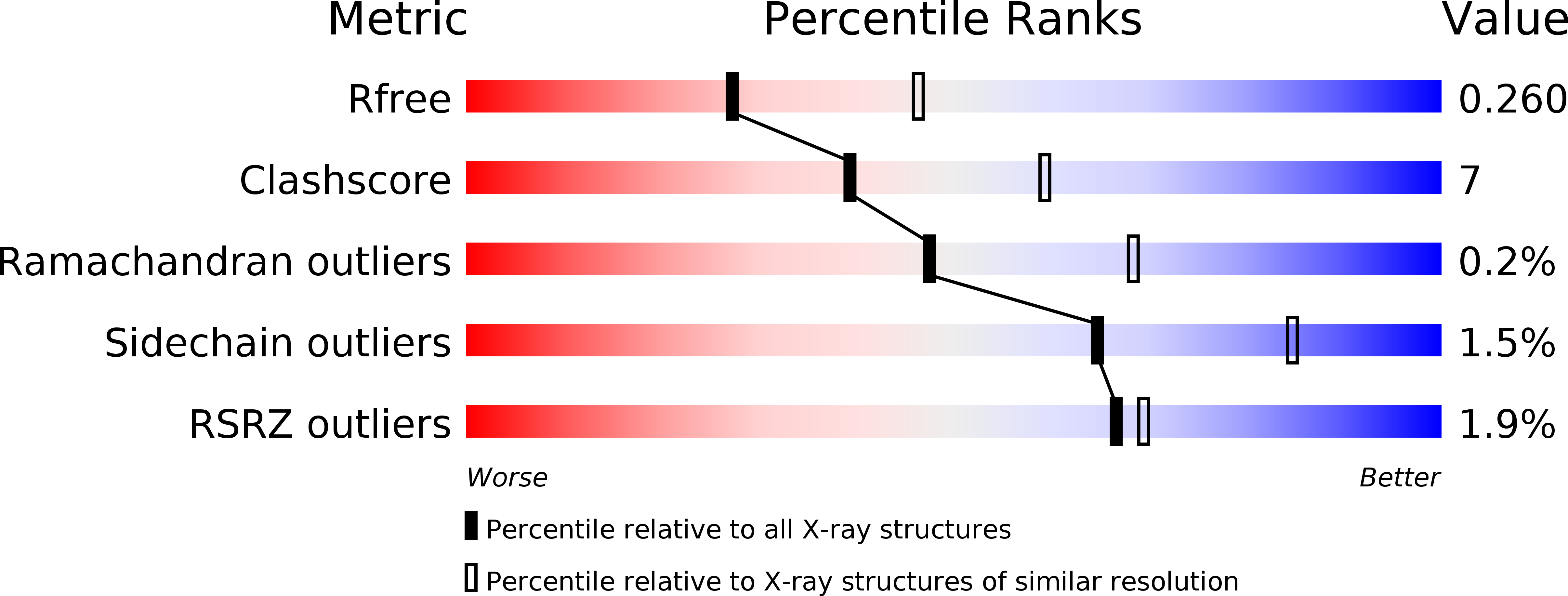
2.50 Å
R-Value Free:
0.26
R-Value Work:
0.20
R-Value Observed:
0.20
Space Group:
C 2 2 21
Macromolecular Entities
Structures with similar UniProt ID
Protein Blast
Polymer Type:polypeptide(L)
Molecule:Siderophore-interacting protein
Mutagens:P129S
Chain IDs:A, B
Chain Length:268
Number of Molecules:2
Biological Source:Aeromonas hydrophila
Ligand Molecules
Primary Citation
Crystal structure of the Siderophore-interacting protein SIP from Aeromonas hydrophila.
Biochem.Biophys.Res.Commun. 519 23 28 (2019)
PMID: 31477273 DOI: 10.1016/j.bbrc.2019.08.085

Abstact

Siderophores acquire iron from hosts under iron-limiting conditions and play an essential role in the survival of microorganisms. Siderophore-interacting proteins (SIPs) from microbes release iron from the siderophore complex by reducing ferric iron to ferrous iron, but the molecular mechanism of iron reduction remains unclear. To better understand the molecular mechanism of SIPs, we herein report the crystal structure of Aeromonas hydrophila SIP (AhSIP) in complex with flavin adenine dinucleotide (FAD) as a cofactor. AhSIP consists of an N-terminal FAD binding domain and a C-terminal NADH binding domain, which are connected by a linker region. AhSIP showed unique structural differences in the orientation of the cofactor binding lobes when compared with SIP homologs. This study identified a cluster of three basic residues (Lys48, His259 and Arg262) in AhSIP distributed around a potential substrate binding pocket. In addition, AhSIP, containing the NADH binding motif E(L)VL-X3-GE, belongs to the group I subfamily. Our results show the diverse cofactor and substrate binding sites of the SIP family.

Legend

Protein

Chemical

Disease

Primary Citation of related structures
Feedback Form
Name
Email
Institute
Feedback