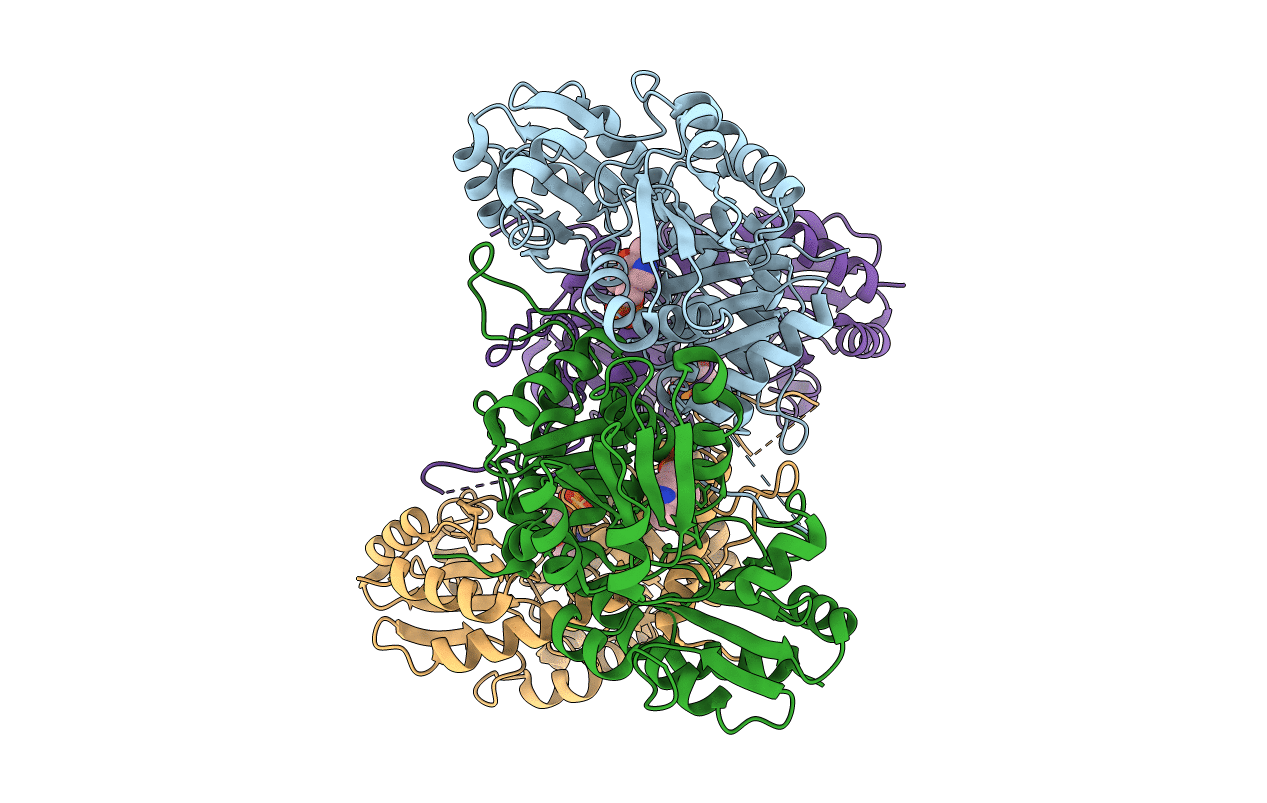
6K1N image
Deposition Date 2019-05-10
Release Date 2020-05-13
Last Version Date 2023-11-22
Entry Detail
PDB ID:
6K1N
Keywords:
Title:
PLP-bound form of a putative cystathionine gamma-lyase
Biological Source:
Host Organism:
Method Details:
Experimental Method:
Resolution:
2.26 Å
R-Value Free:
0.24
R-Value Work:
0.18
R-Value Observed:
0.18
Space Group:
P 21 21 21

Macromolecular Entities
Structures with similar UniProt ID
Protein Blast
Polymer Type:polypeptide(L)
Molecule:Cystathionine gamma-lyase
Gene (Uniprot):Smal_0489
Mutagens:D223E, E276D, A290P, K300R, D318E
Chain IDs:A, B, C, D
Chain Length:392
Number of Molecules:4
Biological Source:Stenotrophomonas maltophilia (strain R551-3)
Ligand Molecules
Primary Citation
Structural characterization of cystathionine gamma-lyase smCSE enables aqueous metal quantum dot biosynthesis.
Int.J.Biol.Macromol. 174 42 51 (2021)
PMID: 33497694 DOI: 10.1016/j.ijbiomac.2021.01.141

Abstact

The development and utilization of inorganic material biosynthesis have evolved into single macromolecular systems. A putative cystathionine γ-lyase of bacteria Stenotrophomonas maltophilia (smCSE) is a newly identified biomolecule that enables the synthesis of nanomaterials. Due to the lack of structural information, the mechanism of smCSE biosynthesis remains unclear. Herein, we obtain two atomic-resolution smCSE-form X-ray structures and confirm that the conformational changes of Tyr108 and Lys206 within the enzyme active sites are critical for the protein-driven synthesis of metal sulfide quantum dots (QDs). The structural stability of tetramer and the specificity of surface amino acids are the basis for smCSE to synthesize quantum dots. The size of QD products can be regulated by predesigned amino acids and the morphology can be controlled through proteolytic treatments. The growth rate is enhanced by the stabilization of a flexible loop in the active site, as shown by the X-ray structure of the engineered protein which fused with a dodecapeptide. We further prove that the smCSE-driven route can be applied to the general synthesis of other metal sulfide nanoparticles. These results provide a better understanding of the mechanism of QD biosynthesis and a new perspective on the control of this biosynthesis by protein modification.

Legend

Protein

Chemical

Disease

Primary Citation of related structures
Feedback Form
Name
Email
Institute
Feedback