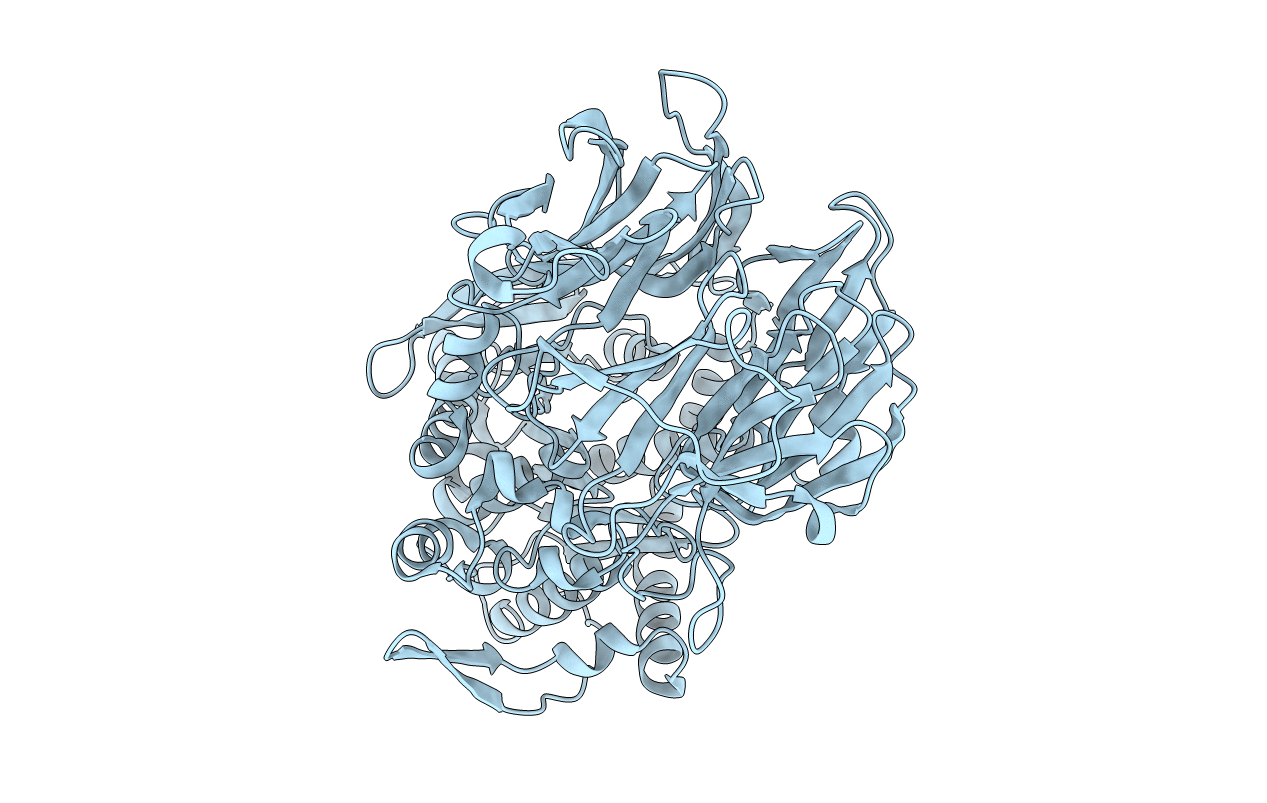
6JYM image
Deposition Date 2019-04-26
Release Date 2020-04-29
Last Version Date 2023-11-22
Entry Detail
PDB ID:
6JYM
Keywords:
Title:
Crystal structure of Prolyl Endopeptidase from Haliotis discus hannai
Biological Source:
Source Organism:
Host Organism:
Method Details:
Experimental Method:
Resolution:
1.50 Å
R-Value Free:
0.19
R-Value Work:
0.17
R-Value Observed:
0.17
Space Group:
P 21 21 21
Macromolecular Entities
Structures with similar UniProt ID
Protein Blast
Polymer Type:polypeptide(L)
Molecule:Prolyl endopeptidase
Gene (Uniprot):PREP
Chain IDs:A
Chain Length:758
Number of Molecules:1
Biological Source:Haliotis discus hannai
Primary Citation
Characterization and crystal structure of prolyl endopeptidase from abalone (Haliotis discus hannai).
FOOD CHEM 333 127452 127452 (2020)
PMID: 32673951 DOI: 10.1016/j.foodchem.2020.127452

Abstact

Aimed to study the characteristics of prolyl endopeptidase (PEP, EC 3.4.21.26) and its possible role in the degradation of collagen, we cloned the full-length cDNA sequence of PEP from abalone (Haliotis discus hannai) (Hdh-PEP). Recombinant Hdh-PEP (rHdh-PEP) was expressed in vitro, its enzymatic properties were detected, and its secondary structure was analyzed by Circular Dichroism (CD). We for the first time determined the 1.5 Å crystal structure of rHdh-PEP. The decomposition effect of rHdh-PEP on collagen peptides was analyzed. Our data revealed that the molecular weight of rHdh-PEP is 85 kDa, consisting of a catalytic domain and a β-propeller domain. The optimal pH and temperature of rHdh-PEP were pH 6.0 and 20 °C, respectively. Using small collagen peptides as substrates, HPLC-ESI-MS analysis confirmed that rHdh-PEP specifically cleaved at the carboxyl side of proline residues, suggesting its role in the degradation of collagen peptides during autolysis.

Legend

Protein

Chemical

Disease

Primary Citation of related structures
Feedback Form
Name
Email
Institute
Feedback