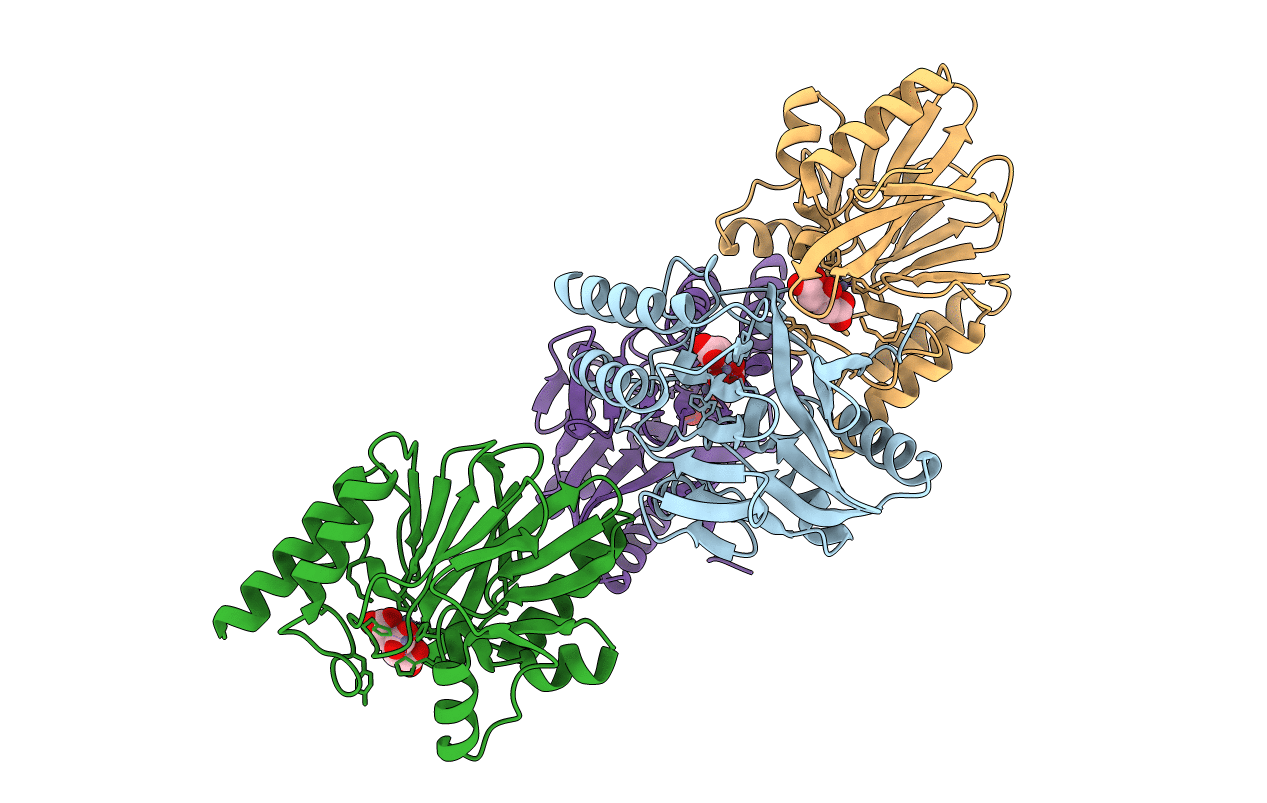
6JV4 image
Deposition Date 2019-04-15
Release Date 2019-11-27
Last Version Date 2024-03-27
Entry Detail
PDB ID:
6JV4
Keywords:
Title:
Crystal structure of metallo-beta-lactamase VMB-1
Biological Source:
Source Organism:
Method Details:
Experimental Method:
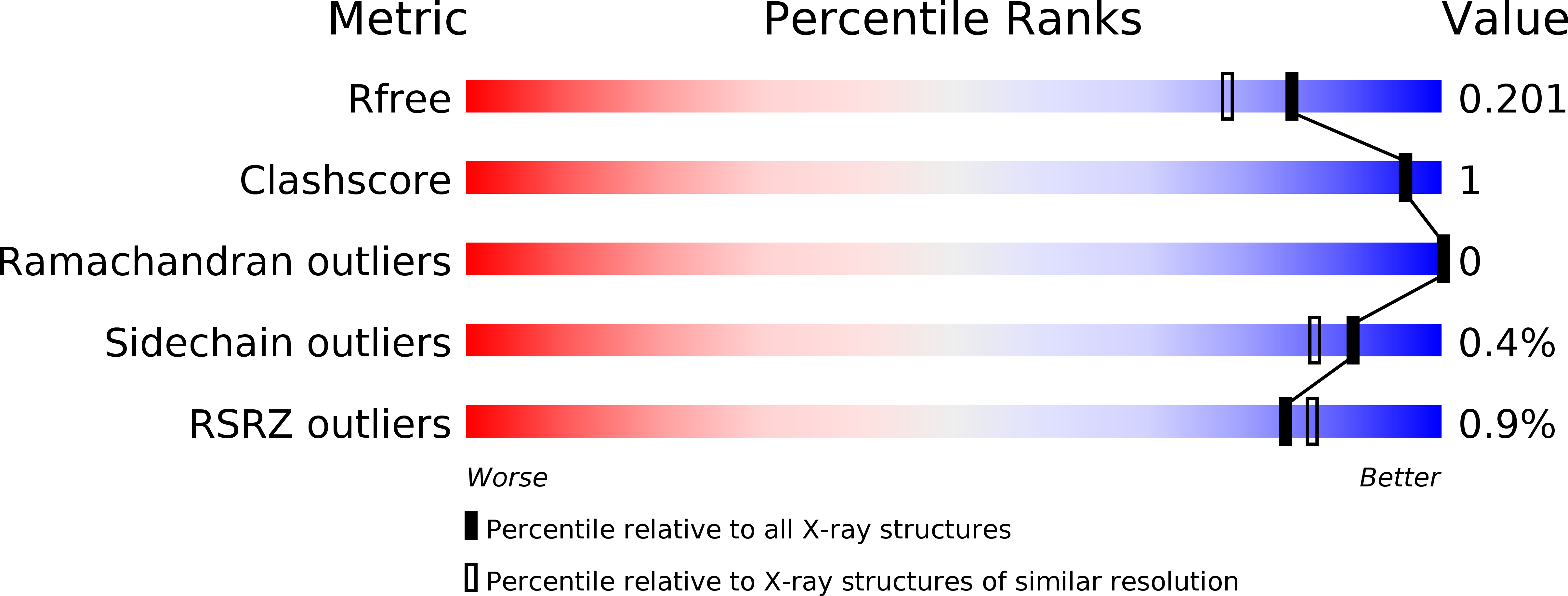
Resolution:
1.70 Å
R-Value Free:
0.18
R-Value Work:
0.16
R-Value Observed:
0.16
Space Group:
P 21 21 21
Macromolecular Entities
Structures with similar UniProt ID
Protein Blast
Polymer Type:polypeptide(L)
Molecule:VMB-1
Gene (Uniprot):vmb-1
Chain IDs:A, B, C, D
Chain Length:234
Number of Molecules:4
Biological Source:Vibrio alginolyticus
Primary Citation
Genetic and Biochemical Characterization of VMB-1, a Novel Metallo-beta-Lactamase Encoded by a Conjugative, Broad-Host Range IncC Plasmid from Vibrio spp.
Adv Biosyst 4 e1900221 e1900221 (2020)
PMID: 32293144 DOI: 10.1002/adbi.201900221

Abstact

The increasing incidence of phenotypic resistance to carbapenems in recent years is mainly attributed to acquisition of mobile carbapenemase-encoding genetic elements by major bacterial pathogens. Here, a novel carbapenemase known as Vibrio metallo-β-lactamase 1 (VMB-1), which is encoded by a gene (blaVMB-1) located in an integron-bearing, highly transmissible IncC type plasmid, namely pVB1796, is identified and characterized, both genetically and functionally. Recovered from a foodborne Vibrio alginolyticus strain that exhibits resistance to all known β-lactam antibiotics, pVB1796 is found to possess a hybrid backbone that exhibits unique features of both type 1 and type 2 IncC elements. VMB-1 exhibits 94% sequence homology with several recently reported but poorly characterized metallo-β-lactamases (MBLs) produced by the marine organisms Alteromonadaceae, Glaciecola, and Thalassomonas actiniarum. Sequence alignment analysis shows that VMB-1 shares a structurally identical active site with subclass B1 MBLs. Importantly, pVB1796 is found to be efficiently transferred from Vibrio to other Gram-negative bacterial pathogens, including Salmonella typhimurium, Klebsiella pneumoniae, and Acinetobacter baumanni, via conjugation. These findings suggest that blaVMB-1 -bearing plasmids have the potential to be disseminated to other Gram-negative bacterial pathogens in the near future and render carbapenems useless in treatment of multidrug resistant infections.

Legend

Protein

Chemical

Disease

Primary Citation of related structures
Feedback Form
Name
Email
Institute
Feedback