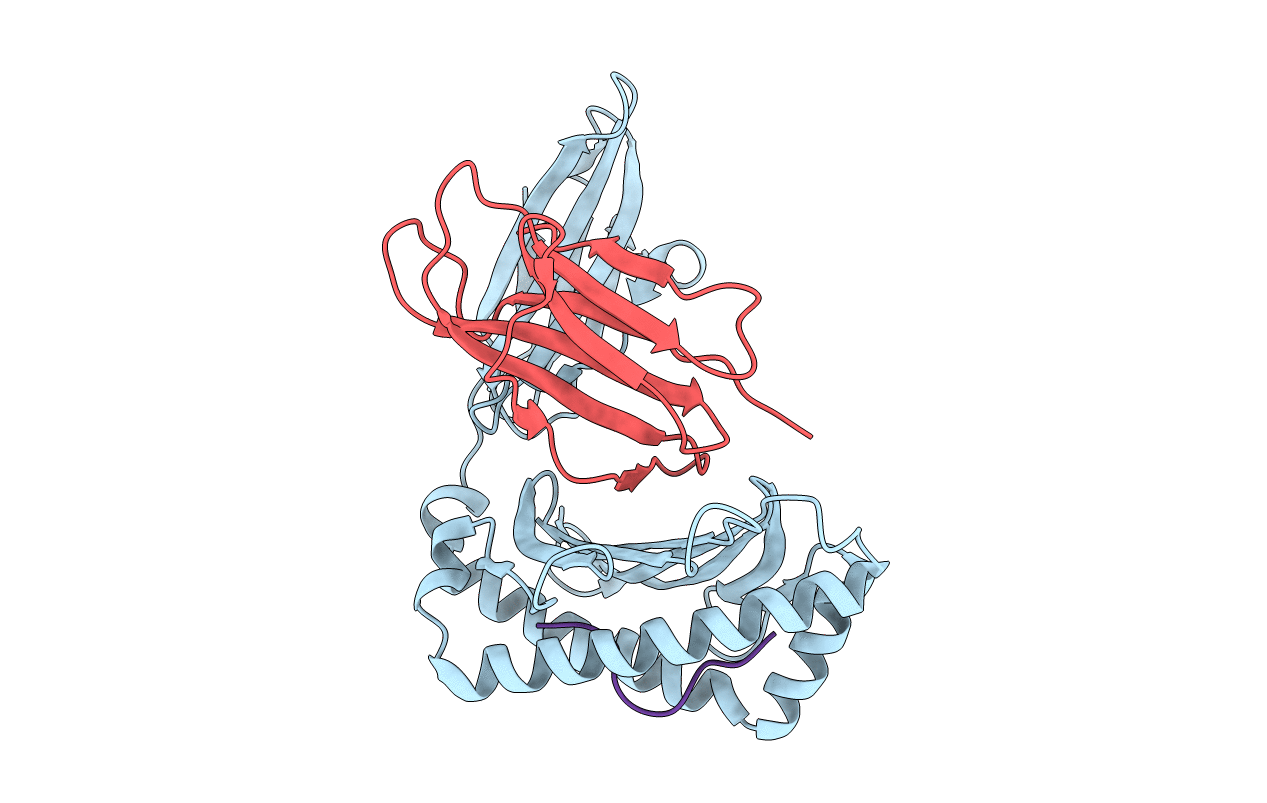
6JTO image
Deposition Date 2019-04-11
Release Date 2020-04-15
Last Version Date 2024-11-13
Entry Detail
PDB ID:
6JTO
Keywords:
Title:
Crystal structure of HLA-C05 in complex with a tumor mut10m peptide
Biological Source:
Source Organism:
Homo sapiens (Taxon ID: 9606)
Host Organism:
Method Details:
Experimental Method:
Resolution:
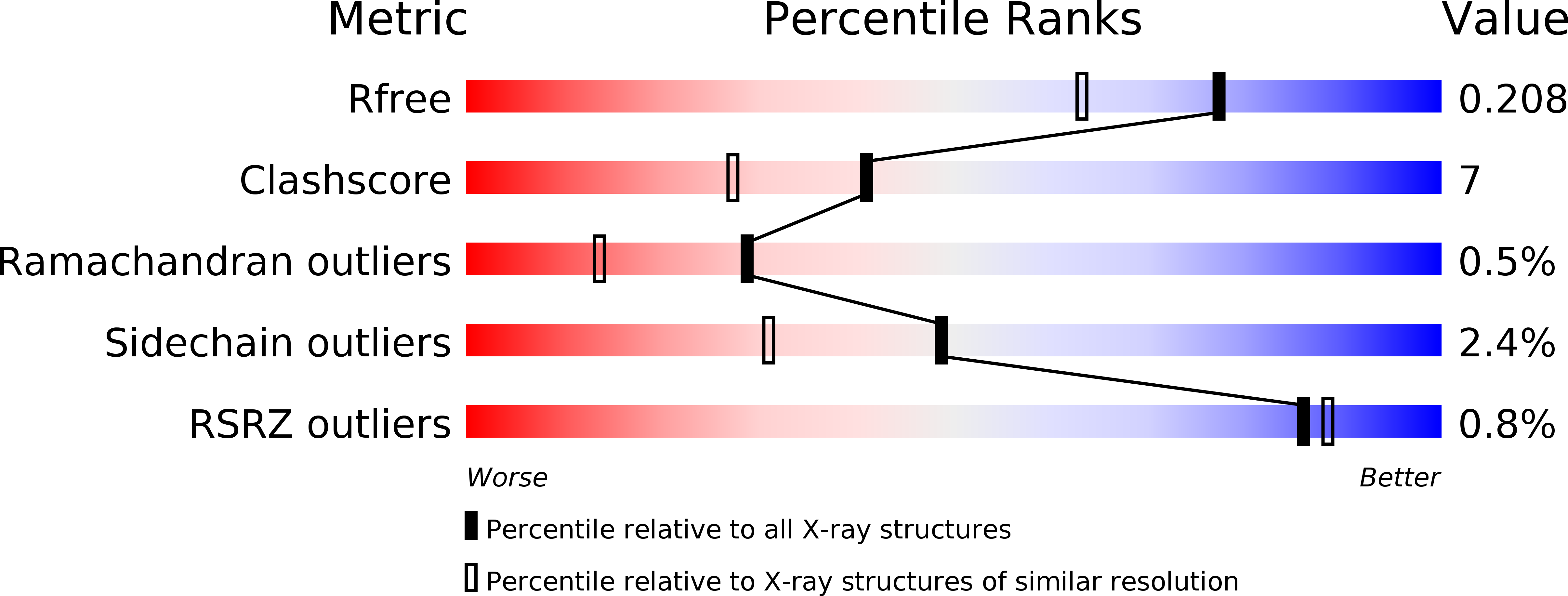
1.70 Å
R-Value Free:
0.20
R-Value Work:
0.17
R-Value Observed:
0.17
Space Group:
P 21 21 21
Macromolecular Entities
Structures with similar UniProt ID
Protein Blast
Polymer Type:polypeptide(L)
Molecule:HLA class I histocompatibility antigen, Cw-5 alpha chain
Chain IDs:A
Chain Length:273
Number of Molecules:1
Biological Source:Homo sapiens
Structures with similar UniProt ID
Protein Blast
Polymer Type:polypeptide(L)
Molecule:Beta-2-microglobulin
Gene (Uniprot):B2M
Chain IDs:B
Chain Length:98
Number of Molecules:1
Biological Source:Homo sapiens
Structures with similar UniProt ID
Protein Blast
Polymer Type:polypeptide(L)
Molecule:10-mer peptide
Chain IDs:C
Chain Length:10
Number of Molecules:1
Biological Source:Homo sapiens
Primary Citation
Rational discovery of a cancer neoepitope harboring the KRAS G12D driver mutation.
Sci China Life Sci ? ? ? (2021)
PMID: 33740187 DOI: 10.1007/s11427-020-1888-1

Abstact

Cytotoxic T cells targeting cancer neoantigens harboring driver mutations can lead to durable tumor regression in an HLAI-dependent manner. However, it is difficult to extend the population of patients who are eligible for neoantigen-based immunotherapy, as immunogenic neoantigen-HLA pairs are rarely shared across different patients. Thus, a way to find other human leukocyte antigen (HLA) alleles that can also present a clinically effective neoantigen is needed. Recently, neoantigen-based immunotherapy targeting the KRAS G12D mutation in patients with HLA-C*08:02 has shown effectiveness. In a proof-of-concept study, we proposed a combinatorial strategy (the combination of phylogenetic and structural analyses) to find potential HLA alleles that could also present KRAS G12D neoantigen. Compared to in silico binding prediction, this strategy avoids the uneven accuracy across different HLA alleles. Our findings extend the population of patients who are potentially eligible for immunotherapy targeting the KRAS G12D mutation. Additionally, we provide an alternative way to predict neoantigen-HLA pairs, which maximizes the clinical usage of shared neoantigens.

Legend

Protein

Chemical

Disease

Primary Citation of related structures
Feedback Form
Name
Email
Institute
Feedback