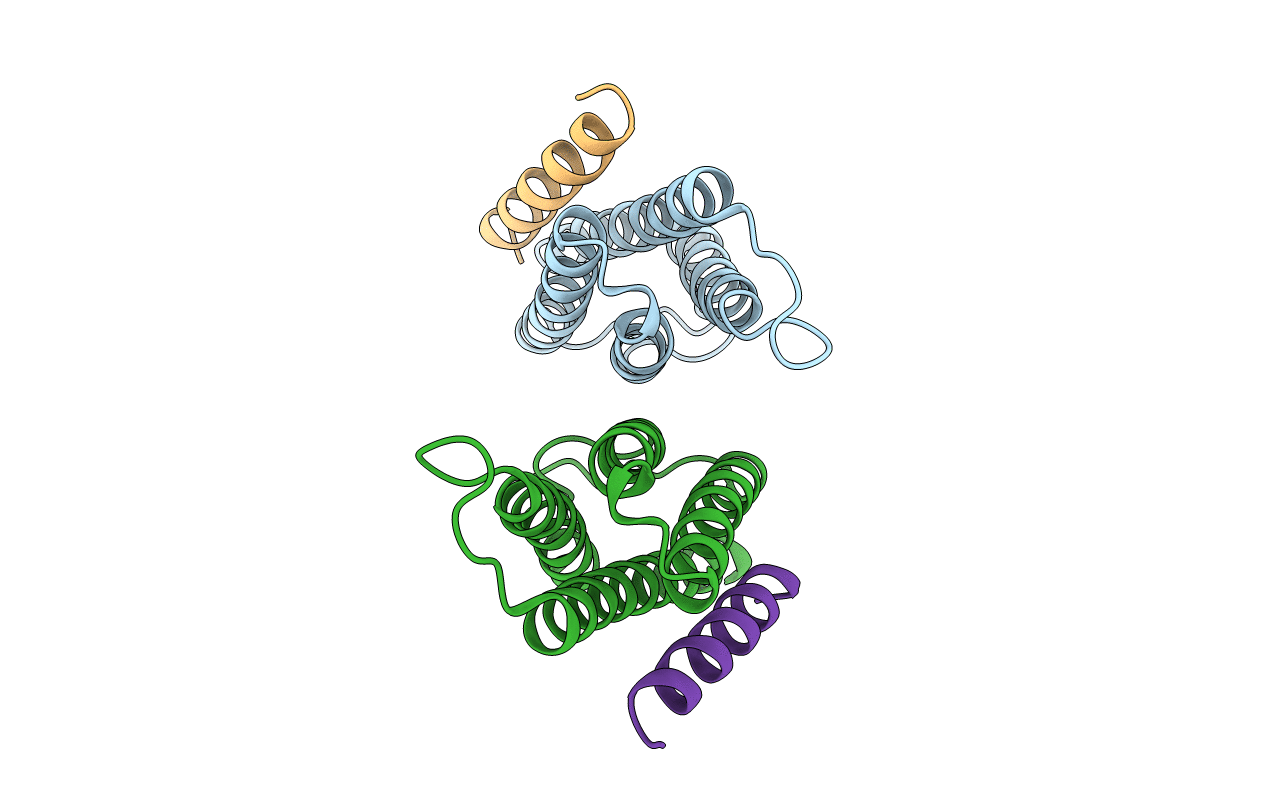
6JMU image
Deposition Date 2019-03-13
Release Date 2020-05-20
Last Version Date 2023-11-22
Entry Detail
PDB ID:
6JMU
Keywords:
Title:
Crystal structure of GIT1/Paxillin complex
Biological Source:
Source Organism(s):
Mus musculus (Taxon ID: 10090)
Expression System(s):
Method Details:
Experimental Method:
Resolution:
2.00 Å
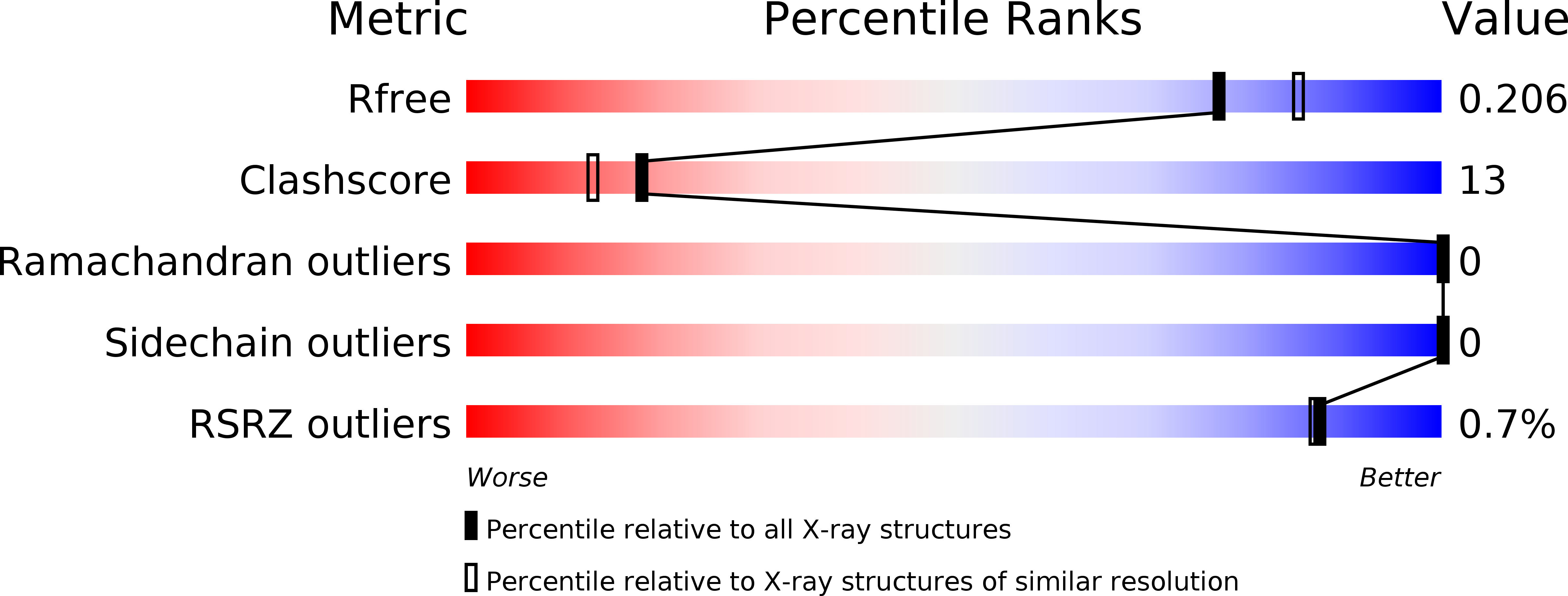
R-Value Free:
0.20
R-Value Work:
0.17
R-Value Observed:
0.17
Space Group:
P 1 21 1
Macromolecular Entities
Structures with similar UniProt ID
Protein Blast
Polymer Type:polypeptide(L)
Molecule:ARF GTPase-activating protein GIT1
Gene (Uniprot):Git1
Chain IDs:A, B
Chain Length:137
Number of Molecules:2
Biological Source:Mus musculus
Structures with similar UniProt ID
Protein Blast
Polymer Type:polypeptide(L)
Molecule:Paxillin
Gene (Uniprot):Pxn
Chain IDs:C, D
Chain Length:32
Number of Molecules:2
Biological Source:Mus musculus
Primary Citation
GIT/PIX Condensates Are Modular and Ideal for Distinct Compartmentalized Cell Signaling.
Mol.Cell 79 782 796.e6 (2020)
PMID: 32780989 DOI: 10.1016/j.molcel.2020.07.004

Abstact

Enzymes or enzyme complexes can be concentrated in different cellular loci to modulate distinct functional processes in response to specific signals. How cells condense and compartmentalize enzyme complexes for spatiotemporally distinct cellular events is not well understood. Here we discover that specific and tight association of GIT1 and β-Pix, a pair of GTPase regulatory enzymes, leads to phase separation of the complex without additional scaffolding molecules. GIT1/β-Pix condensates are modular in nature and can be positioned at distinct cellular compartments, such as neuronal synapses, focal adhesions, and cell-cell junctions, by upstream adaptors. Guided by the structure of the GIT/PIX complex, we specifically probed the role of phase separation of the enzyme complex in cell migration and synapse formation. Our study suggests that formation of modular enzyme complex condensates via phase separation can dynamically concentrate limited quantities of enzymes to distinct cellular compartments for specific and optimal signaling.

Legend

Protein

Chemical

Disease

Primary Citation of related structures
Feedback Form
Name
Email
Institute
Feedback