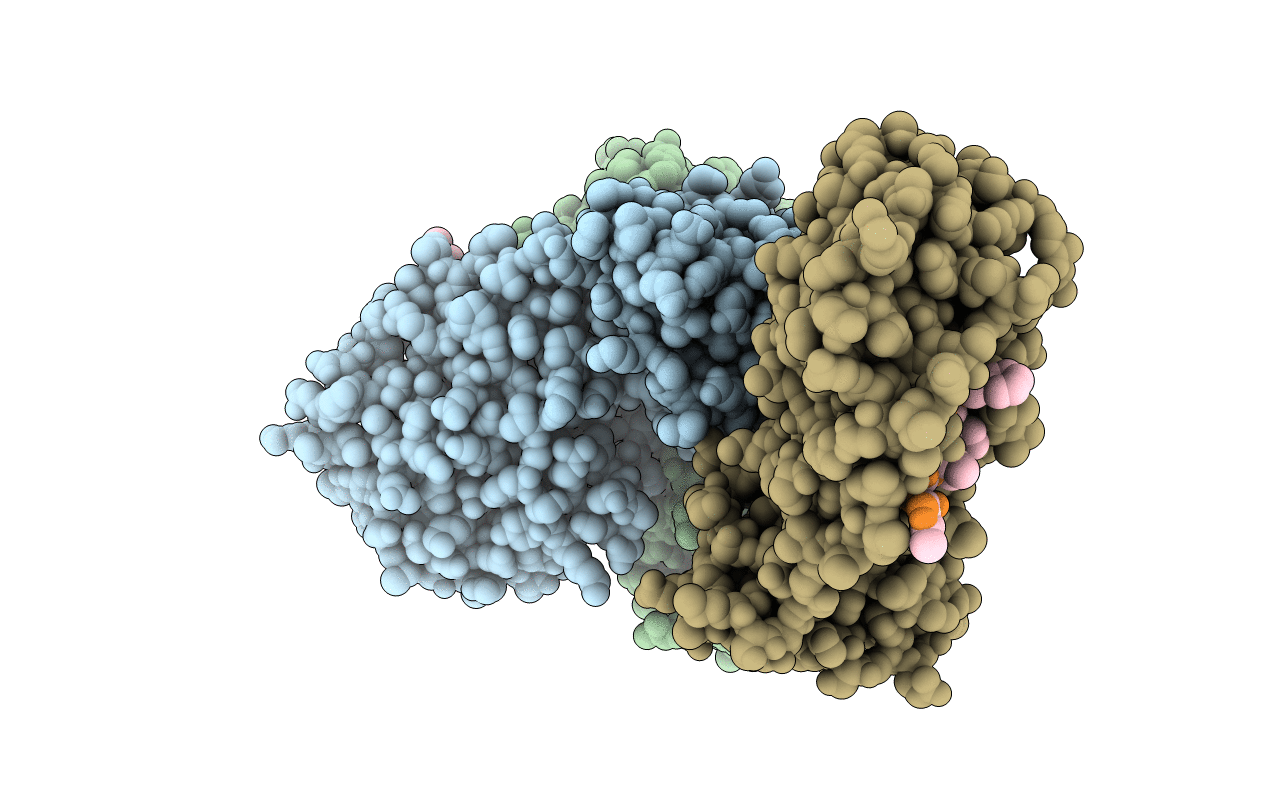
6JIJ image
Deposition Date 2019-02-21
Release Date 2019-04-24
Last Version Date 2024-10-23
Entry Detail
PDB ID:
6JIJ
Title:
The Crystal Structure of Main Protease from Mouse Hepatitis Virus A59 in Complex with an inhibitor
Biological Source:
Source Organism:
Host Organism:
Method Details:
Experimental Method:
Resolution:
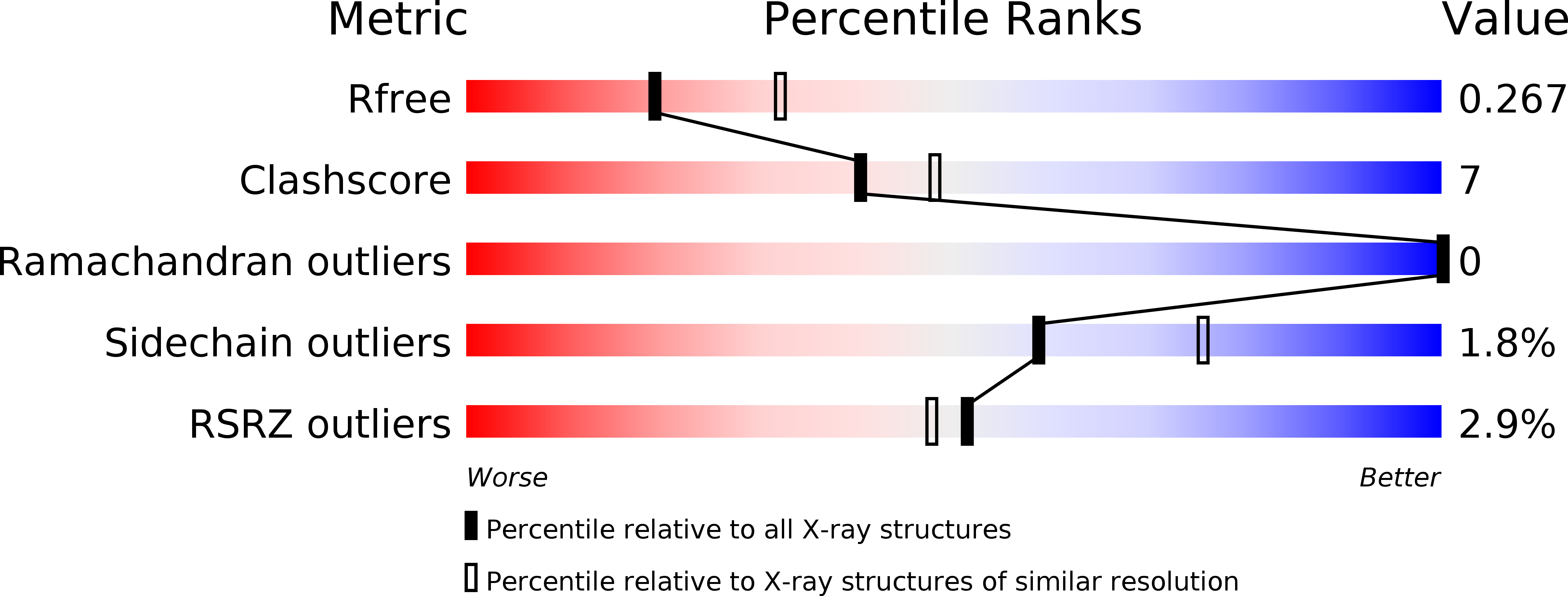
2.65 Å
R-Value Free:
0.27
R-Value Work:
0.22
R-Value Observed:
0.22
Space Group:
C 1 2 1
Macromolecular Entities
Structures with similar UniProt ID
Protein Blast
Polymer Type:polypeptide(L)
Molecule:Replicative polyprotein 1ab
Chain IDs:A (auth: B), B (auth: C), C (auth: A)
Chain Length:301
Number of Molecules:3
Biological Source:Murine coronavirus (strain A59)
Polymer Type:polypeptide(L)
Molecule:02J-ALA-VAL-LEU-PJE-010
Chain IDs:D, E, F
Chain Length:6
Number of Molecules:3
Biological Source:synthetic construct
Peptide-like Molecules
PRD_002214
Primary Citation
The crystal structure of main protease from mouse hepatitis virus A59 in complex with an inhibitor.
Biochem. Biophys. Res. Commun. 511 794 799 (2019)
PMID: 30833083 DOI: 10.1016/j.bbrc.2019.02.105

Abstact

Mouse hepatitis virus A59 (MHV-A59) is a representative member of the genus betacoronavirus within the subfamily Coronavirinae, which infects the liver, brain and respiratory tract. Through different inoculation routes, MHV-A59 can provide animal models for encephalitis, hepatitis and pneumonia to explore viral life machinery and virus-host interactions. In viral replication, non-structural protein 5 (Nsp5), also termed main protease (Mpro), plays a dominant role in processing coronavirus-encoded polyproteins and is thus recognized as an ideal target of anti-coronavirus agents. However, no structure of the MHV-A59 Mpro has been reported, and molecular exploration of the catalysis mechanism remains hindered. Here, we solved the crystal structure of the MHV-A59 Mpro complexed with a Michael acceptor-based inhibitor, N3. Structural analysis revealed that the Cβ of the vinyl group of N3 covalently bound to C145 of the catalytic dyad of Mpro, which irreversibly inactivated cysteine protease activity. The lactam ring of the P1 side chain and the isobutyl group of the P2 side chain, which mimic the conserved residues at the same positions of the substrate, fit well into the S1 and S2 pockets. Through a comparative study with Mpro of other coronaviruses, we observed that the substrate-recognition pocket and enzyme inhibitory mechanism is highly conservative. Altogether, our study provided structural features of MHV-A59 Mpro and indicated that a Michael acceptor inhibitor is an ideal scaffold for antiviral drugs.

Legend

Protein

Chemical

Disease

Primary Citation of related structures
Feedback Form
Name
Email
Institute
Feedback